Egypt: A Trip Thousands of Years in the Making
Introduction
I have been fascinated by ancient Egypt since the fourth grade. Mummies, pyramids, buried treasures, the Sphinx, kings and queens—everything to keep a young boy spellbound. But many years later, despite numerous trips abroad, I had never actually been to Egypt. It was time to give it a shot. When I floated the idea of a Viking Nile River Cruise to my wife, she was pretty skeptical. But I persisted and eventually convinced her it would be great. (Truth be told, I really had no idea!)
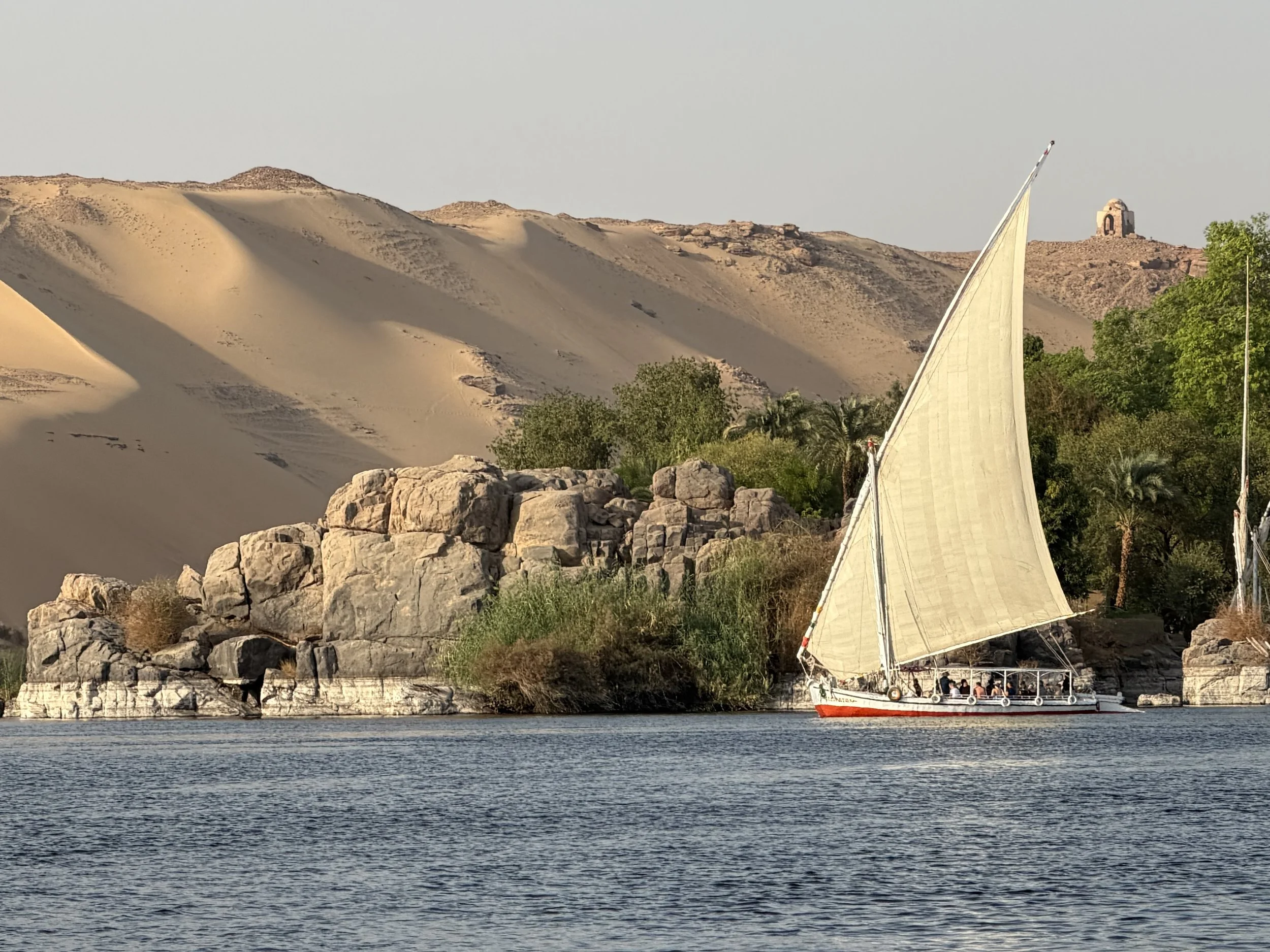
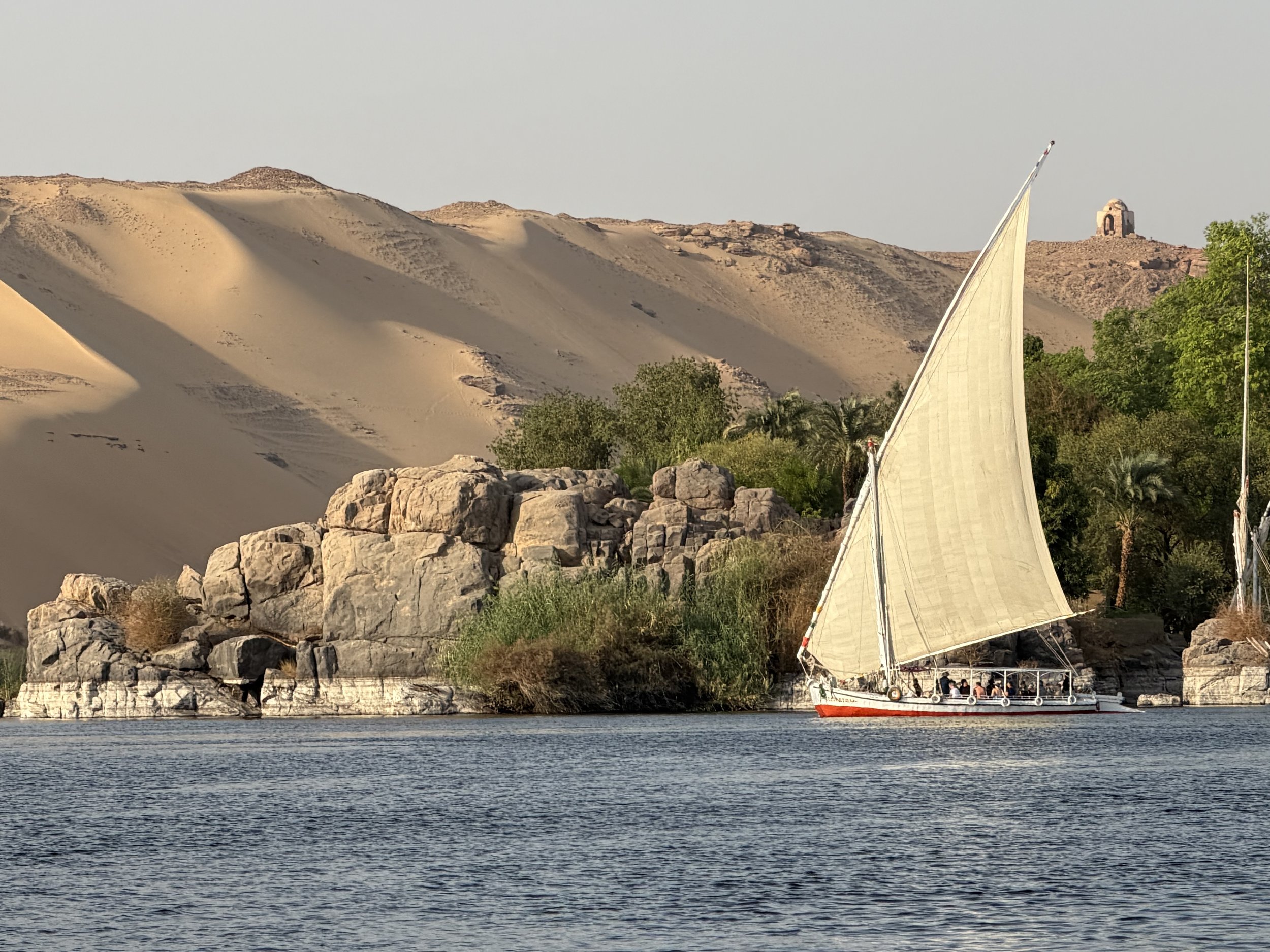
A felucca sailing on the Nile near Aswan
Thank You, Mrs. Heath!
My fascination with ancient Egypt began with my fourth-grade teacher, Mrs. Heath. I remember being introduced to several different countries in her classroom—Holland, Egypt, Greece, and one or two others. But Egypt was the one that really grabbed me. I could imagine myself transported to the past, directing the construction of pyramids or hunting for buried treasure.
Ironically, I was mortified when I learned I had been assigned to Mrs. Heath’s class. We found out who our new teachers would be when our final report cards arrived on the last day of third grade. Mrs. Heath was known among the kids as “H-Bomb,” and the rumor was that she was super strict. I ran home from school, climbed into my closet, and cried my eyes out. How could this happen to me? Assigned to H-Bomb—and separated from my best friend, who had drawn another teacher!
As it turned out, H-Bomb became one of the best teachers I ever had. She was organized, well-prepared, and expected a lot from us. Consequently, I learned more than I realized at the time, and many years later, her lessons were still with me.
So, thanks very much, Mrs. Heath!
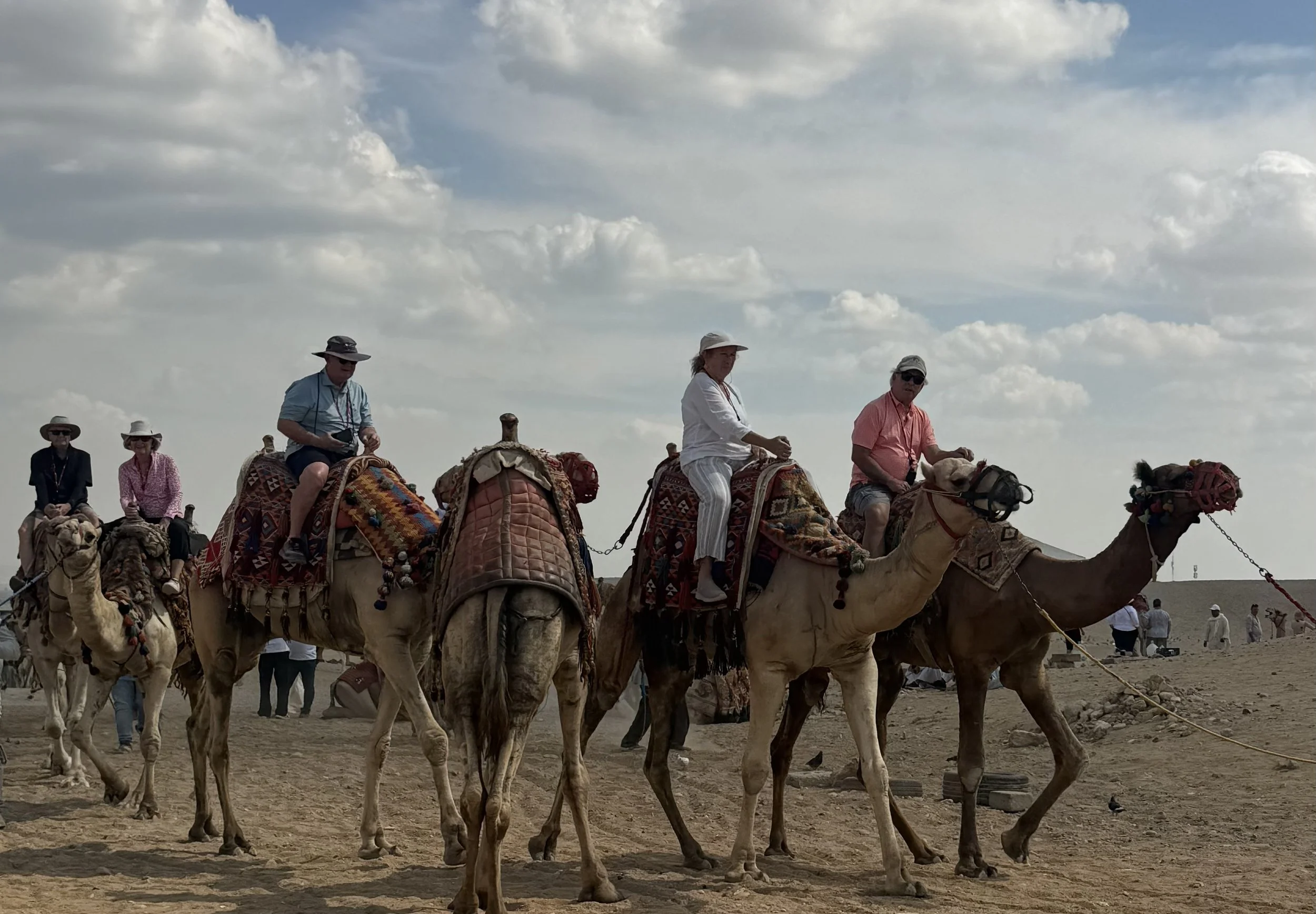
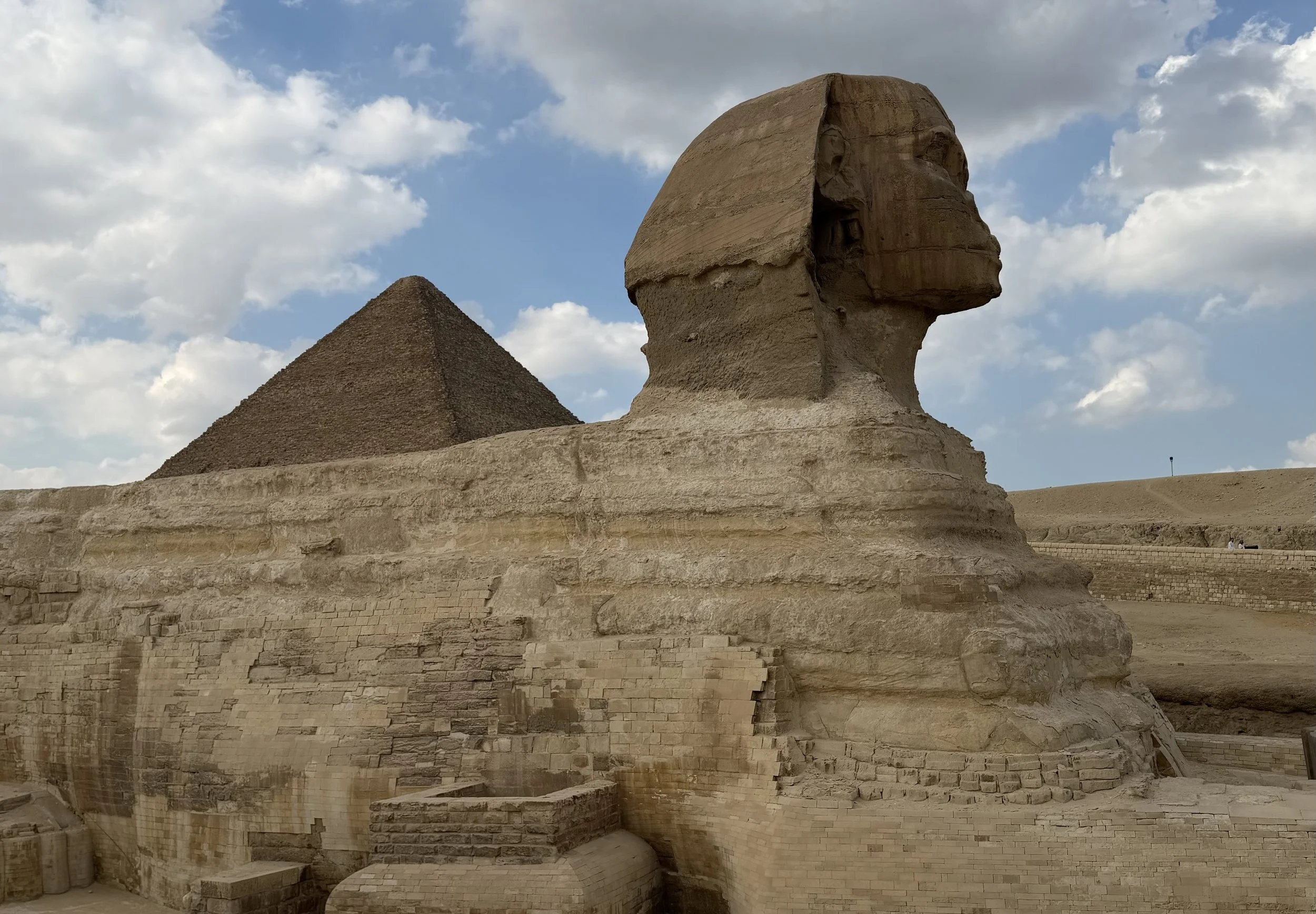
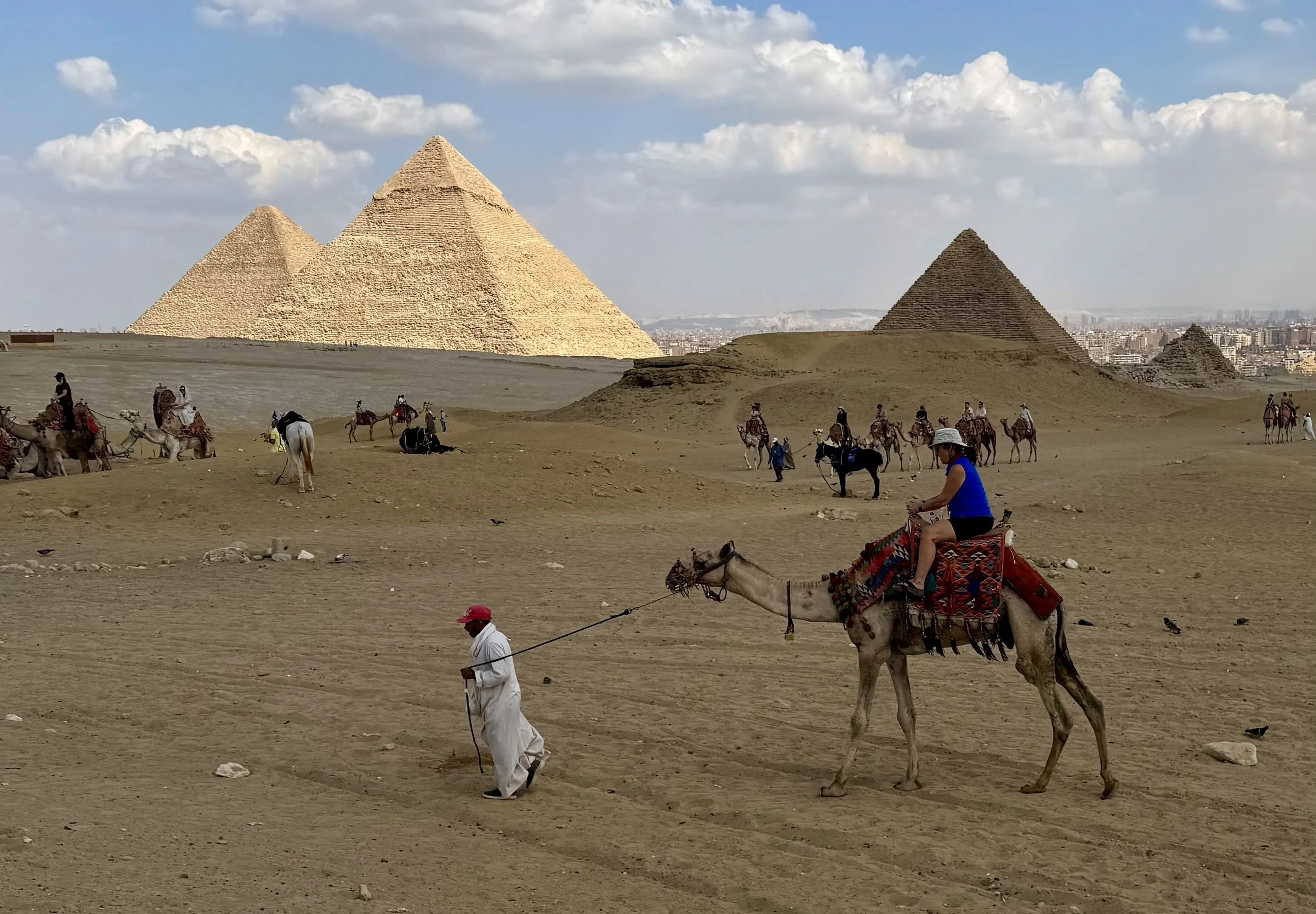
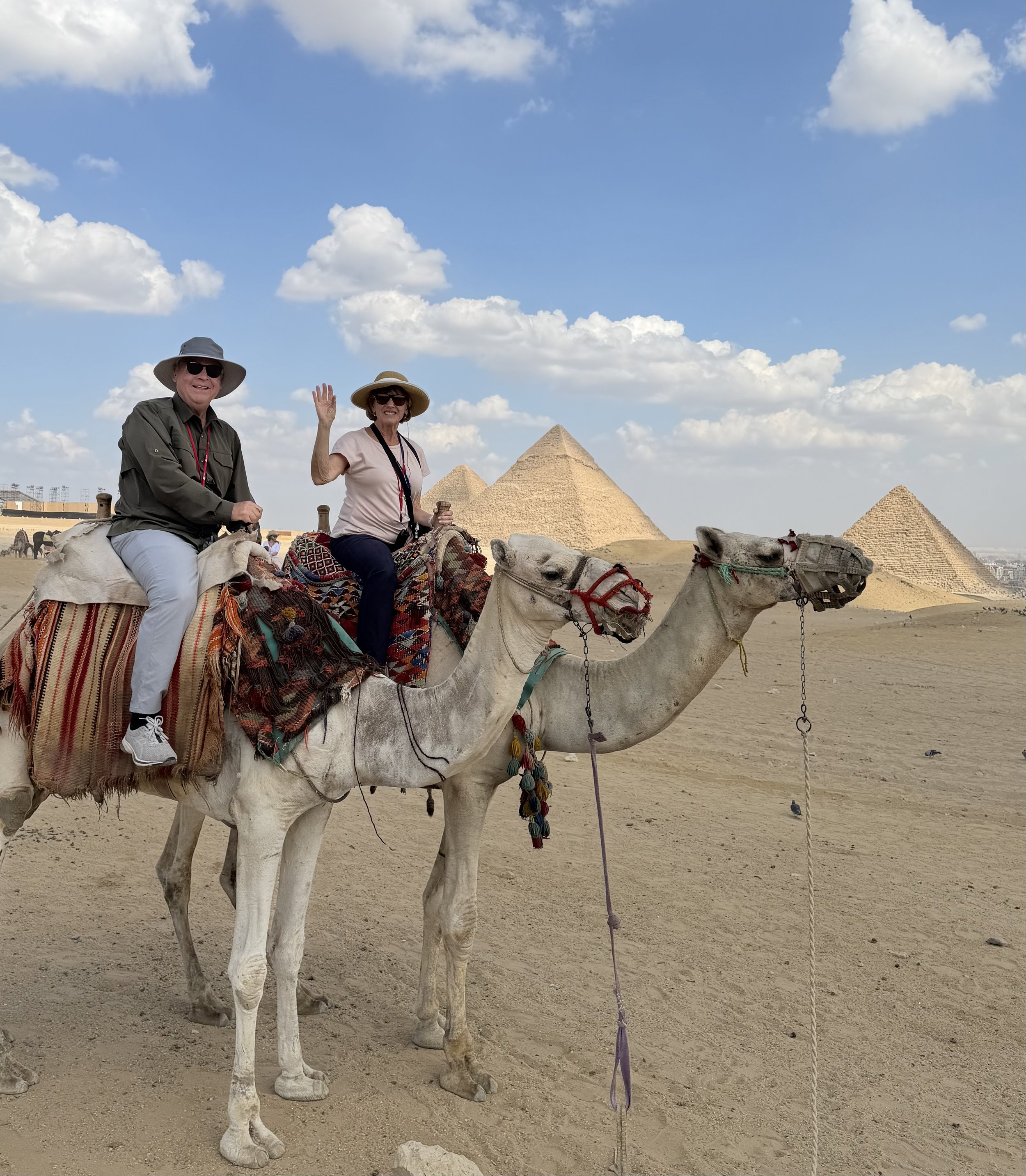
Some of our group riding camels at Giza, site of the Sphinx and Great Pyramid
Flights
This was going to be an expensive trip no matter how we approached it, so I decided to call upon Emirates Business Class one more time. That would make the trip special from the start.
If you want to know more about Emirates Business Class, check out my write-up on our Southeast Asia trip.
We flew from Miami to Dubai for a layover and then continued to Cairo. I’m planning a separate post soon on our time exploring Dubai.
The Itinerary
Cairo
We got to Cairo Airport on our “arrival day” (Day 1) for the Viking cruise. Since we had arranged our own flights, Viking did not provide a transfer. The airport was crazy, with passengers arriving from all over, but we managed to find a cab and head for the hotel.
The ride was a thrill a minute! Cars zigged and zagged, with motorcycles and trucks thrown into the mix. I truly expected to see an accident, but somehow, we made it to the hotel in one piece.
The cab was actually PLAN B. My travel research indicated that Uber was available at Cairo Airport, with reasonable prices, no haggling, and a set fare. That was PLAN A. Unfortunately, the airport Wi-Fi was out, and I couldn’t access my Uber app. So, PLAN B kicked in.
Viking was using the Fairmont Nile City Cairo as its headquarters hotel for the start of the cruise. It was very nice, with comfortable rooms, several restaurants, a rooftop pool, and a bar and grill near the pool. That was a good place to relax with a drink after a day of excursions.
The hotel also had a fabulous breakfast buffet, complete with an omelet station, fruit, pastries, and all the rest. Our room had a nice view of the Nile River and was very comfortable.
On Day 2, we met our Viking tour guides, who would be with us throughout the trip. They briefed us on the schedule, offered travel tips, and shared background information about the places we would visit.
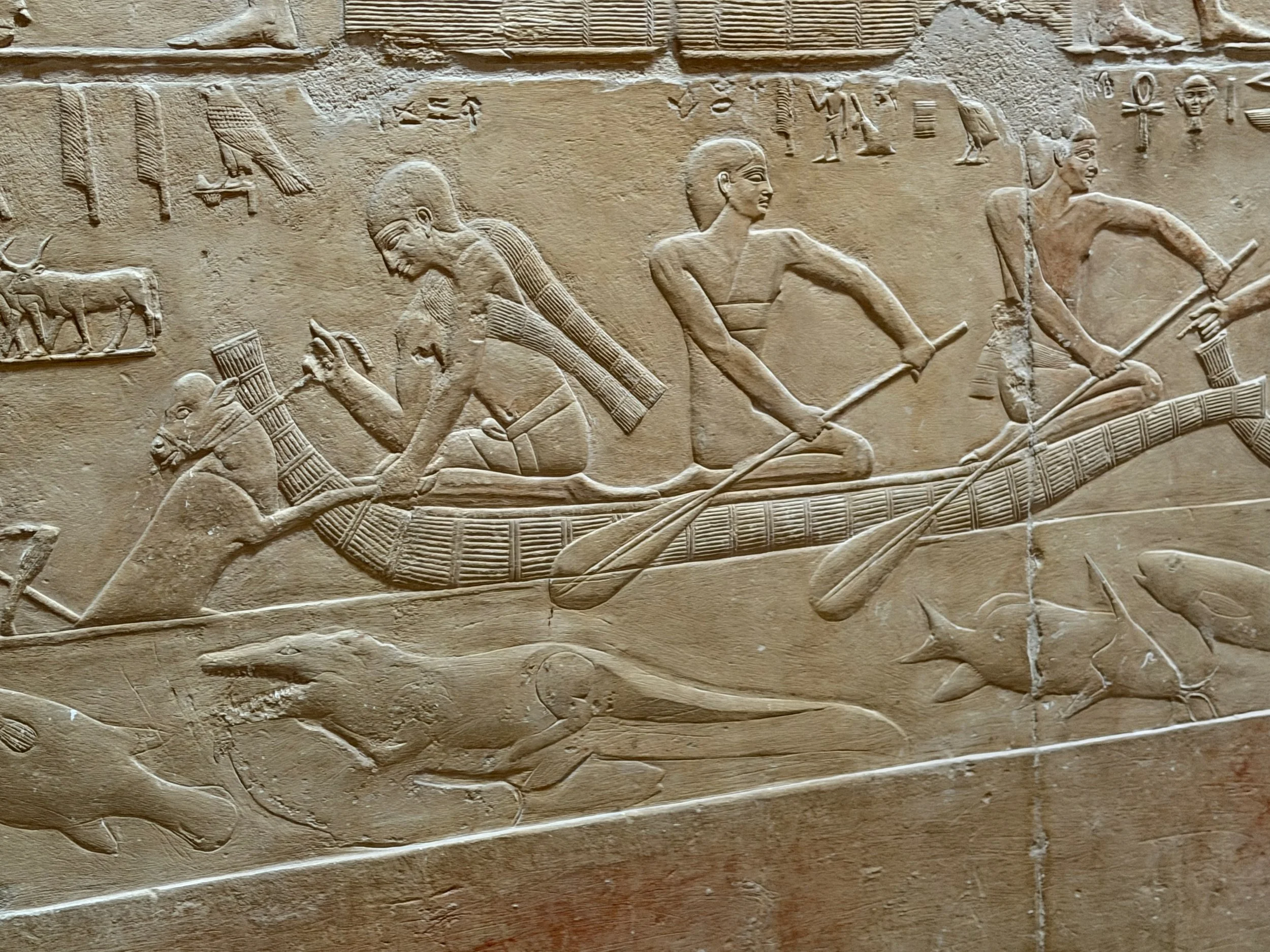
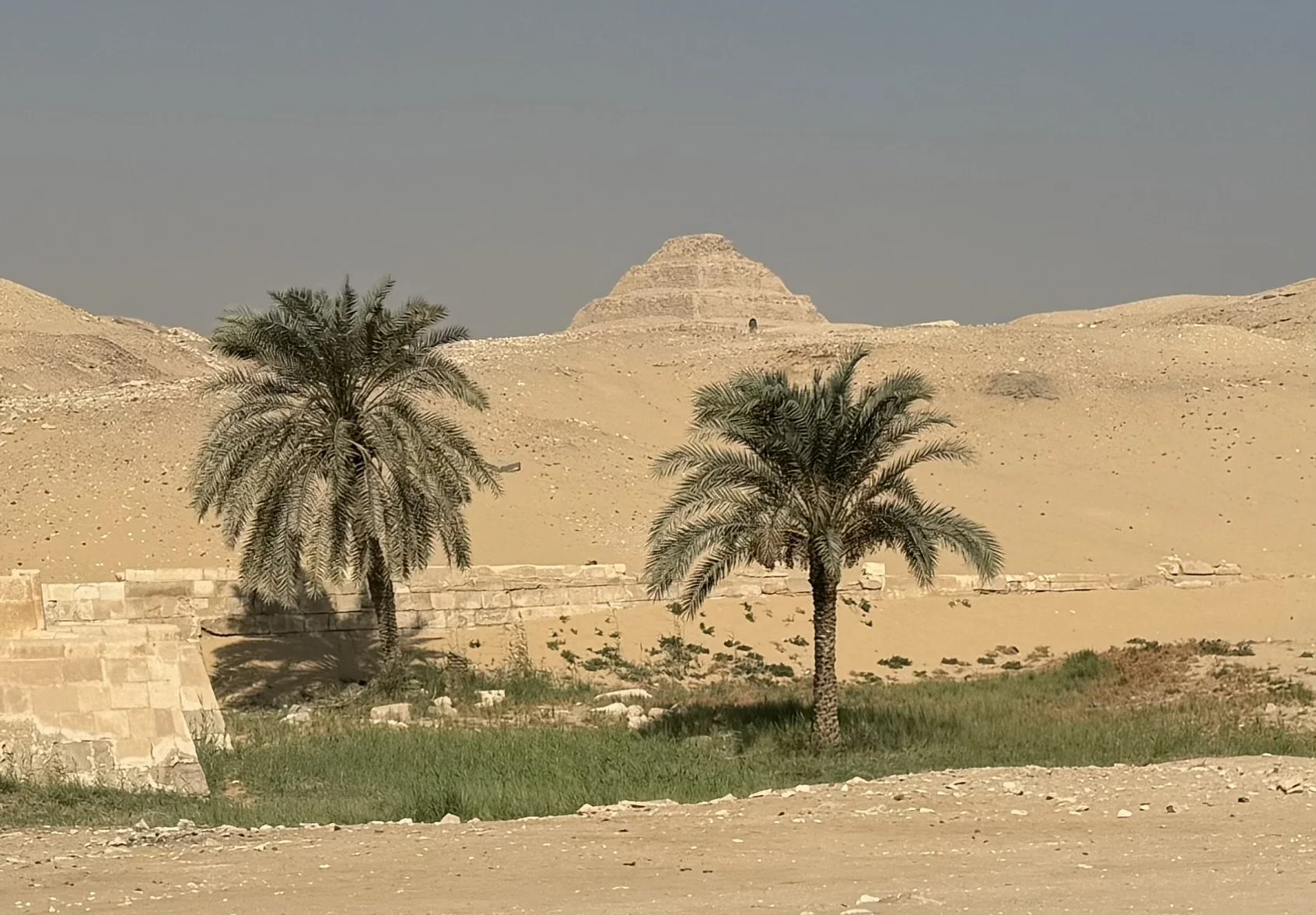
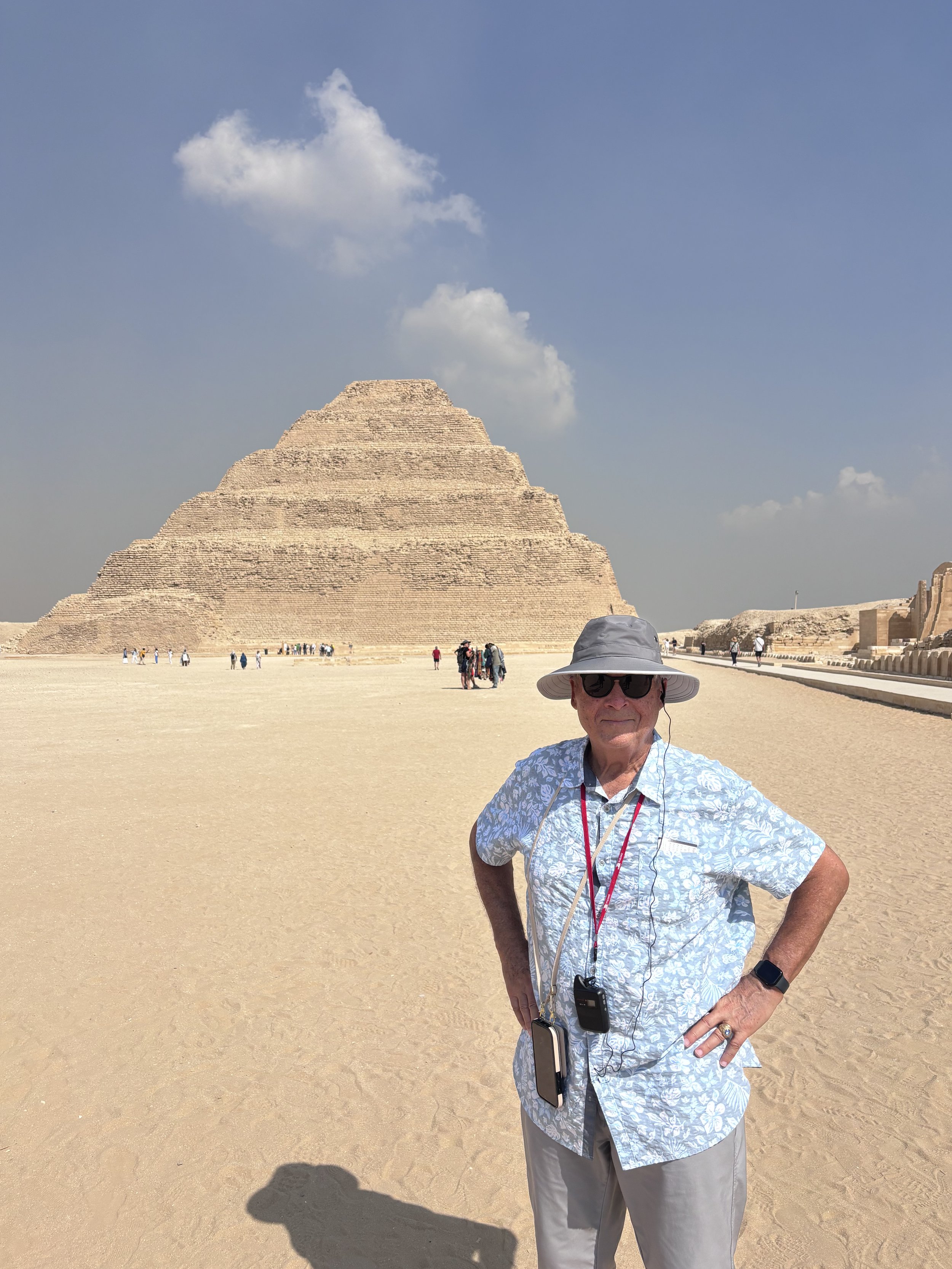
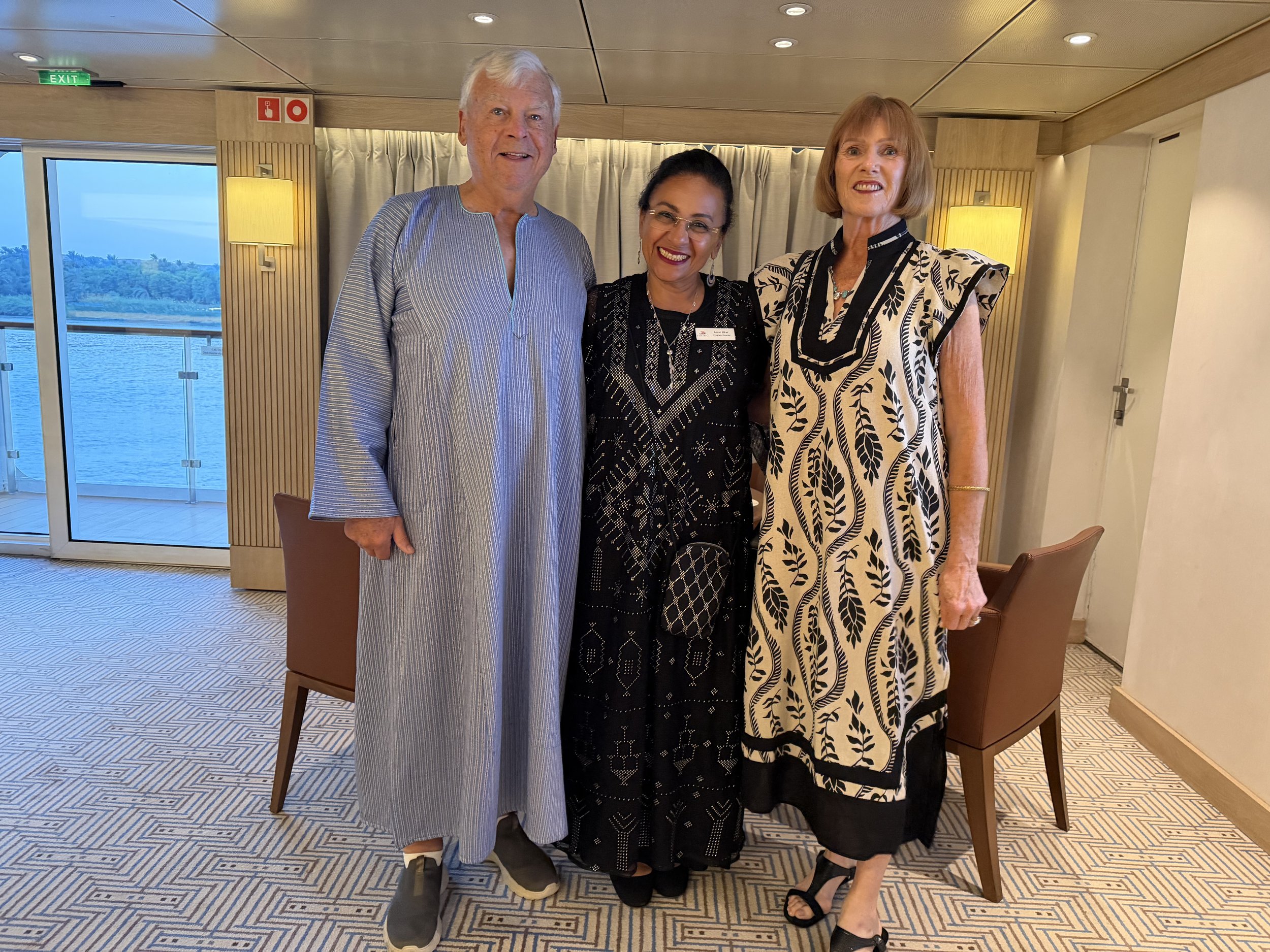
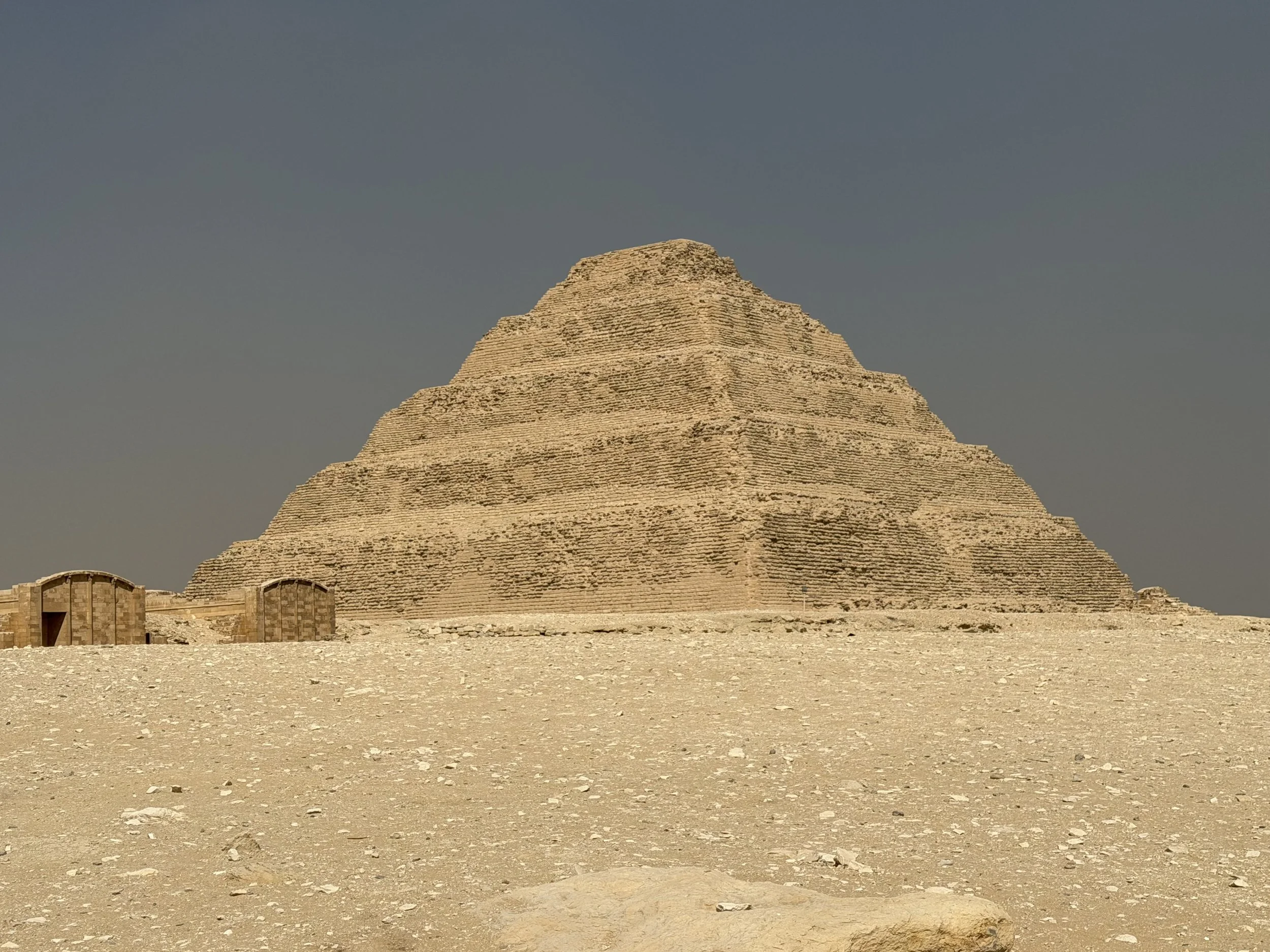
From the hotel, we traveled by bus to Sakkara to see the Step Pyramid, the oldest known stone pyramid in Egypt. Pretty amazing stuff, expertly explained by our guides, who were highly knowledgeable Egyptologists. Our guide, Amal, had been in the business for 39 years, and she answered our questions clearly and thoroughly. We learned not only the history of the temples and pyramids but also about the construction techniques and challenges the builders faced.
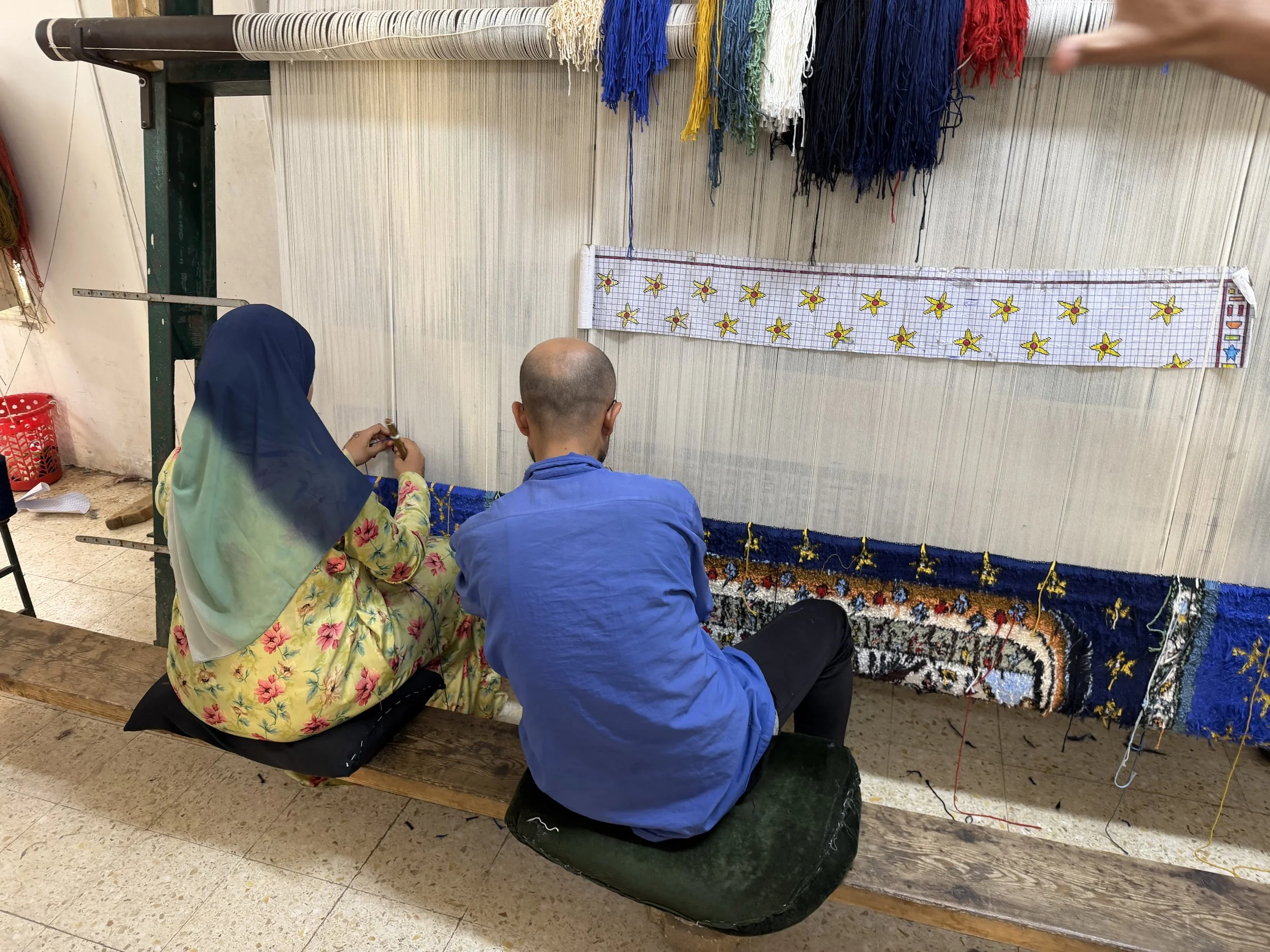
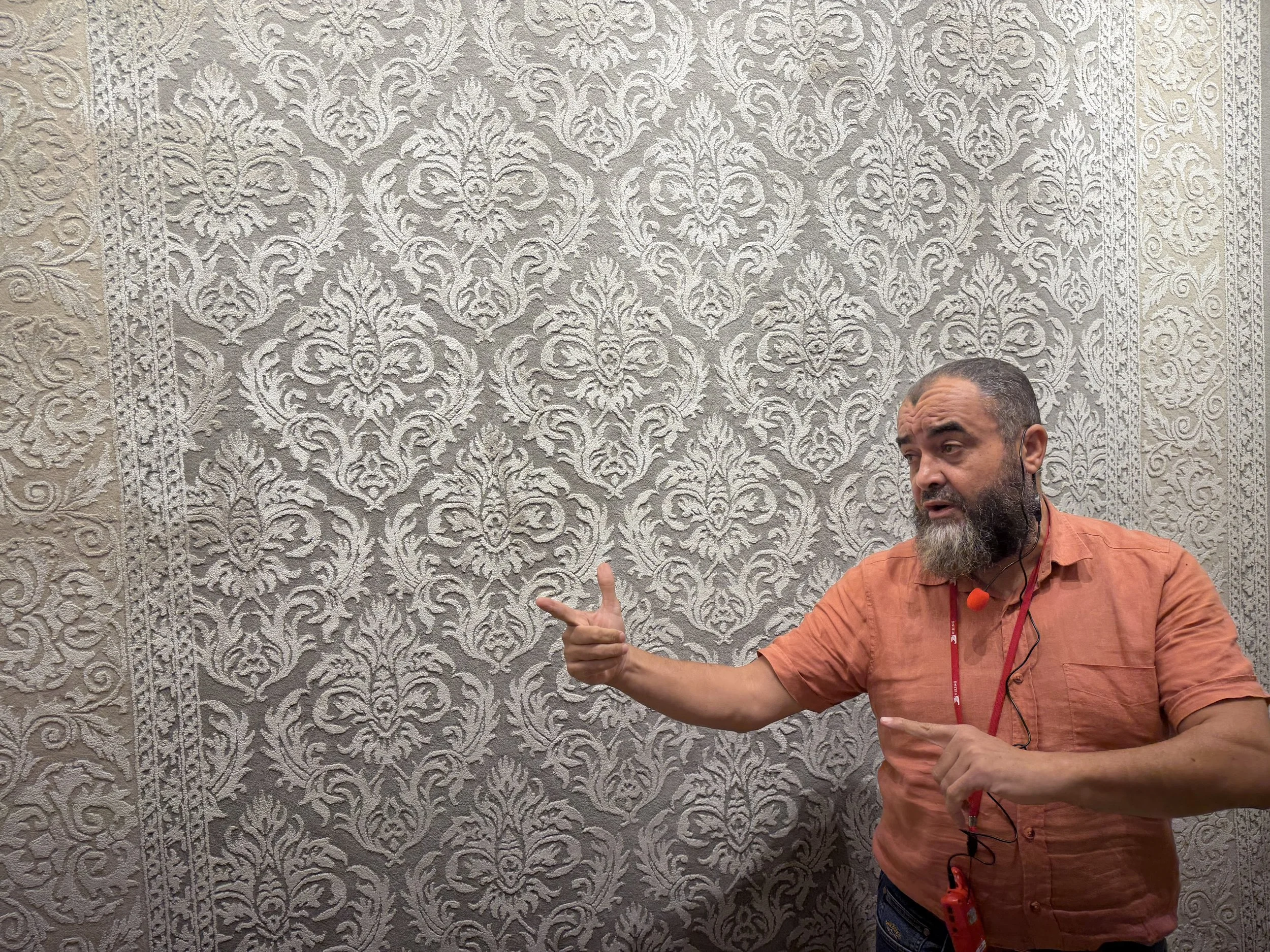
We stopped at a rug-making establishment near the Step Pyramid, where we watched a demonstration of traditional rug-making on a massive loom. The products included high-quality rugs and wall coverings of various sizes, made from silk, cotton, and bamboo. From there, we headed to a nearby resort hotel for a barbecue lunch.
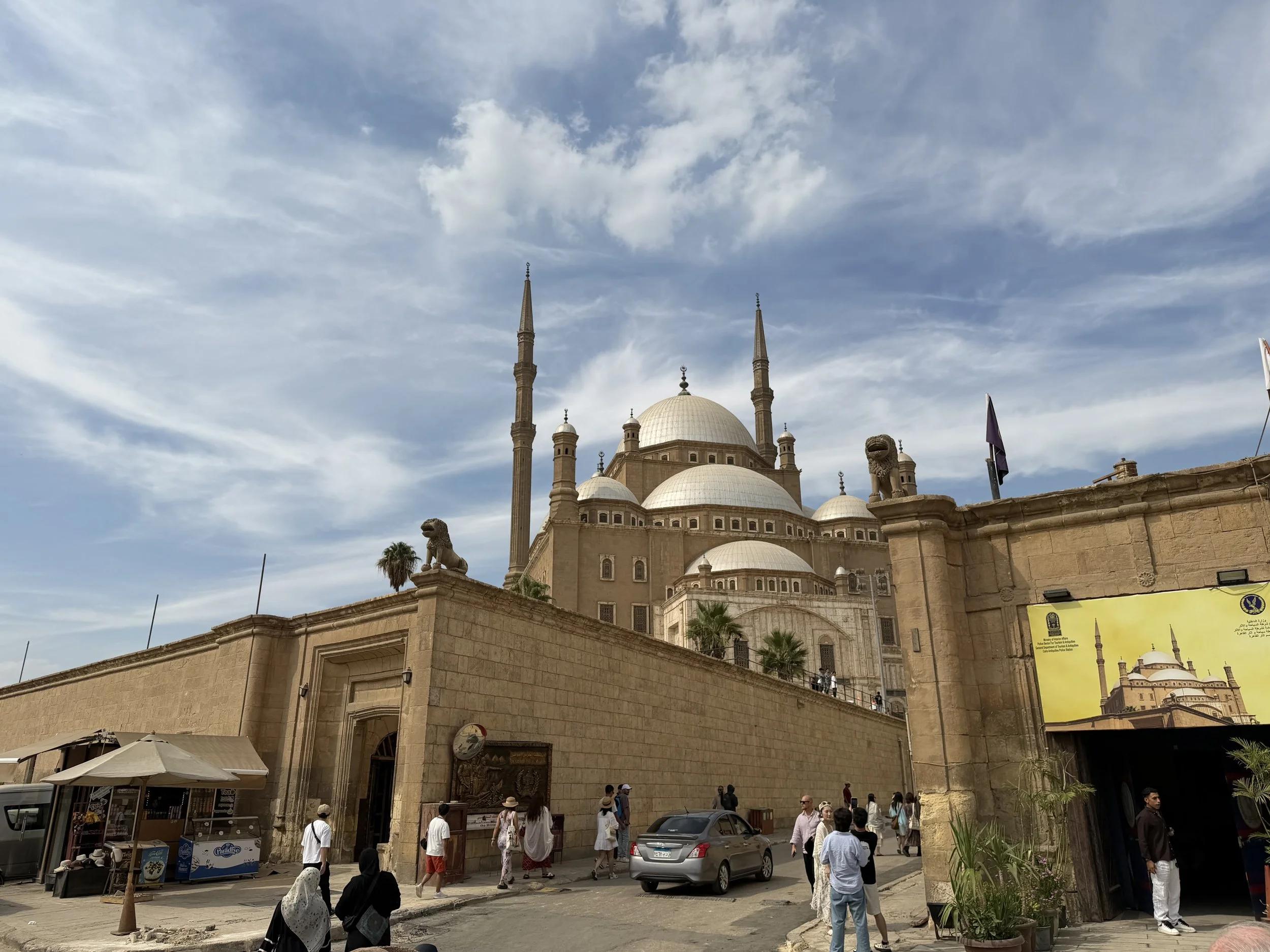
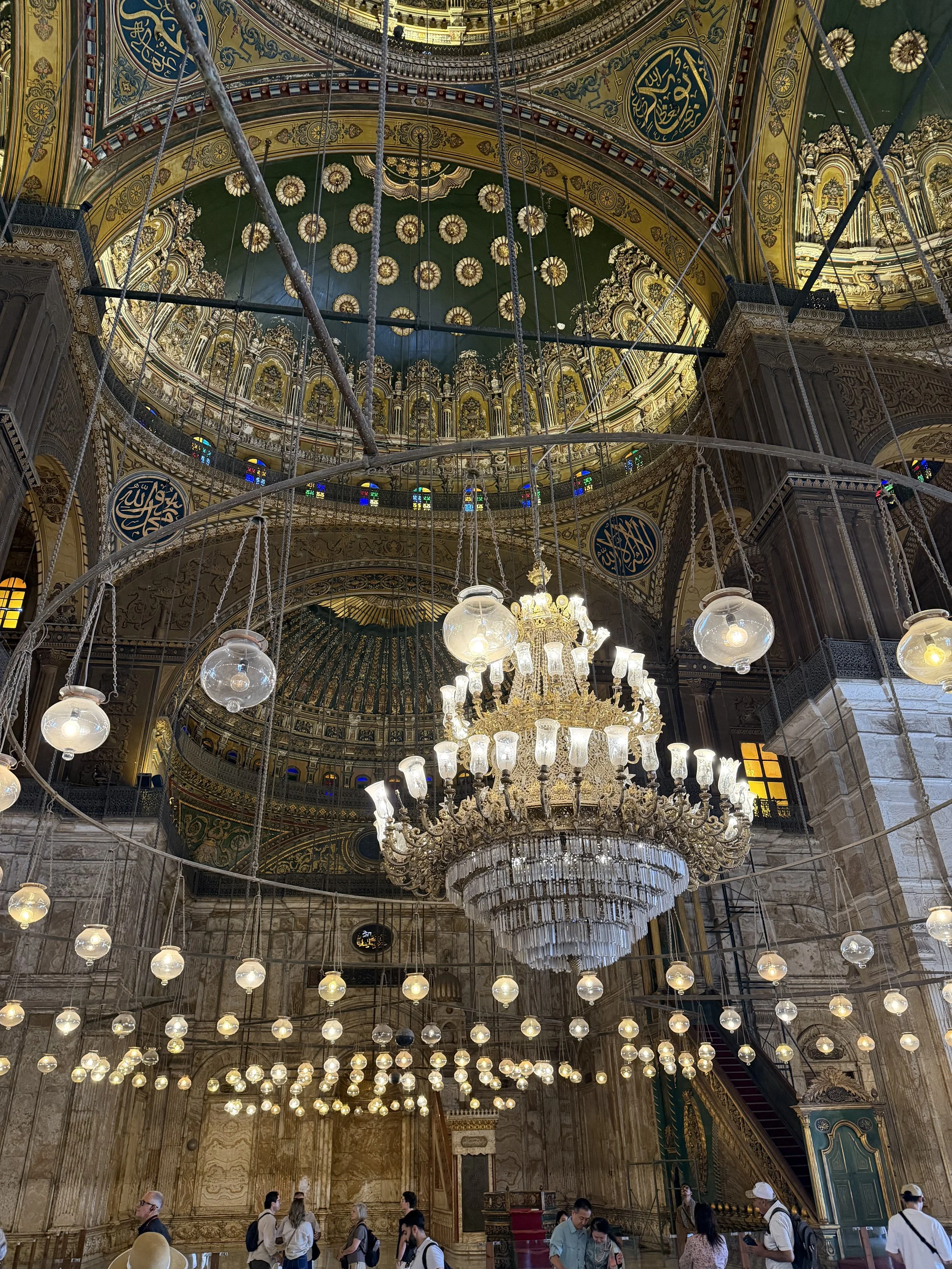
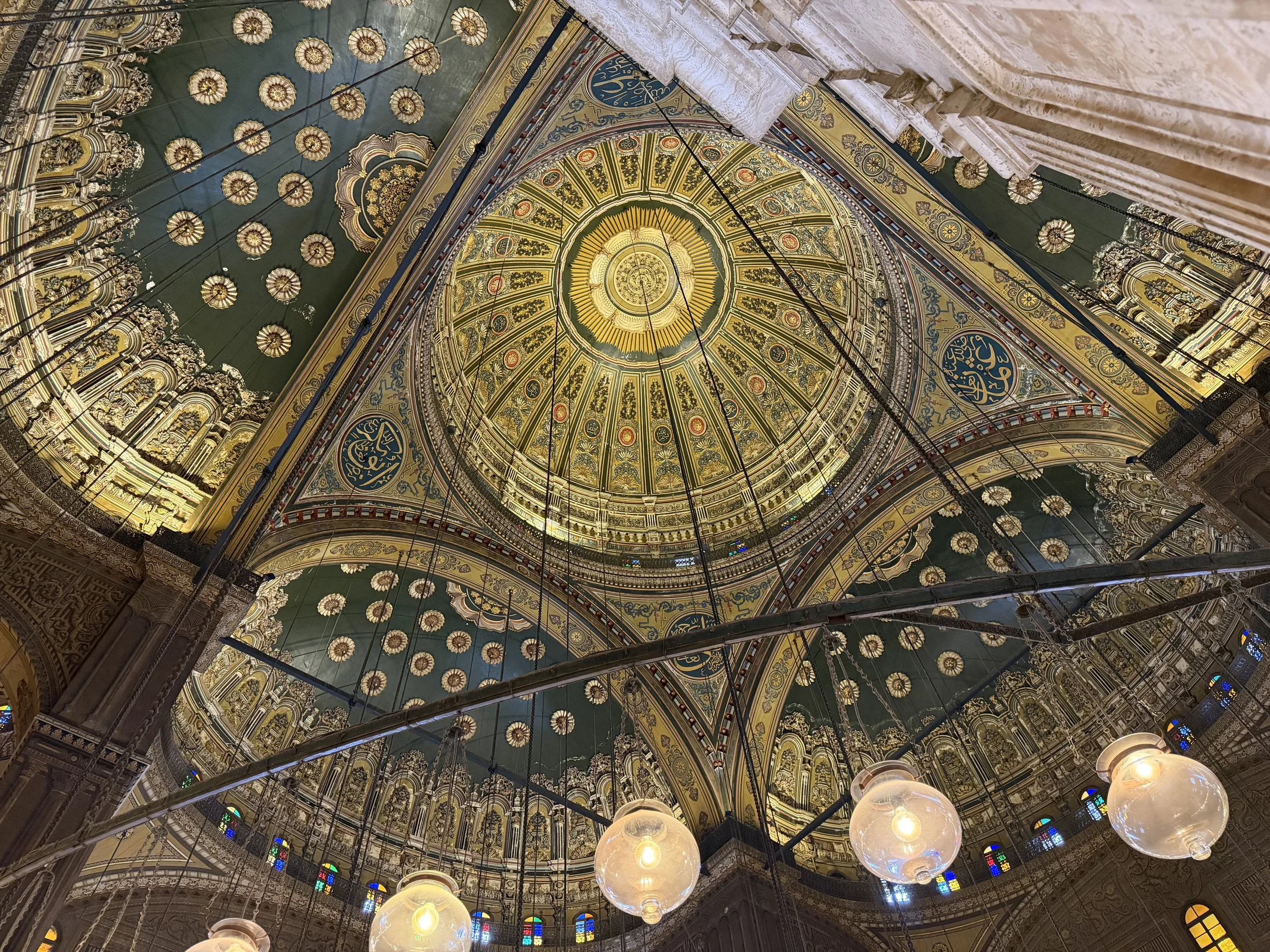
Our final excursion of the day was to the Cairo Citadel, a historic fortified complex that includes an impressive mosque. Our guide explained its history and discussed many aspects of the Muslim faith, including some myth-busting and the differences between Shiite and Sunni Muslims.
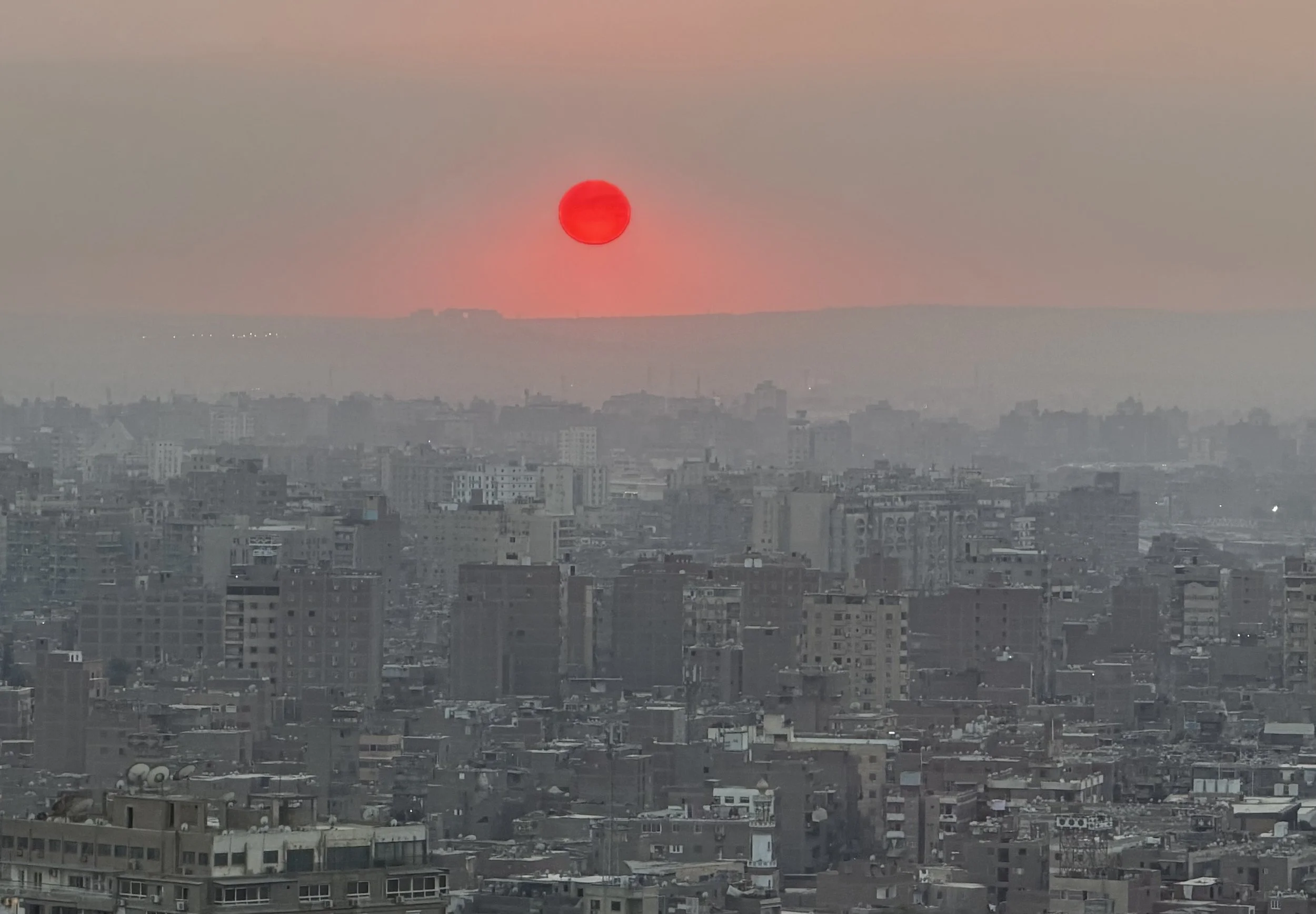
One of the interesting concepts we learned about ancient Egypt was the symbolism associated with the Nile. The East Bank was associated with life and the rising sun, while the West Bank was associated with death and the setting sun. Temples and places of worship were commonly built on the East Bank, while tombs and pyramids were concentrated on the West Bank.
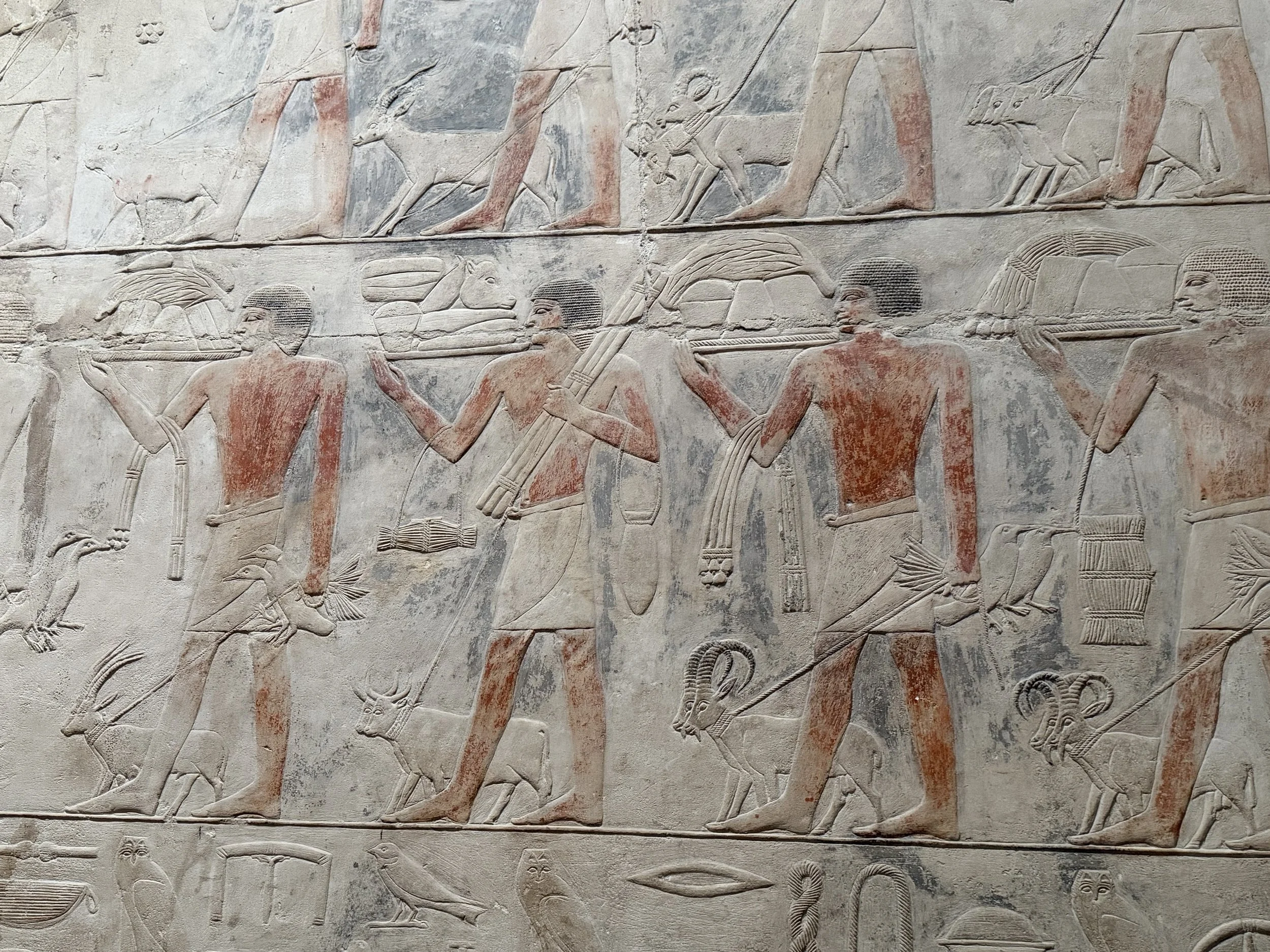
Egypt’s rulers, the pharaohs, prepared enormous structures to protect their bodies and the many personal items they believed they would need in the afterlife. These included clothing, furniture, food and drink, jewelry, gold, and linens.
Unfortunately, all those valuable possessions made the tombs lucrative targets for tomb raiders. Many tombs show evidence of looting and damage, despite the elaborate efforts made to protect them. On the positive side, Egypt has ongoing efforts, working with academic institutions, preservation organizations, and UNESCO, to conserve and restore its historic treasures.
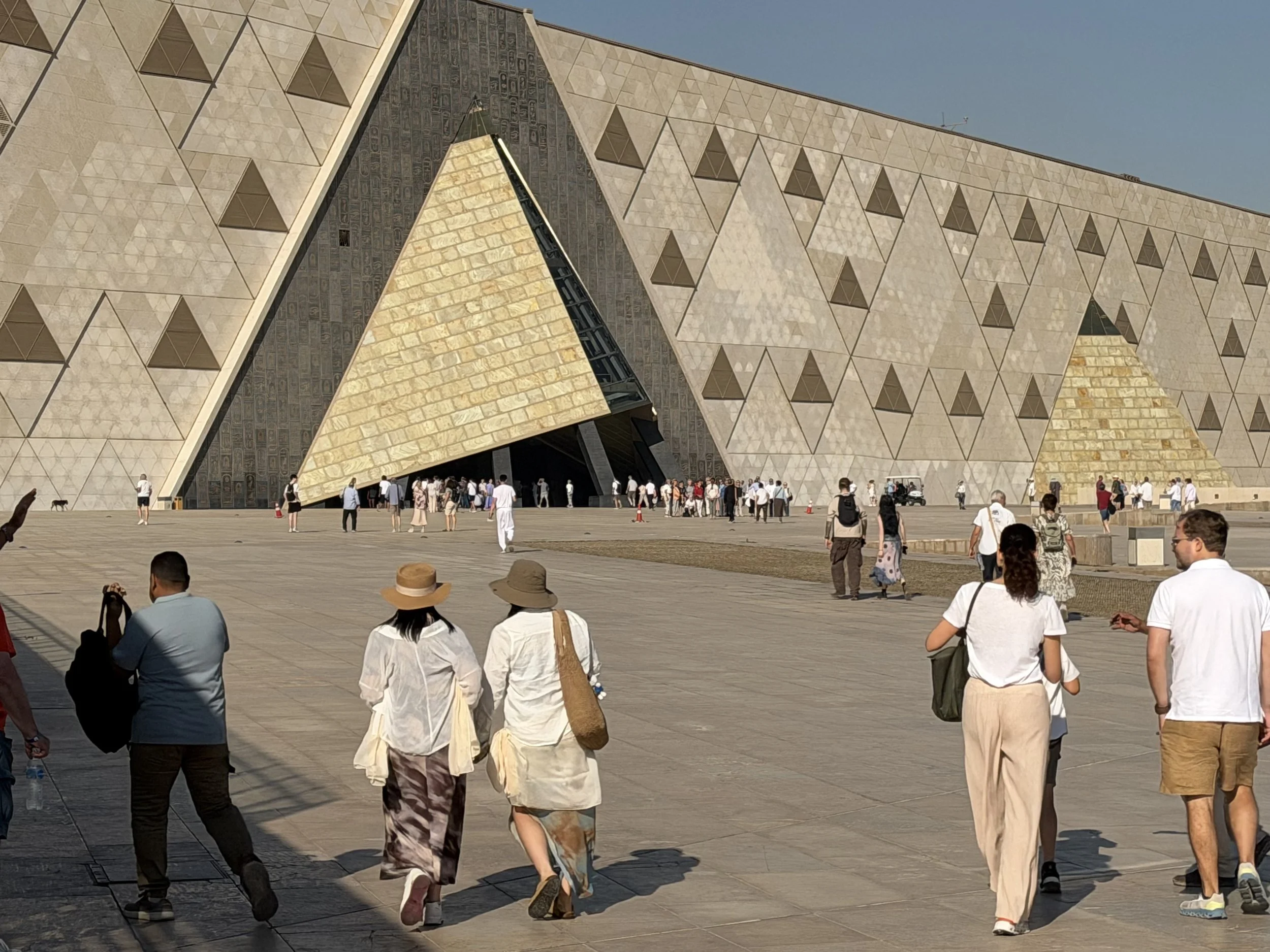
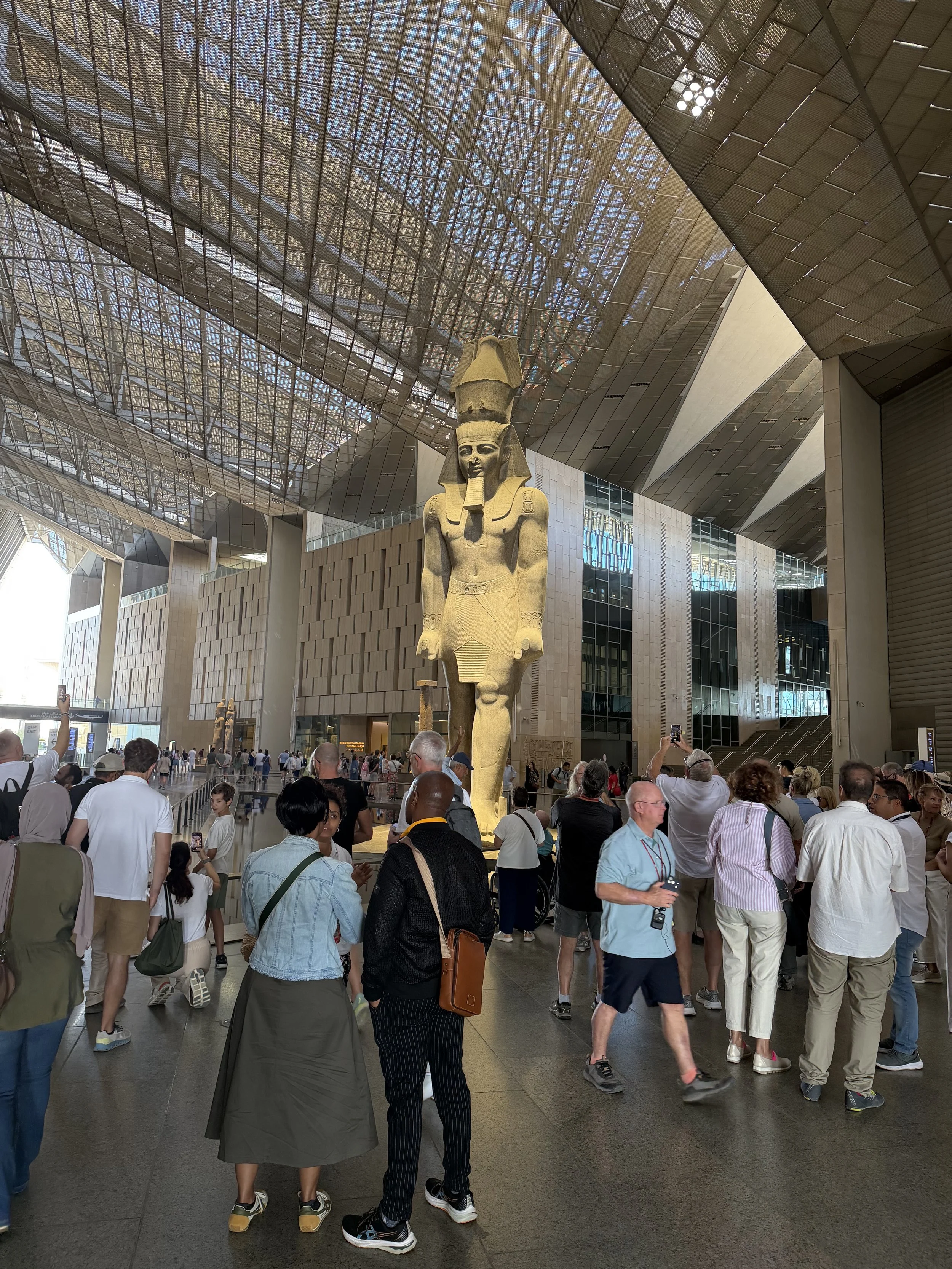
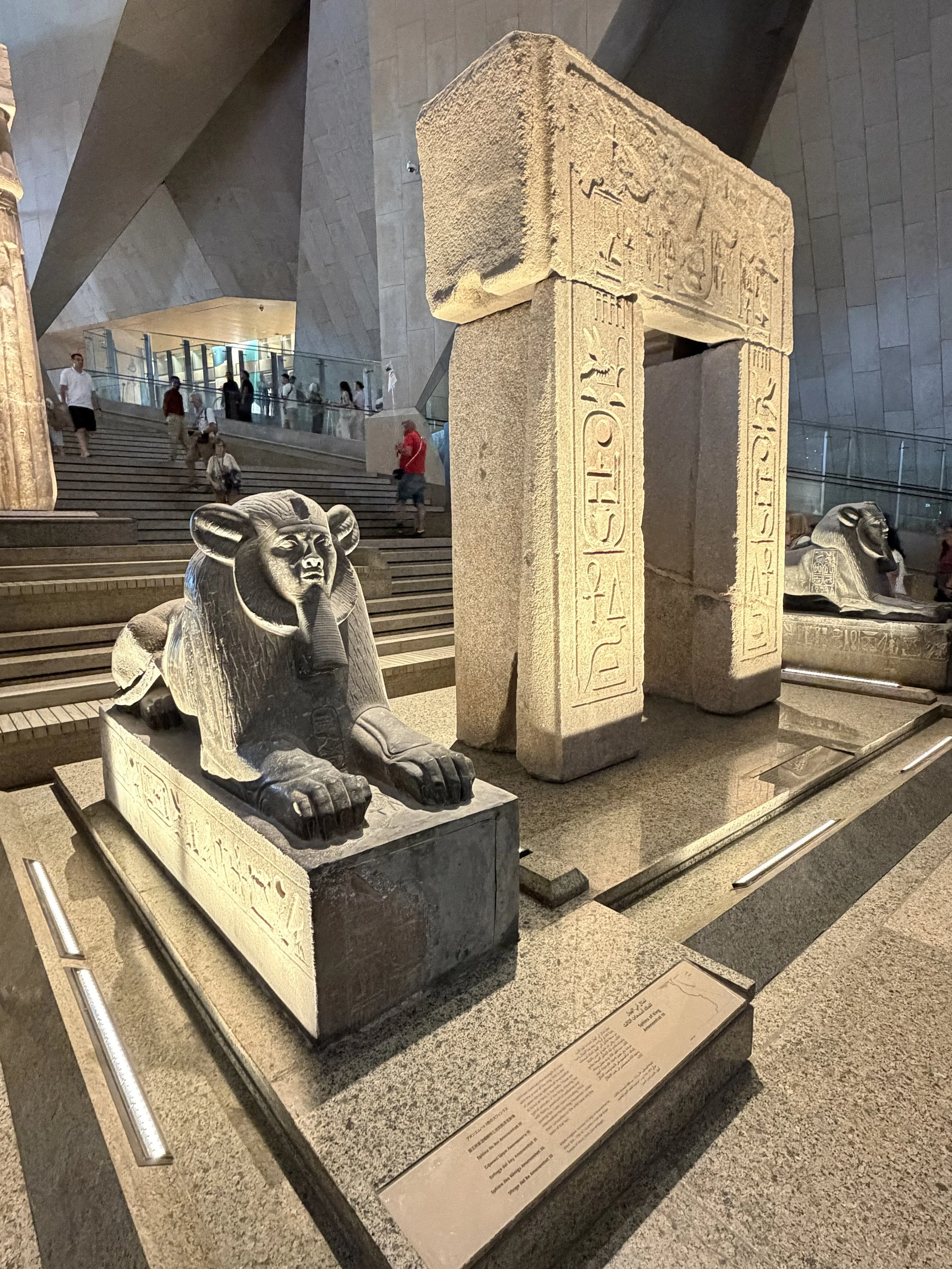
Day 3 began with a morning visit to the Grand Egyptian Museum (GEM) which opened to the public in November 2025. This enormous museum occupies a vast complex near the Giza Pyramids. Its collections include thousands of authentic artifacts from ancient Egypt, with a major section dedicated to the treasures from King Tutankhamun’s tomb.
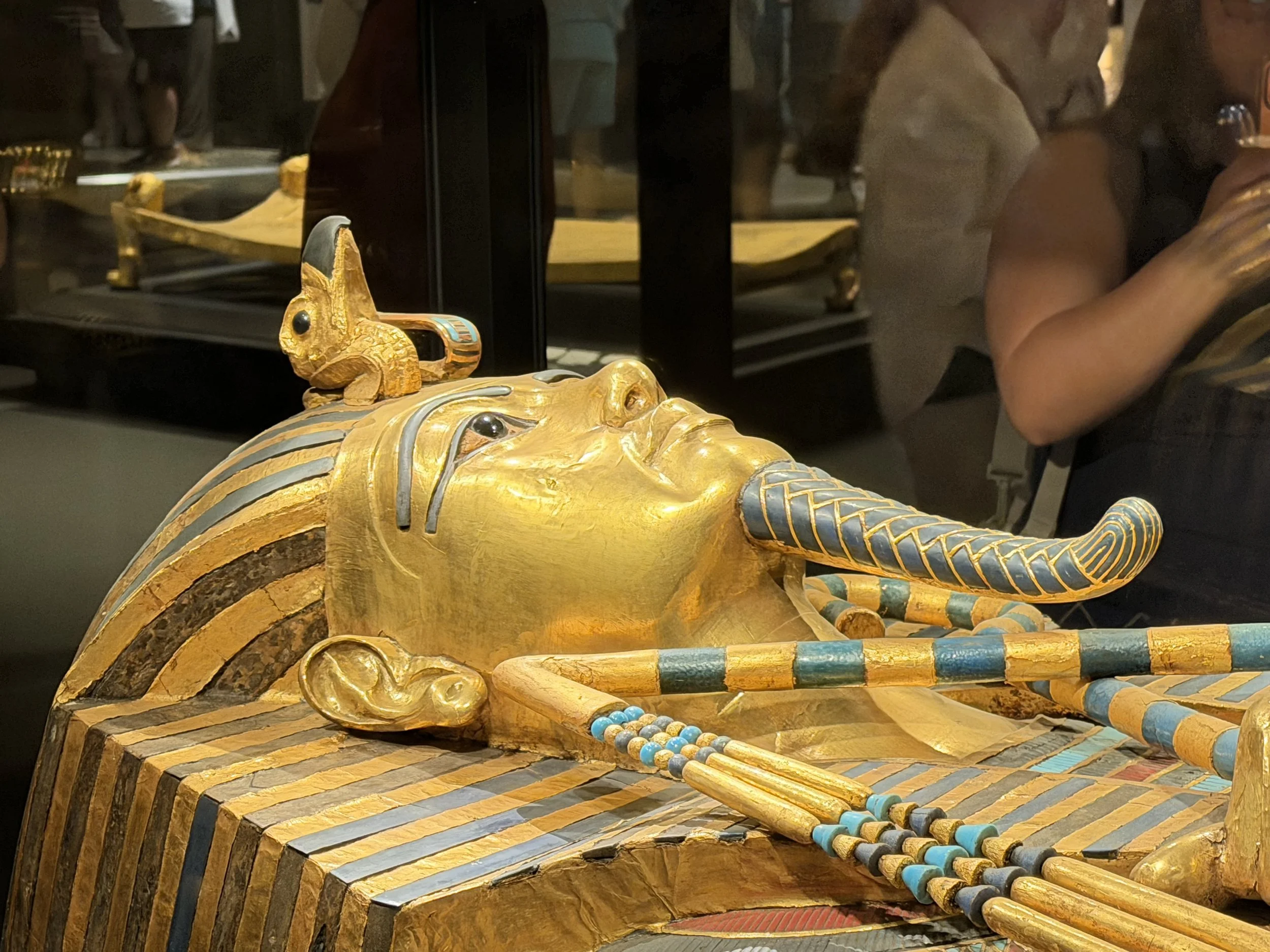
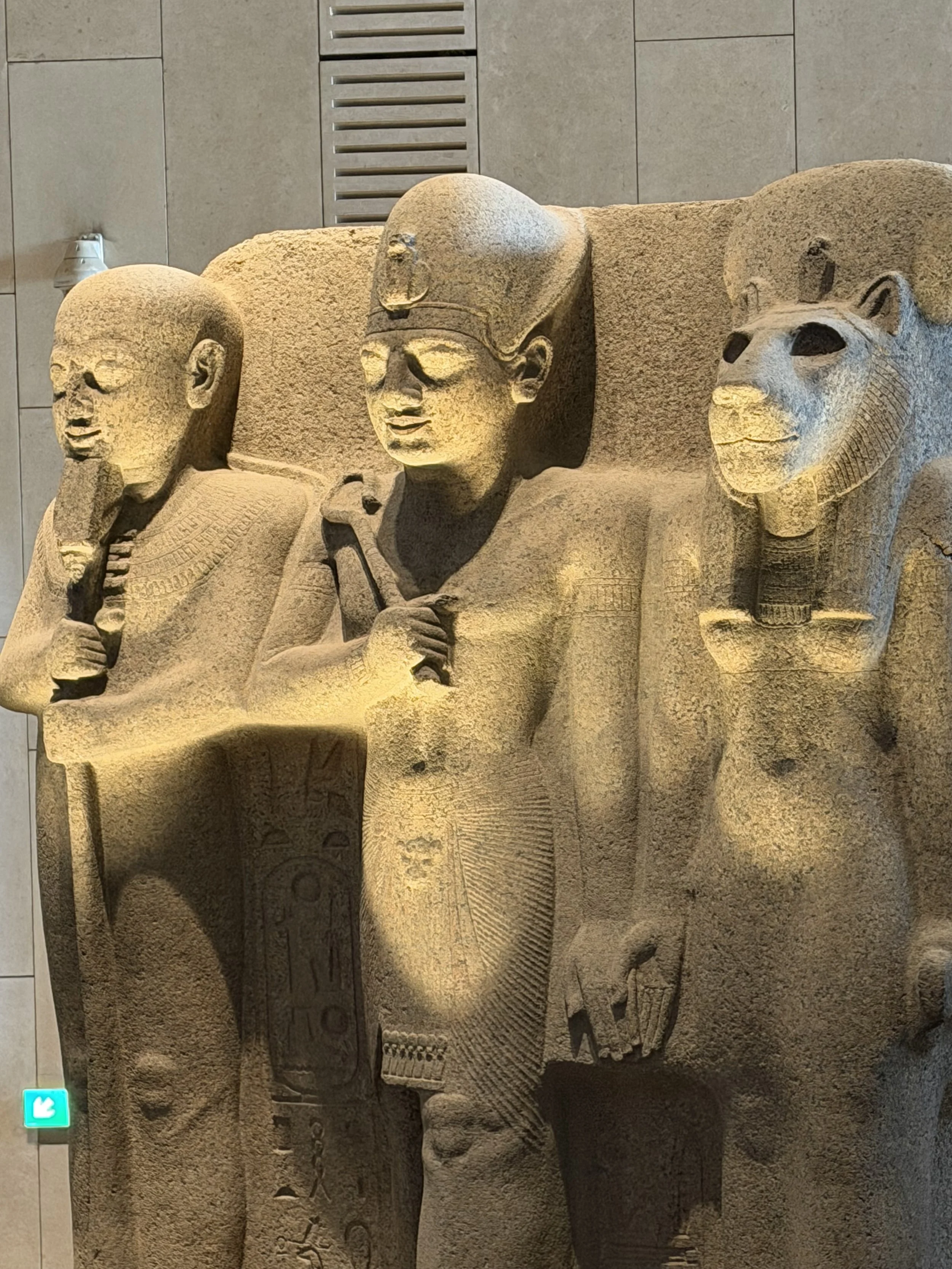
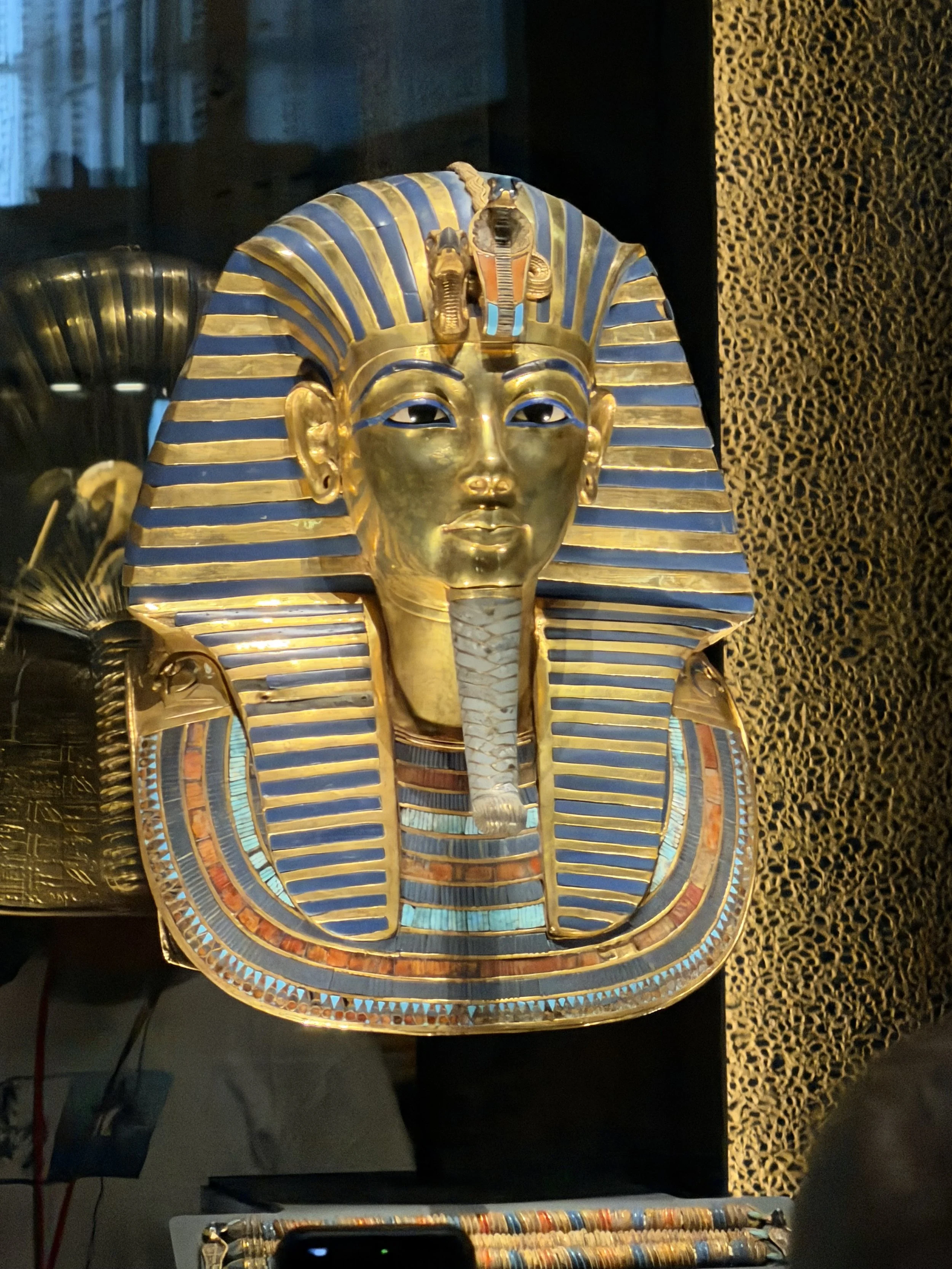
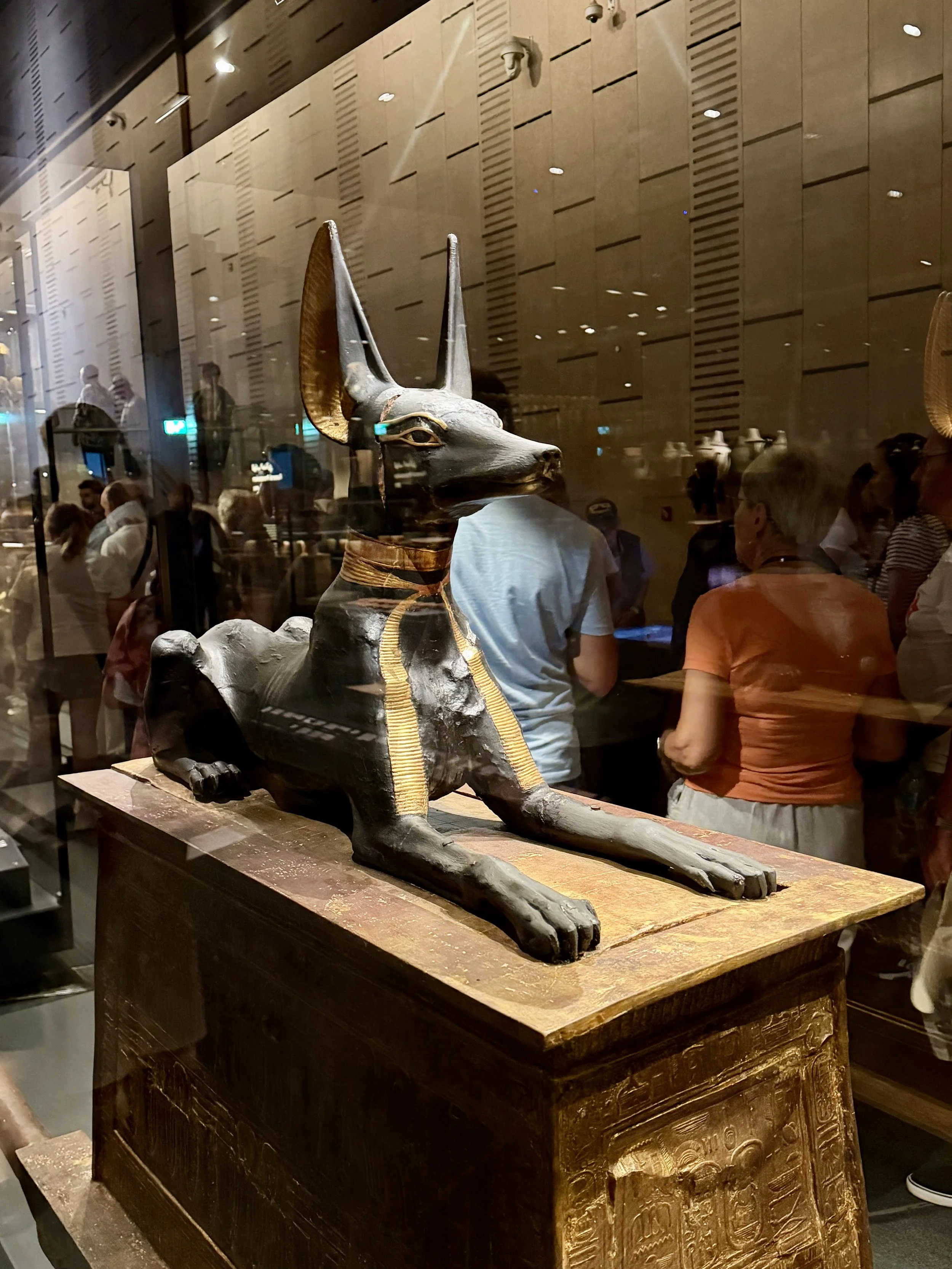
His burial garments, personal jewelry, furniture, nested coffins, and magnificent gold-covered masks and cases are among the items on display. We were told that King Tut became so well known in the modern world because his tomb was discovered largely intact. Earlier tomb discoveries had often revealed evidence of extensive looting, with much of the gold and jewelry already stolen.
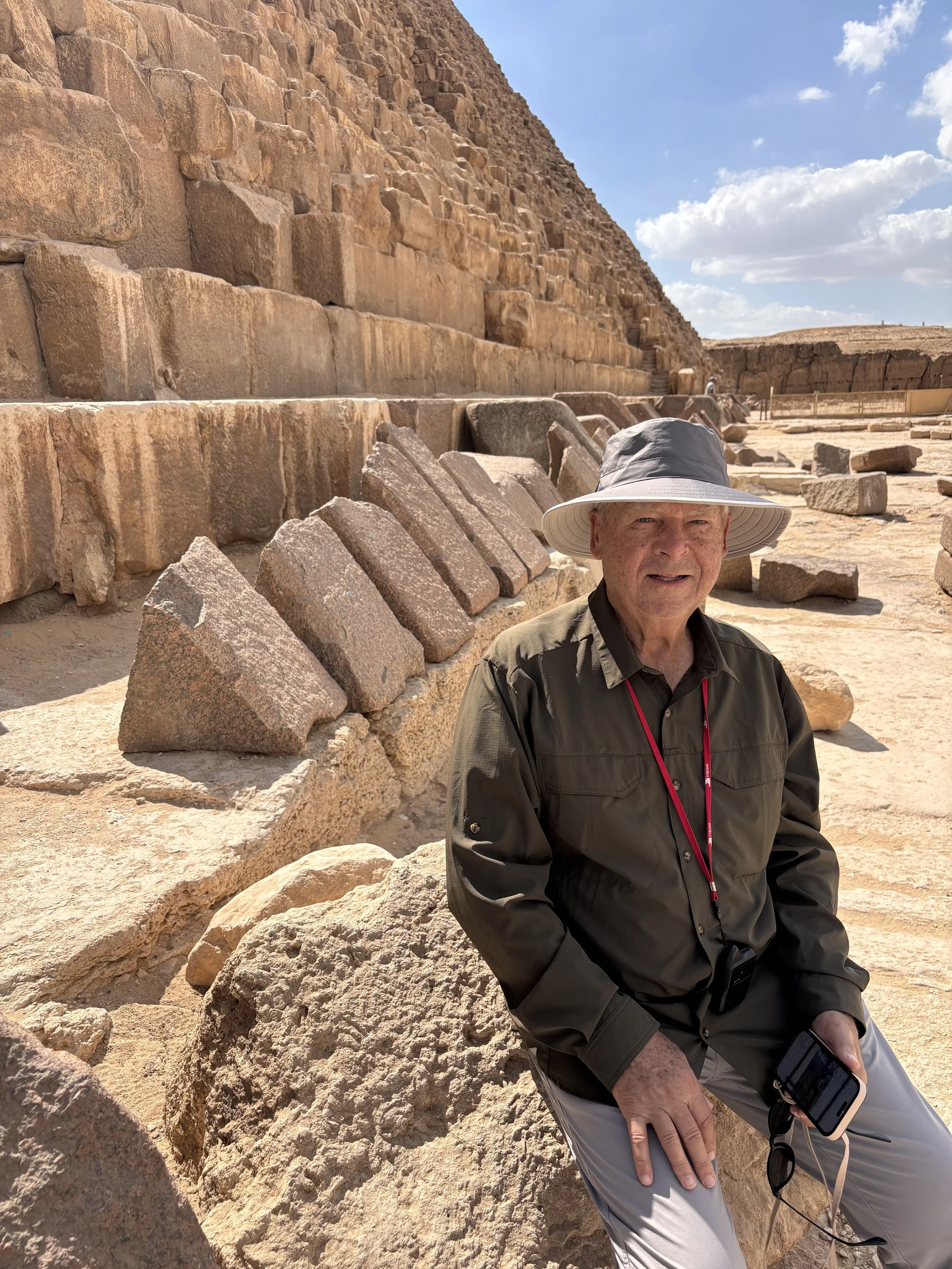
After leaving the GEM, we traveled a short distance to the Giza Pyramids and the Sphinx.
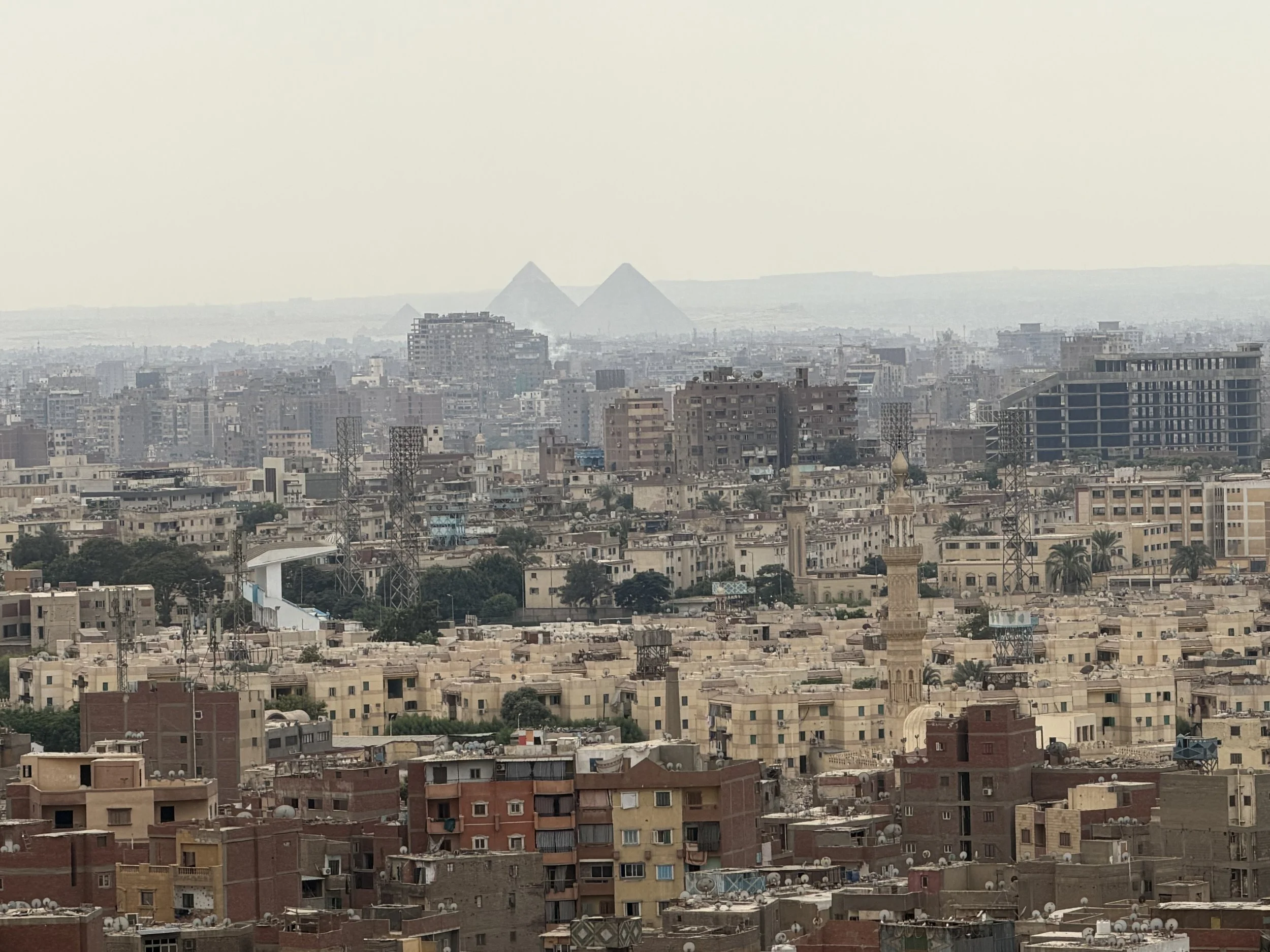
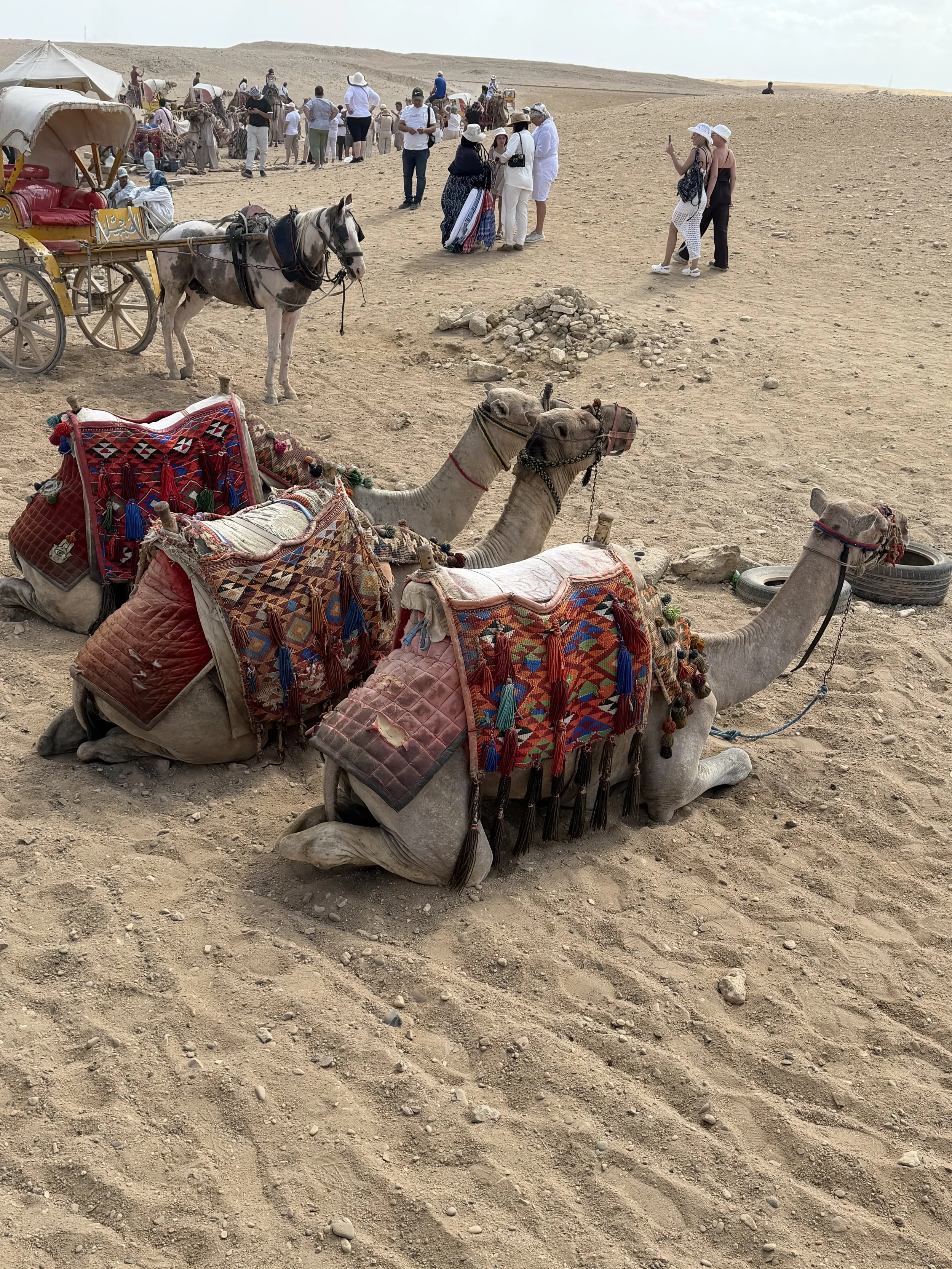
We were offered camel rides at the pyramids, and most of our group accepted. We were warned to “hold on tight” because camels can make sudden, unpredictable movements when getting up or sitting down. It was great fun, but the advice was spot-on!
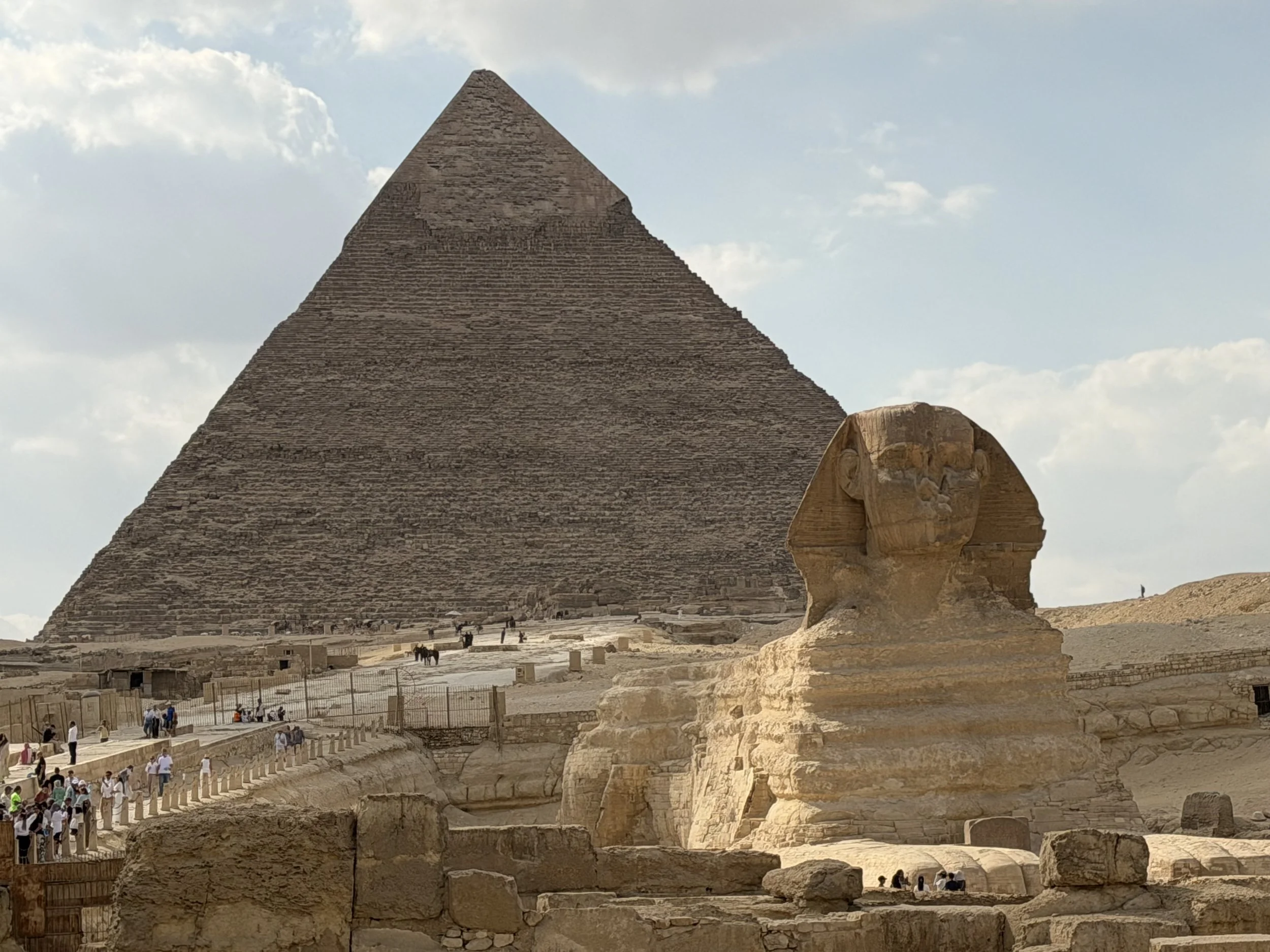
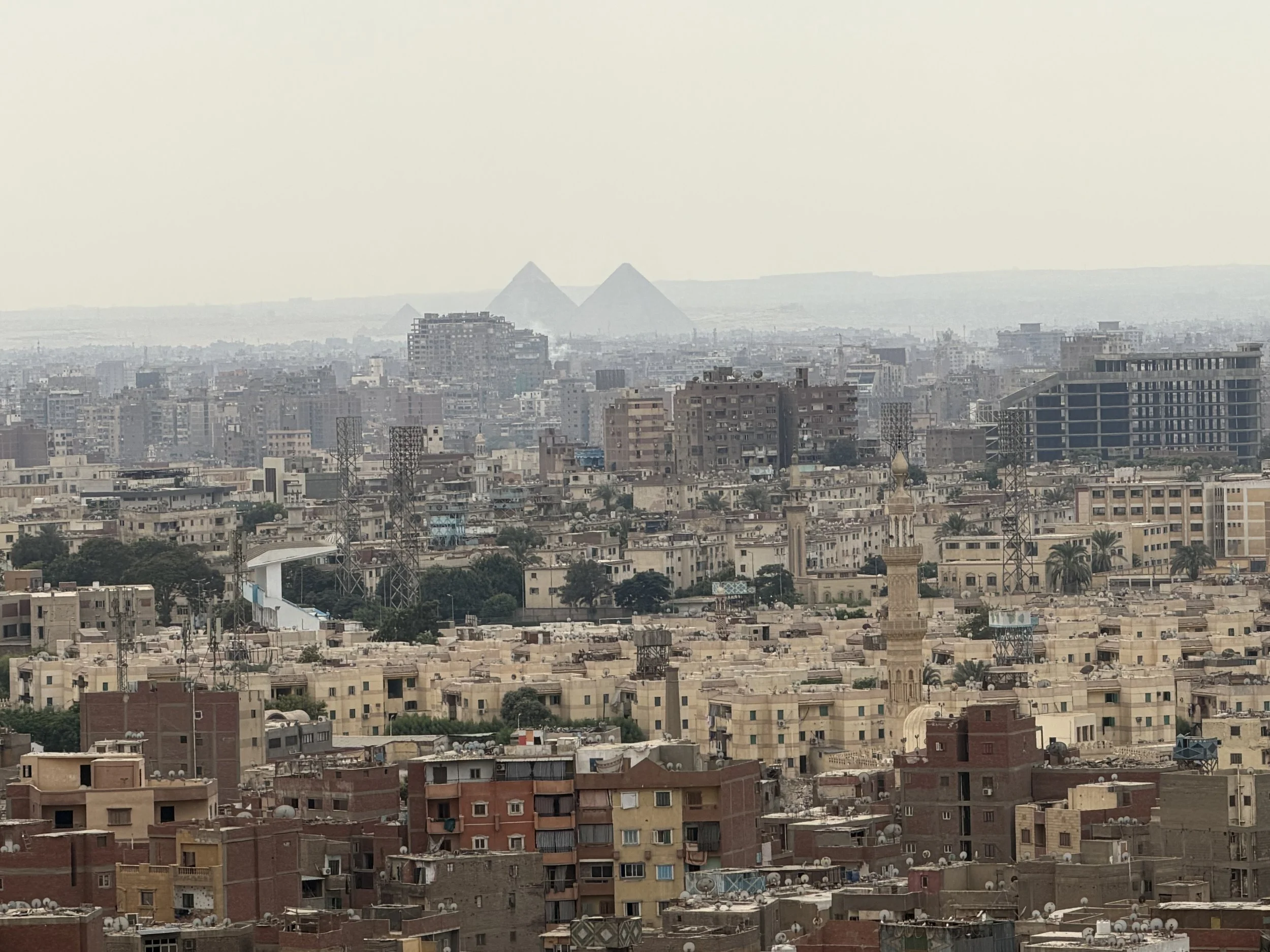
Afterward, our guide explained the history of the pyramids at Giza and the Sphinx. This was a highlight of the trip—a dream come true to see these iconic structures up close. We had plenty of time to explore on our own and take photos.
Luxor
Day 4 began with a 4 a.m. wake-up call so we could catch our flight to Luxor. We checked out of the Fairmont and boarded buses for the ride to Cairo Airport. Viking had chartered a plane for our group, which flew us to Luxor.
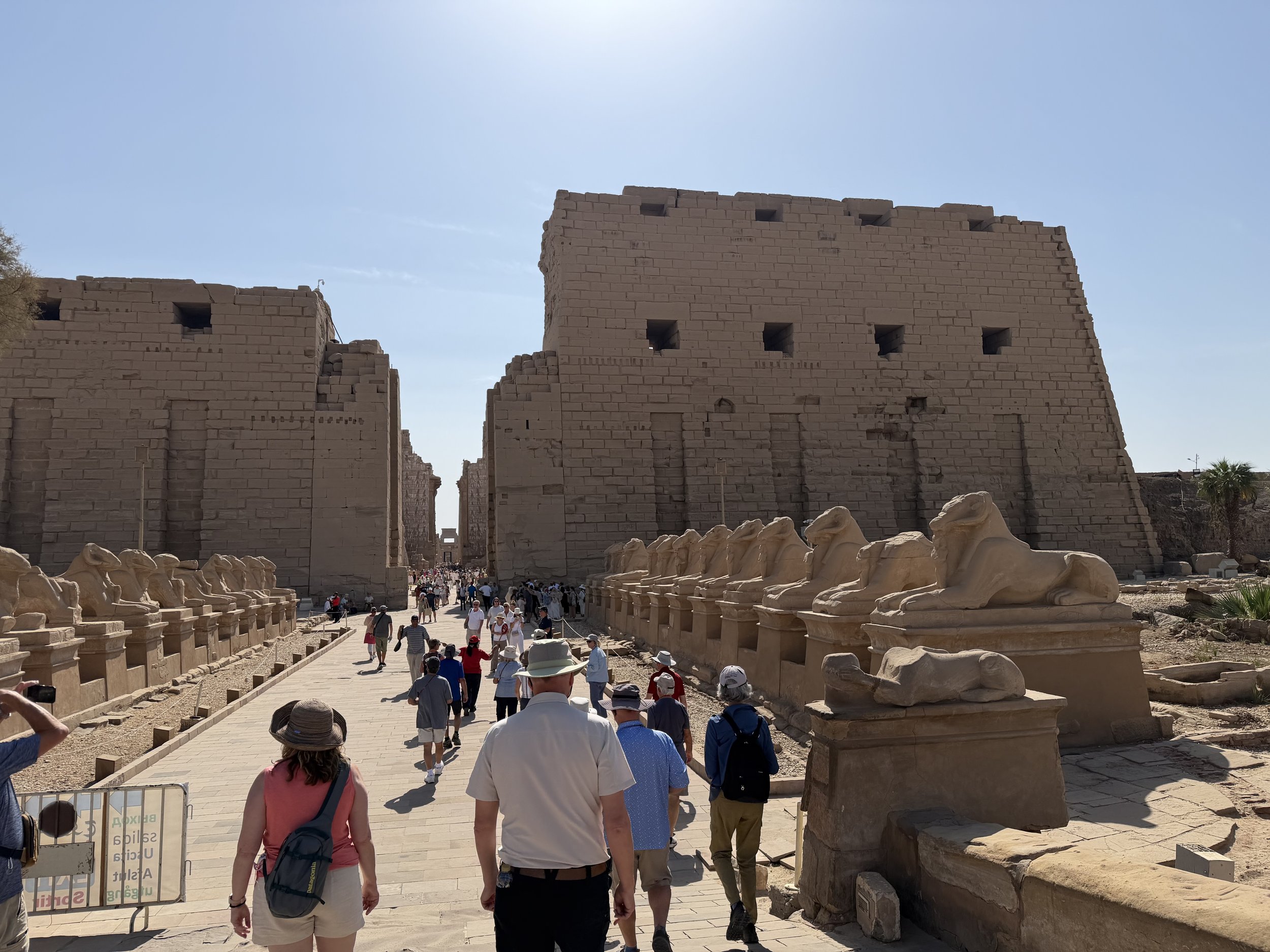
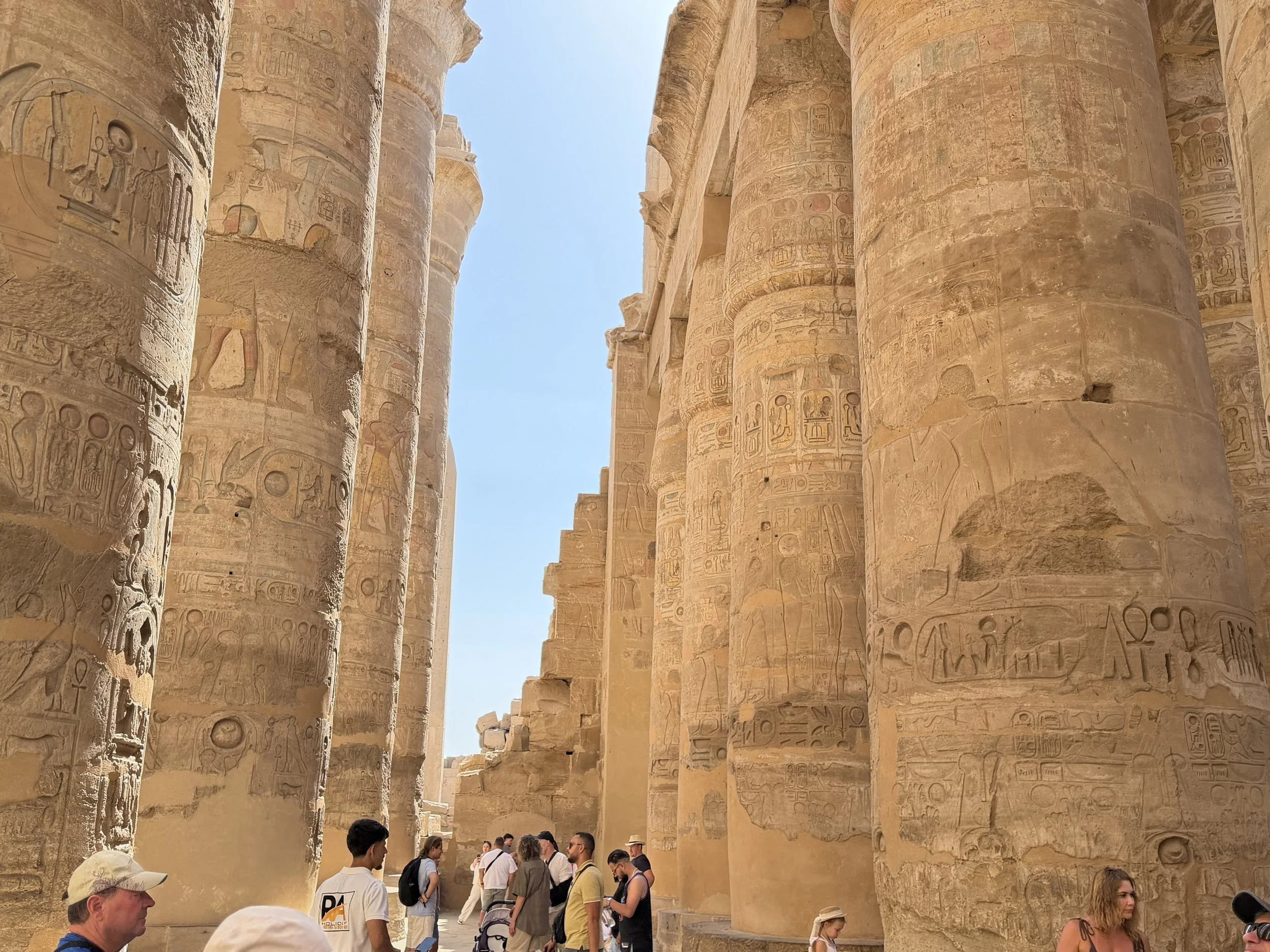
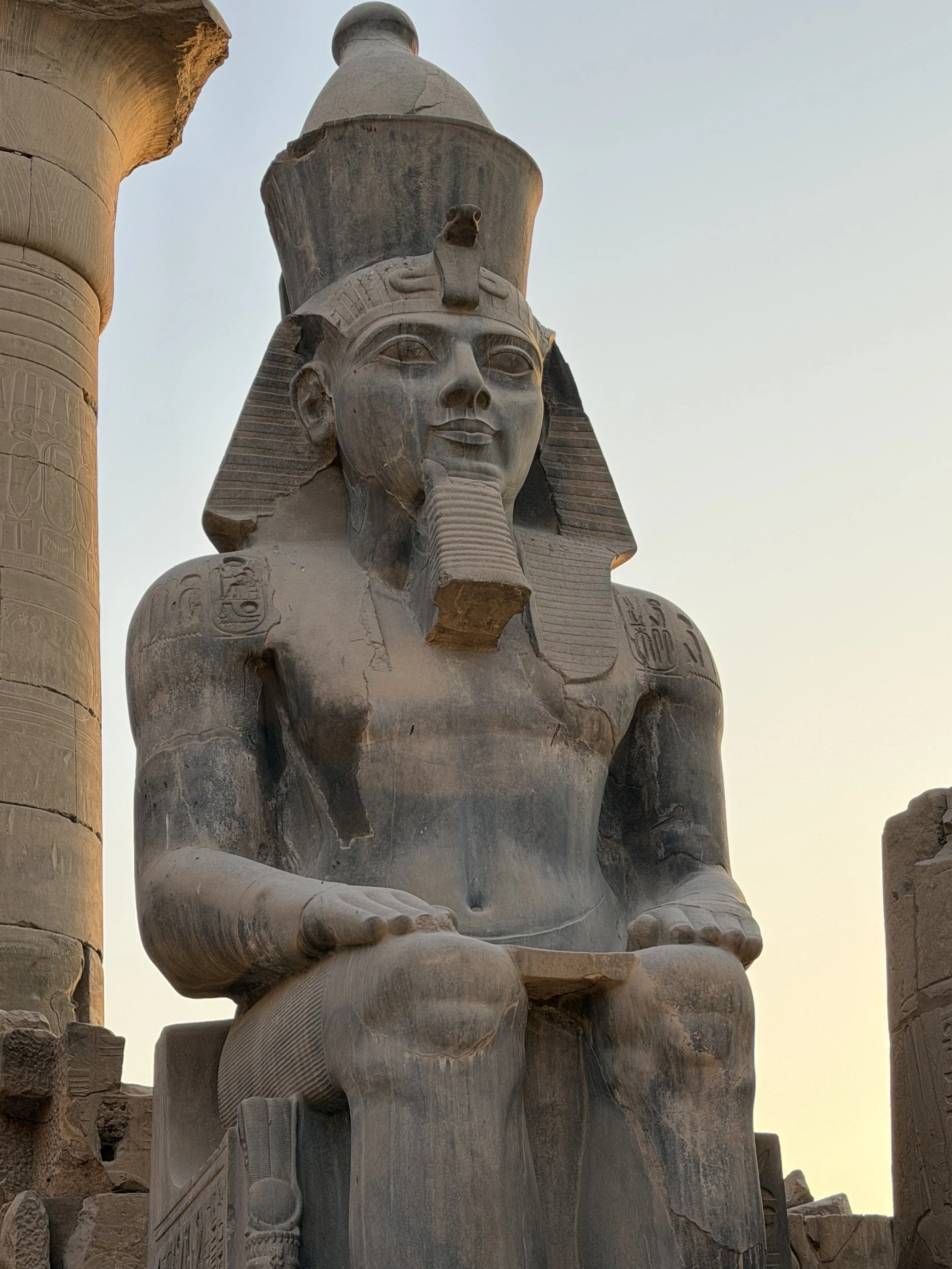
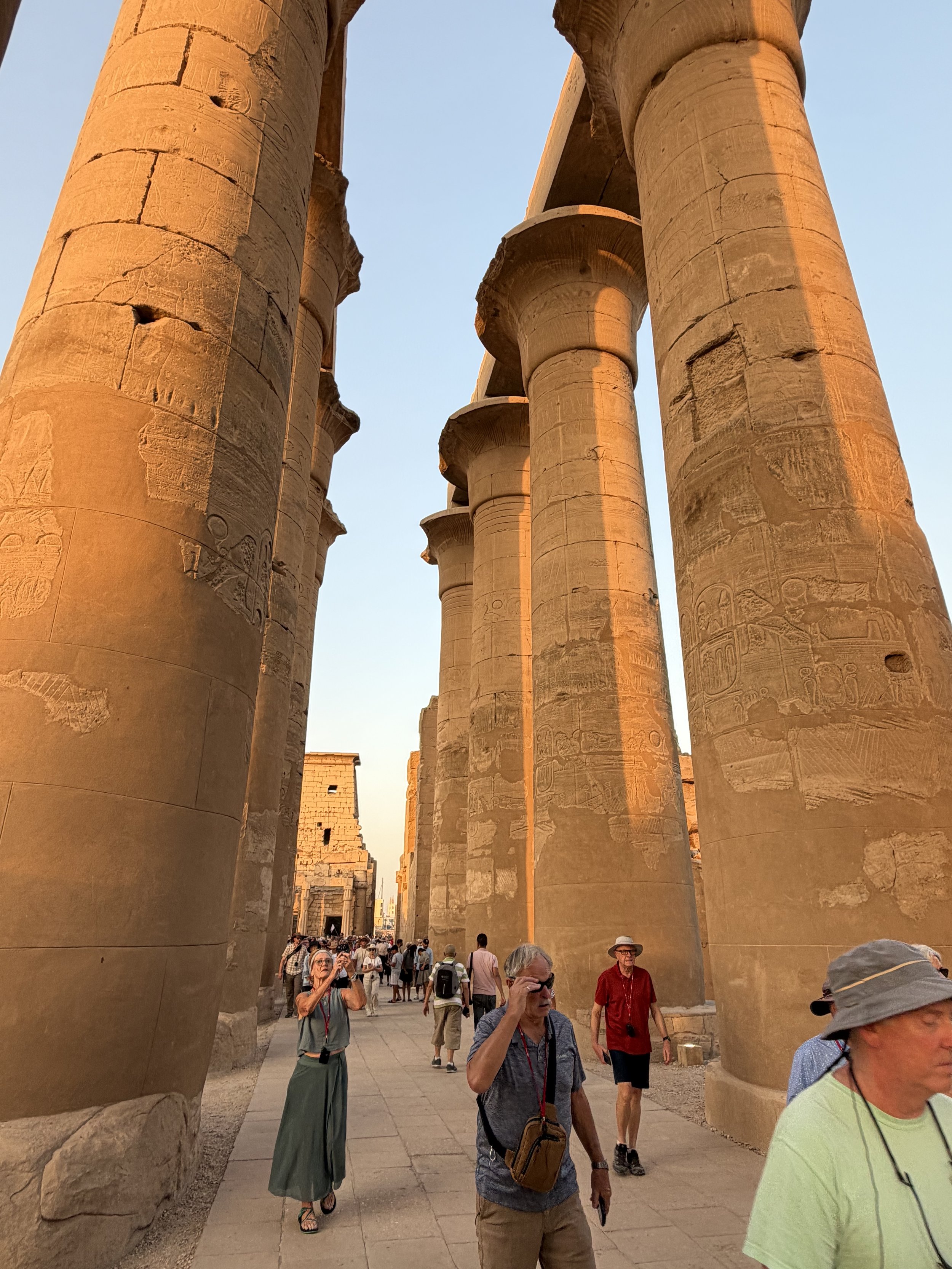
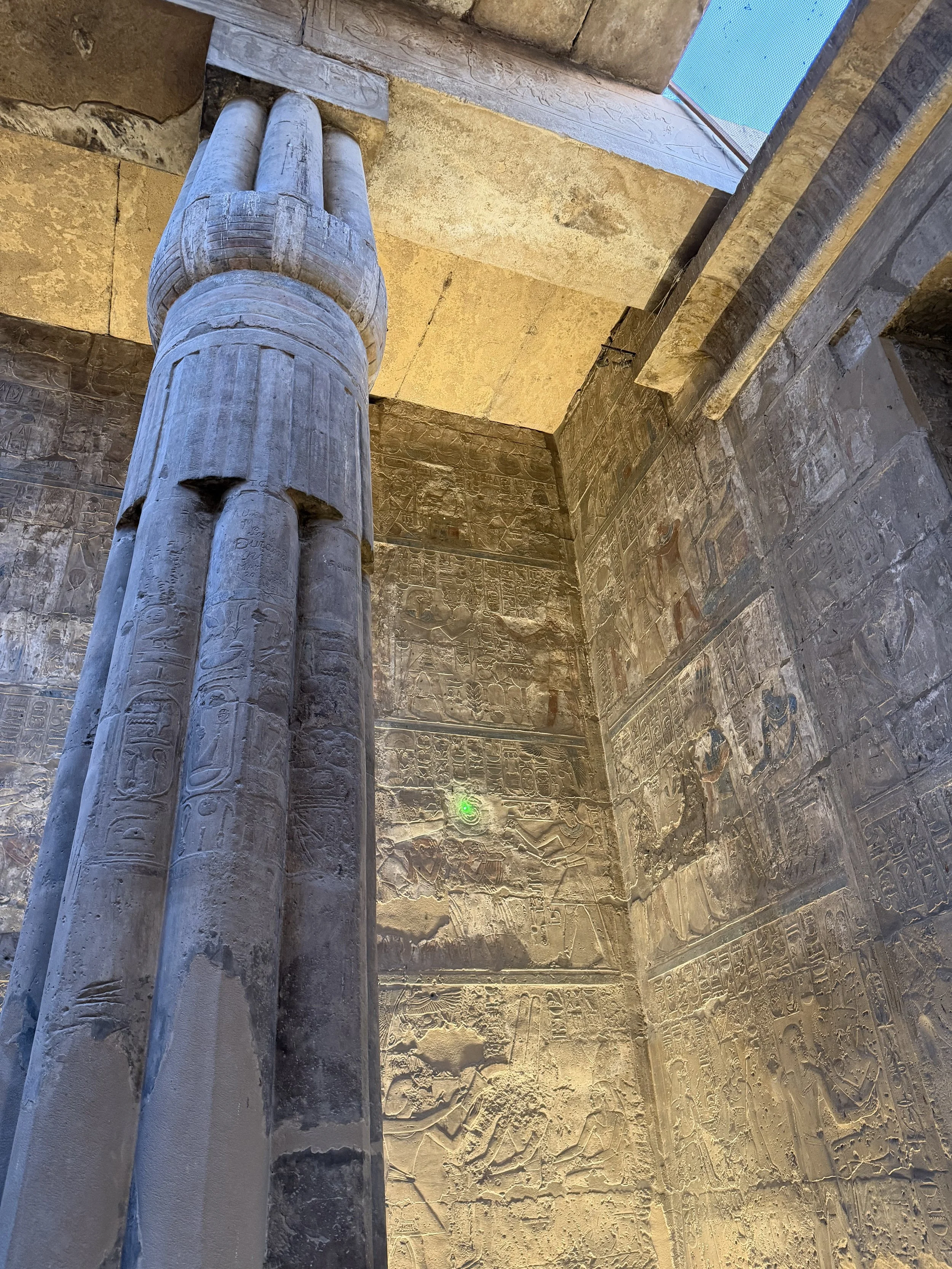
After landing, we went directly to Karnak Temple, one of Luxor’s most famous ancient sites. Luxor is home to an extraordinary concentration of Egyptian history and is part of a UNESCO World Heritage Site. Later in the day, we visited Luxor Temple, another enormous and impressive complex.
Both temples were built on the East Bank of the Nile, consistent with the ancient Egyptians’ association of the East with life.
After our morning visit to Karnak Temple, we boarded our new home for the next seven days: the Viking Aton.
The Viking Aton
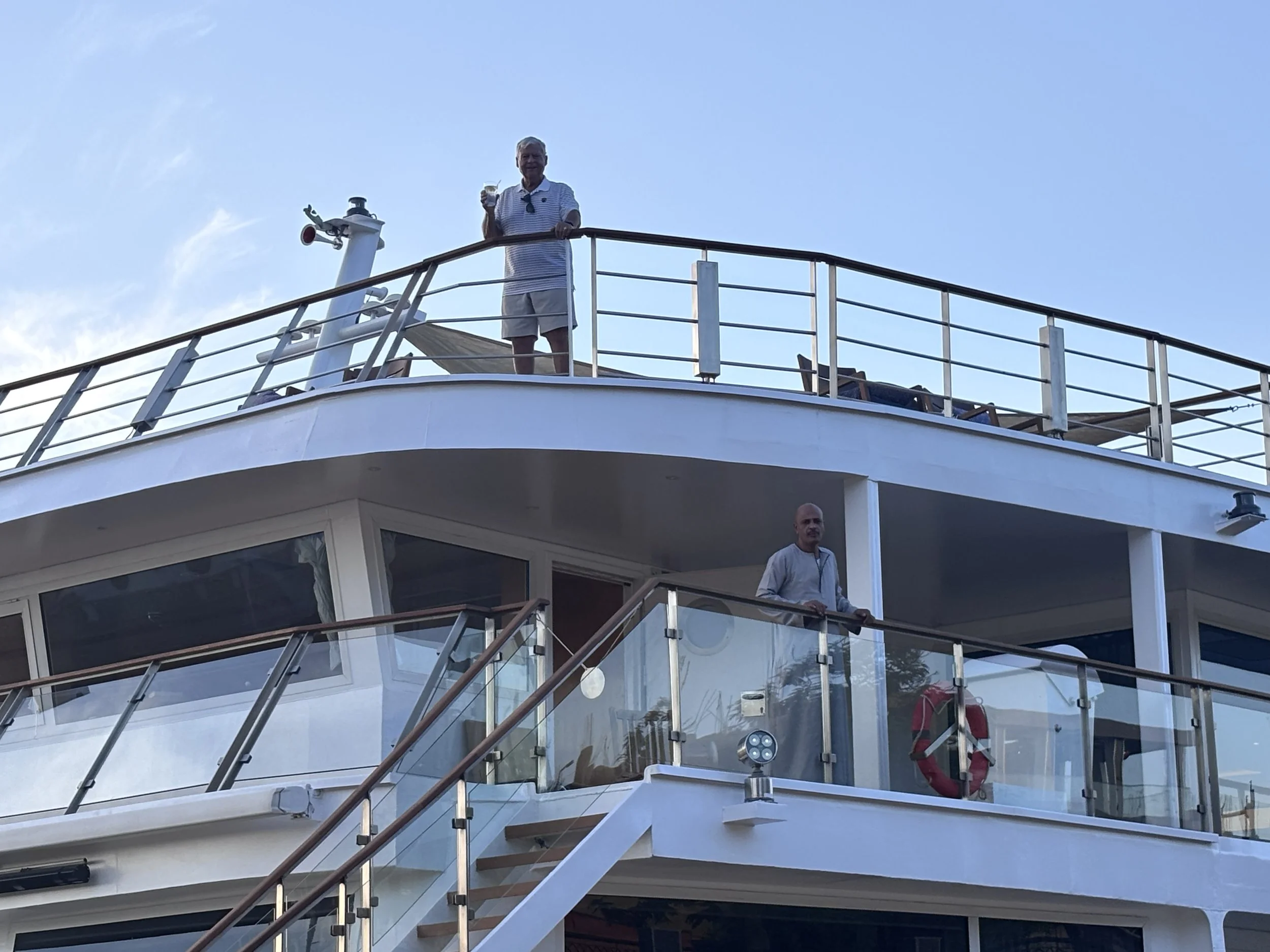
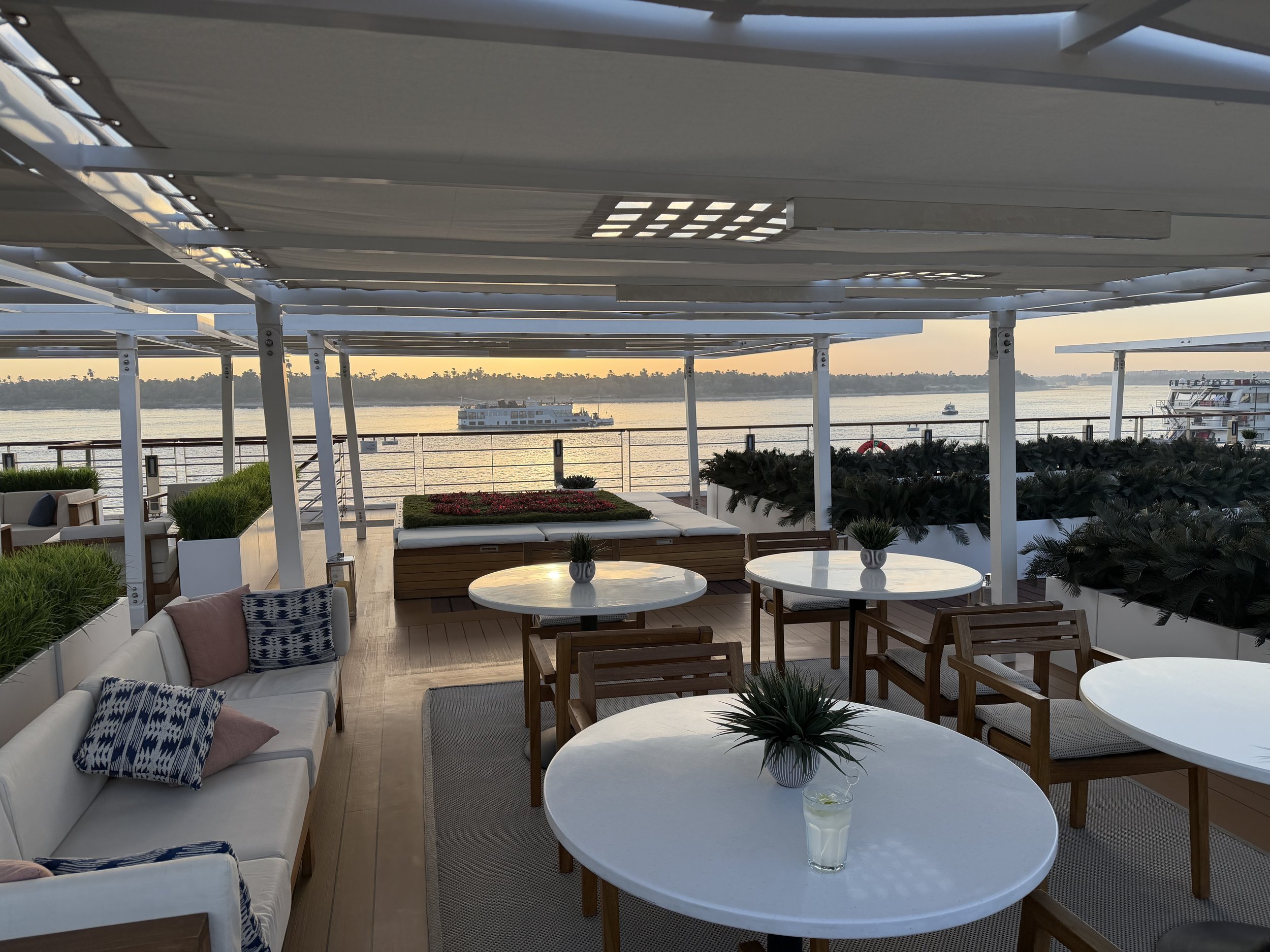
Like other Viking ships, the Aton was beautiful, luxurious, and highly functional, with Scandinavian-inspired design. To us, it looked brand-new—as if it had just come from the shipyard. It was smaller than other river or ocean ships, holding just 82 guests and a crew of 48. The fleet for the Nile River was specially built for that purpose.
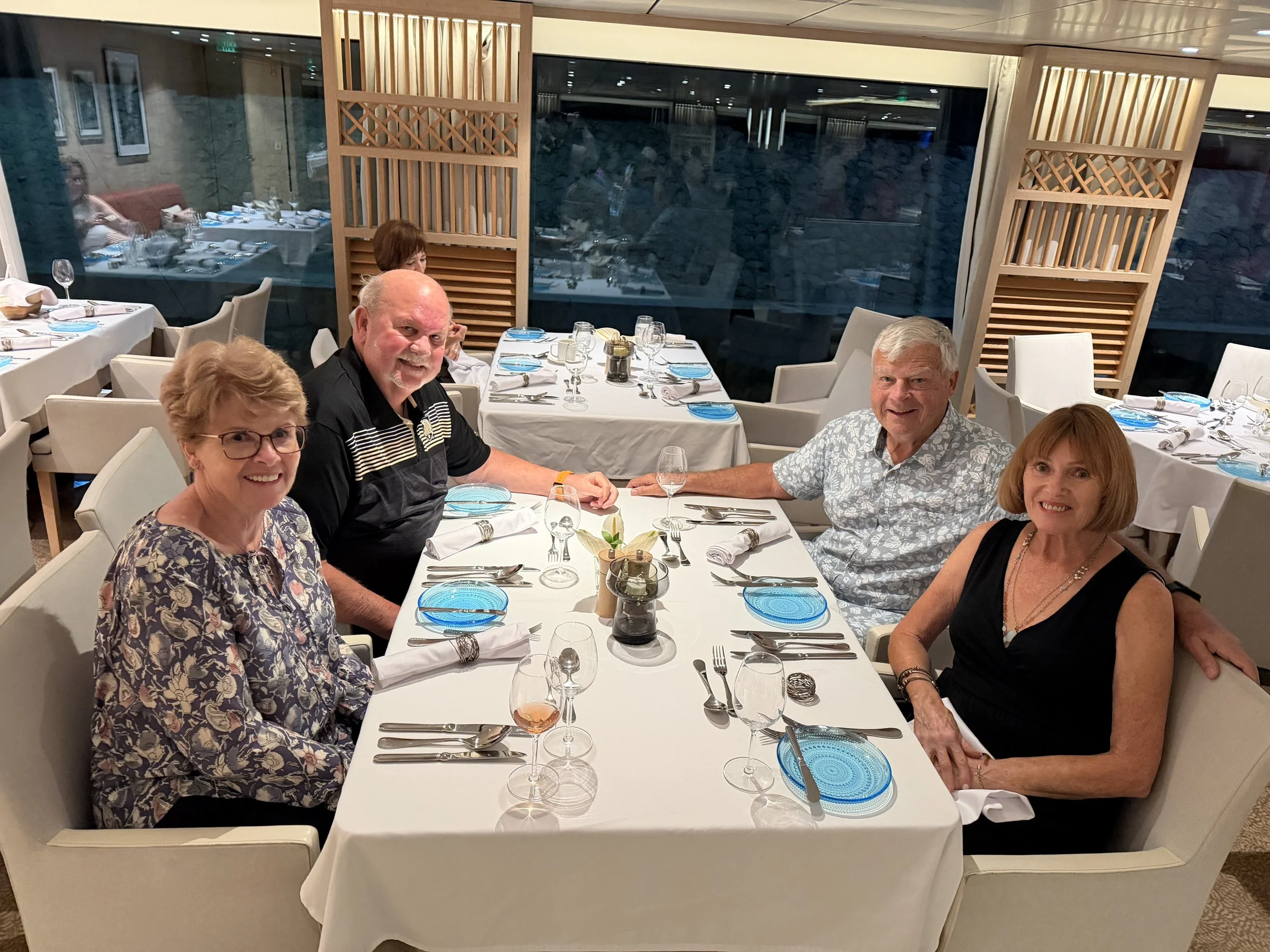
The ship was very comfortable, and the staff were exceptionally friendly, always looking for ways to do more for their guests. Each evening before dinner, there was a “Port Talk” describing the next port of call and the excursions available there.
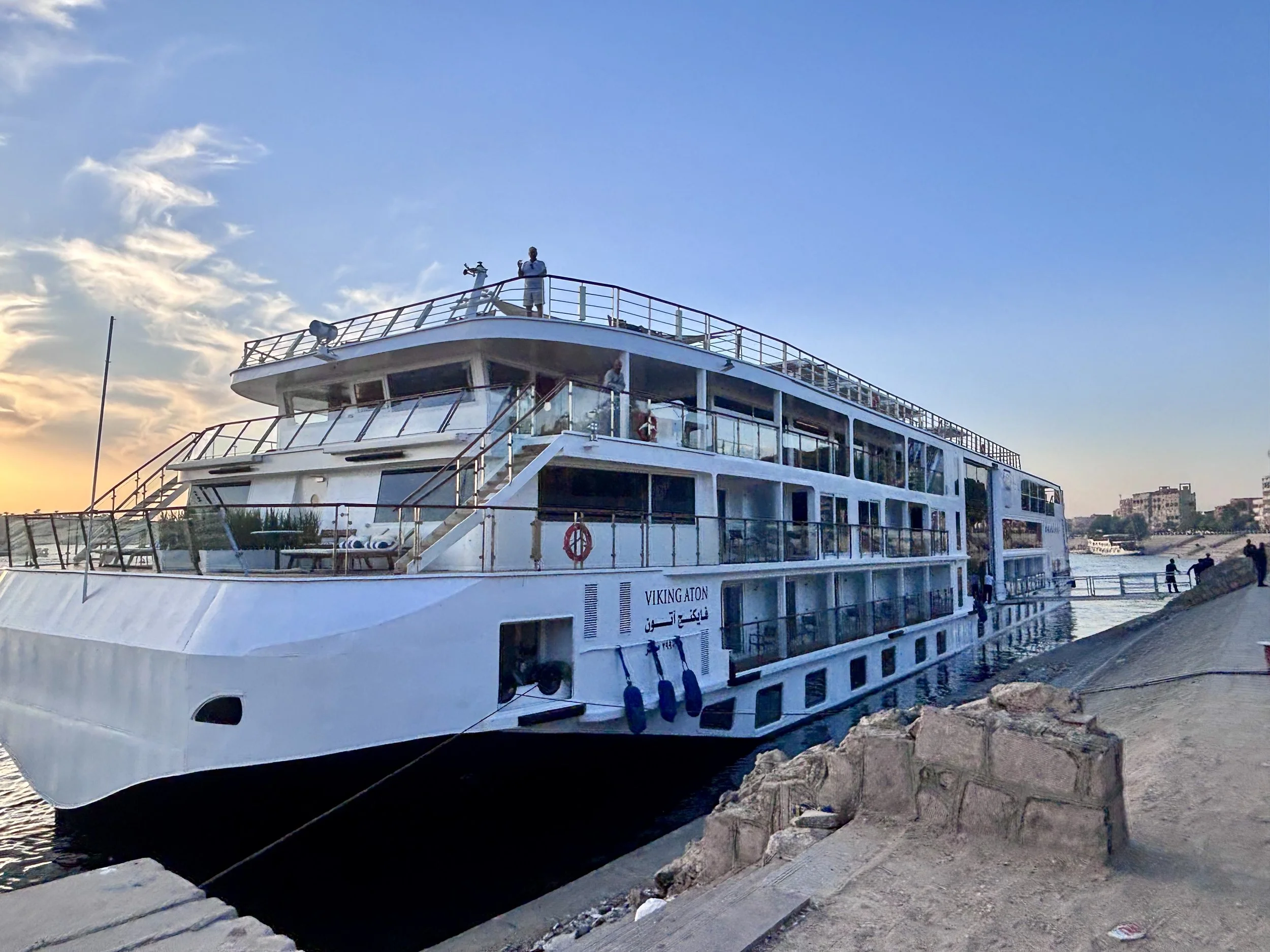
The Viking Aton entered service in August 2023
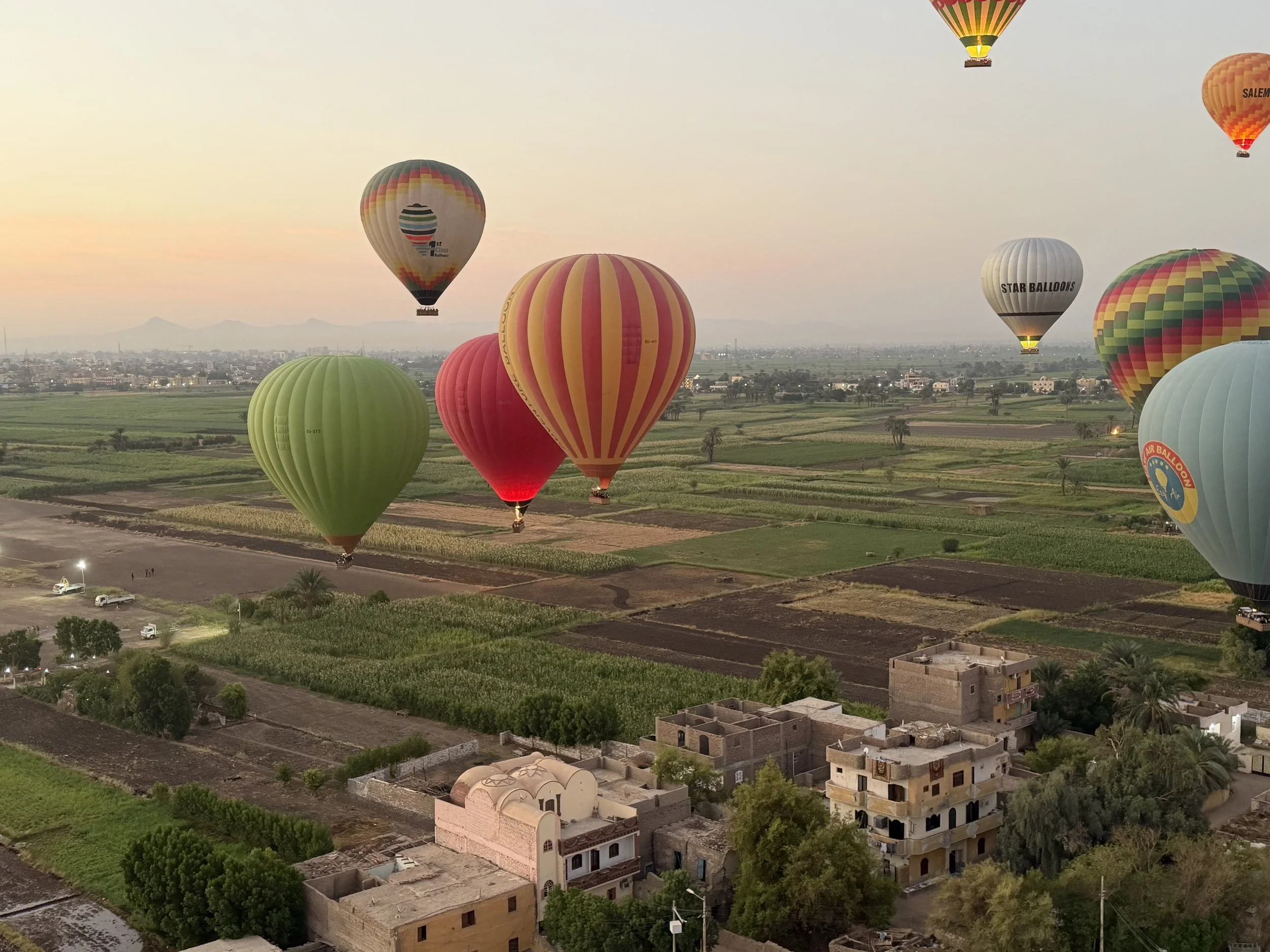
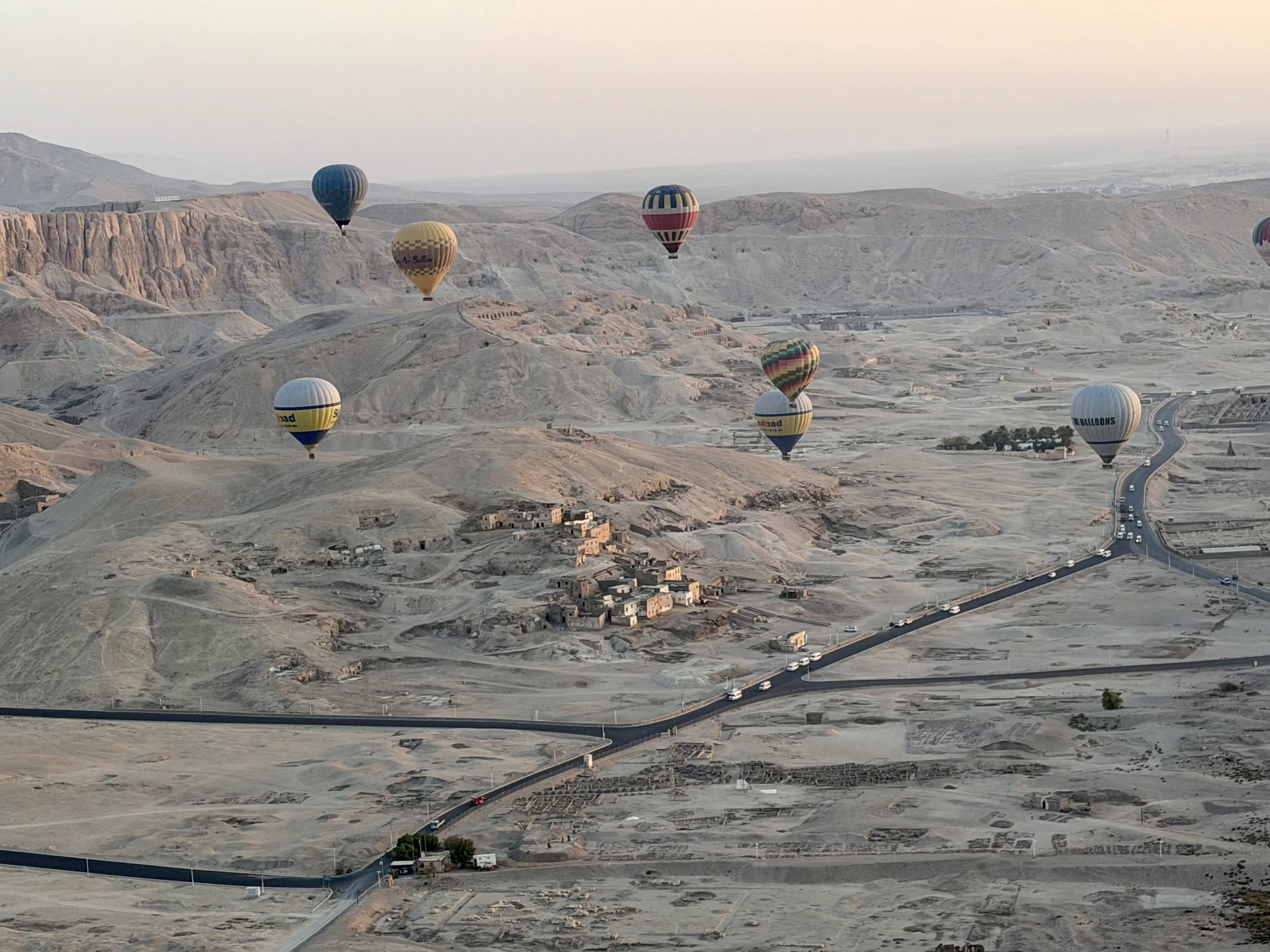
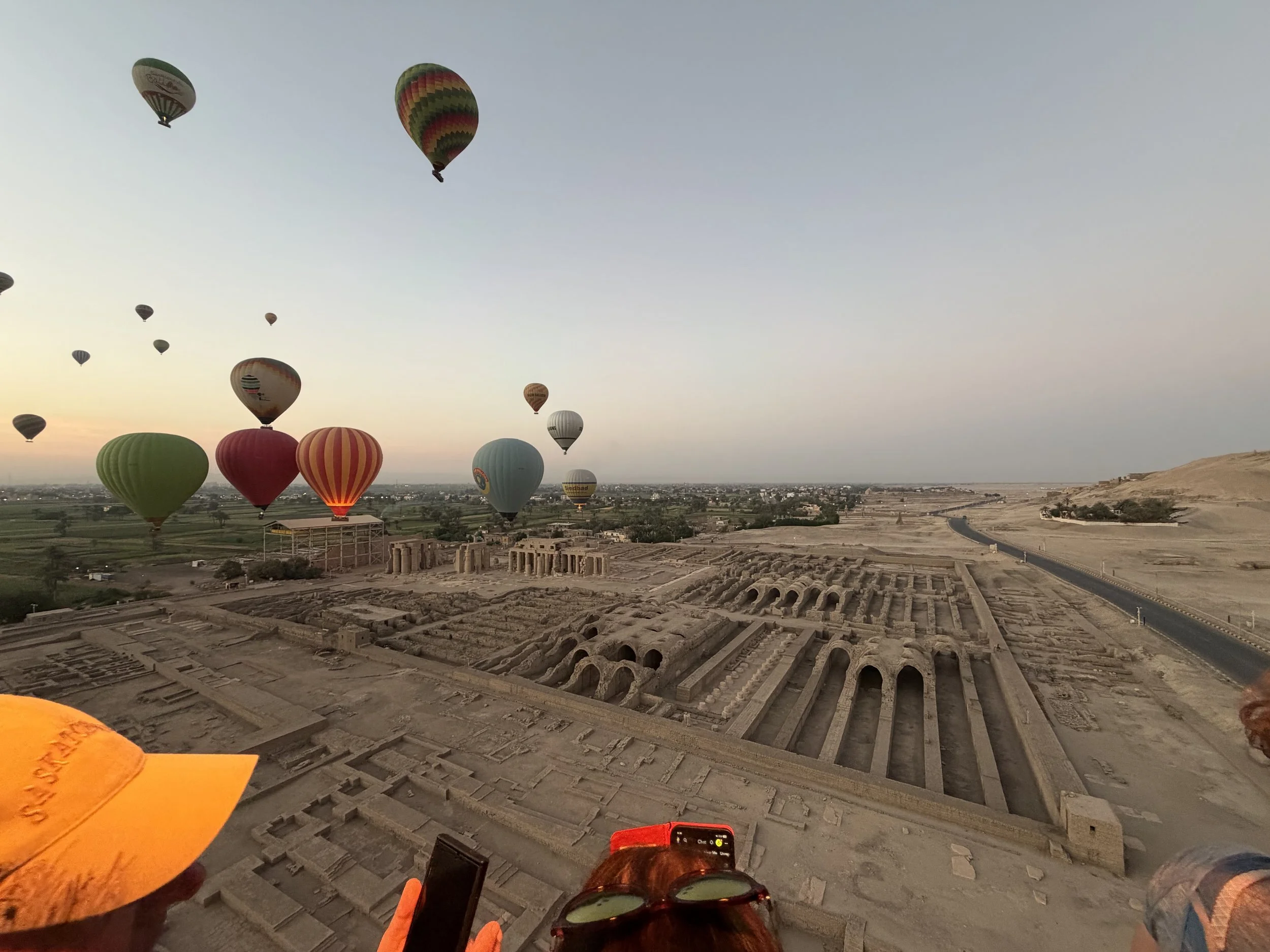
Day 5 began with yet another 4 a.m. wake-up call, this time for a hot-air balloon ride over the West Bank and the Valley of the Kings.
The Valley of the Kings is home to dozens of discovered tombs, including some of the most significant in Egyptian history. The balloon ride was one of the trip’s highlights. Everyone loved it, especially the opportunity to watch the sunrise over the lush green areas near the Nile and the barren desert landscapes where the pharaohs and their tombs lay hidden.
Qena and Dendera
We returned to the Aton for breakfast—and a nap—while the ship sailed north along the Nile toward Qena. Around midday, we traveled a short distance to Dendera Temple, a remarkable site with well-preserved structures and towering columns.
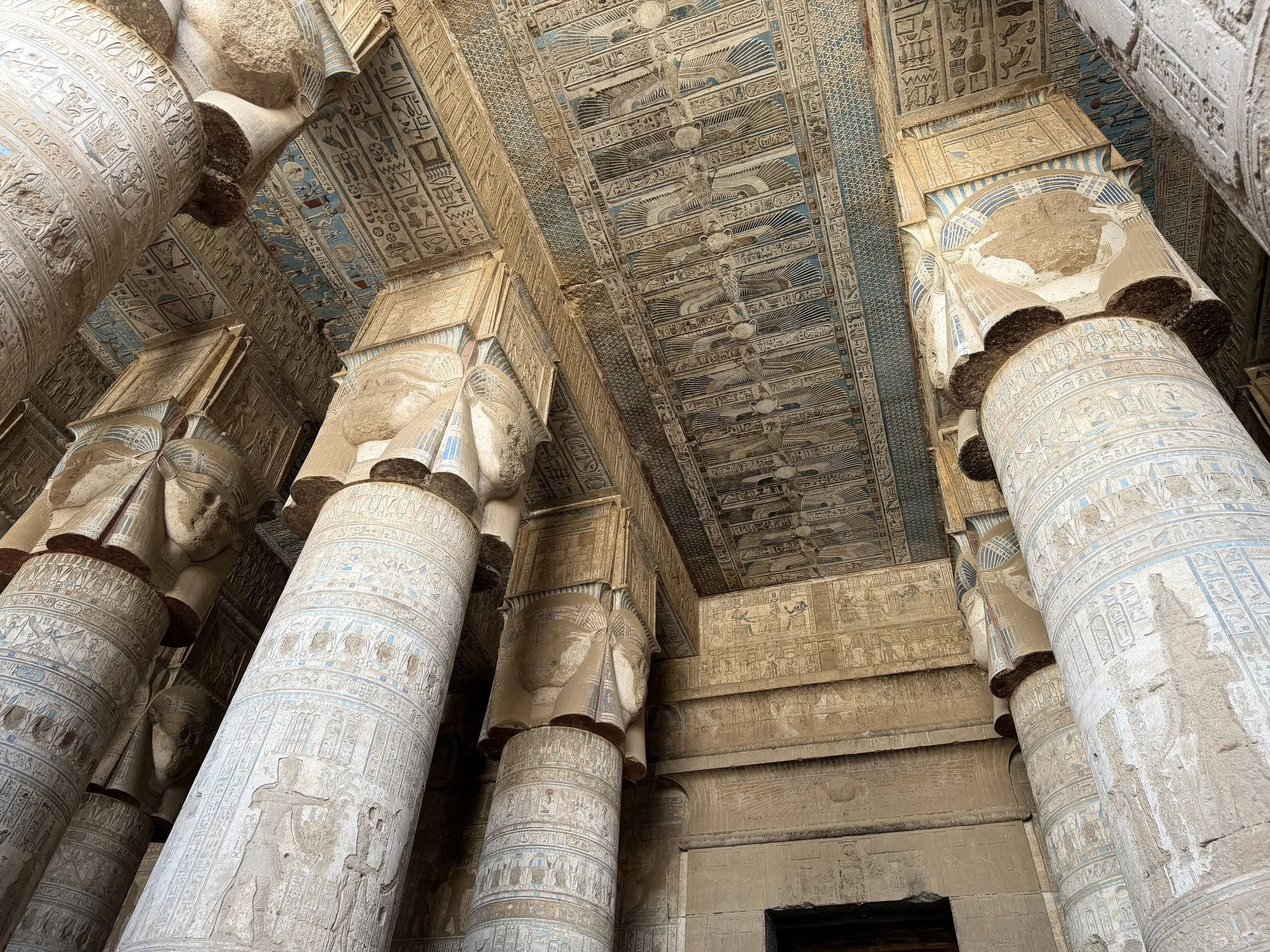
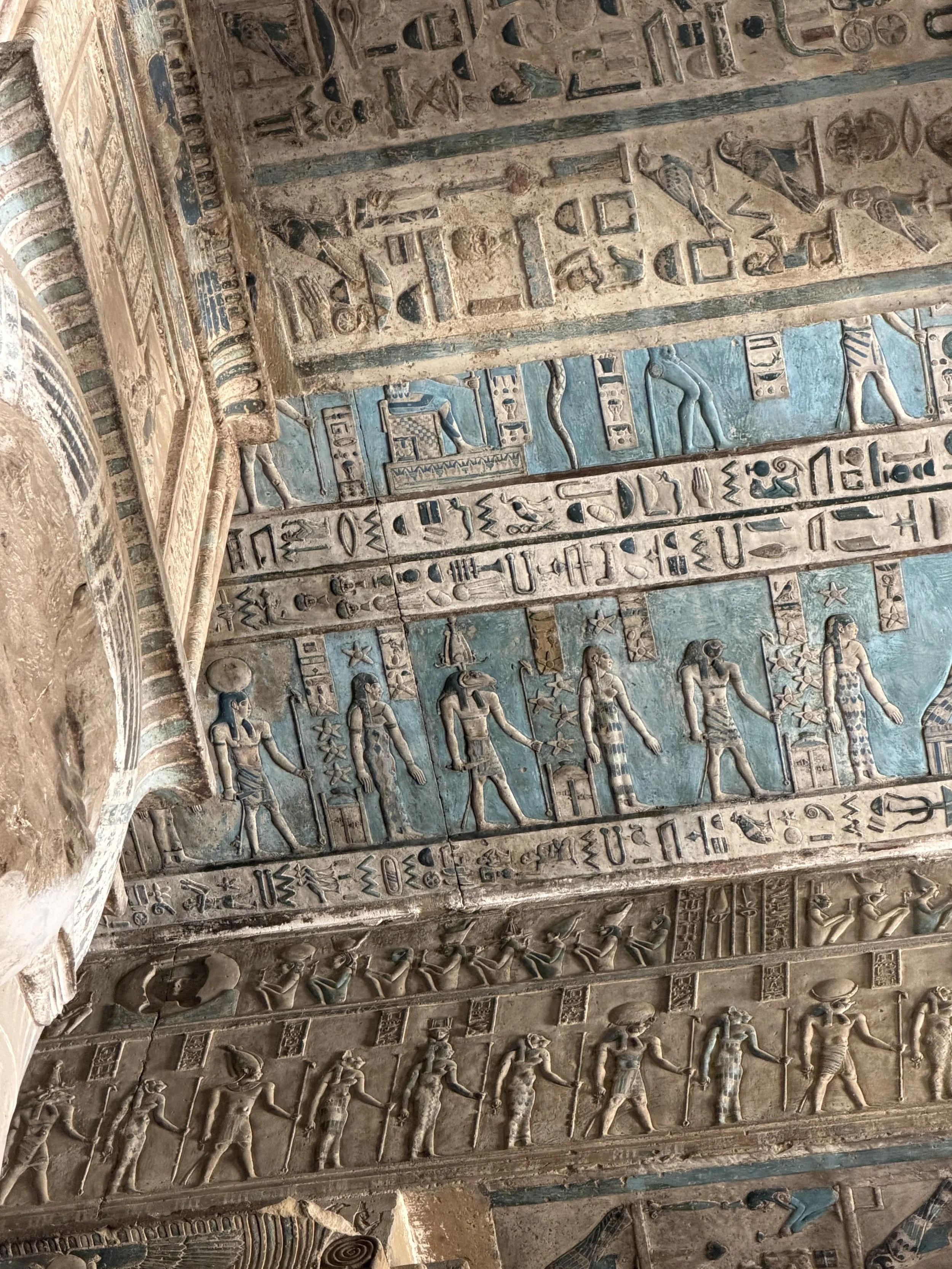
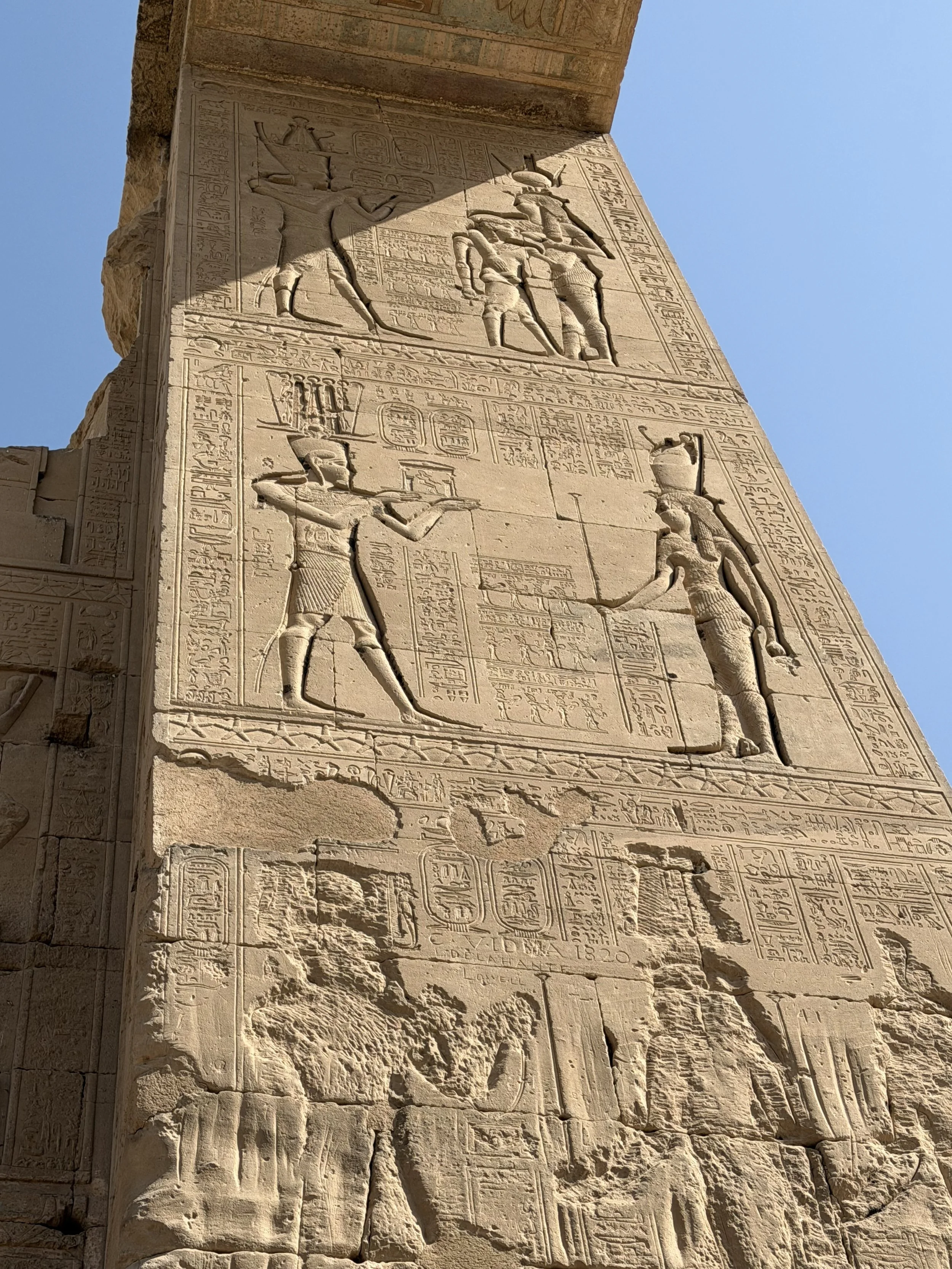
Our guide told us that some Egyptians believe the temple is haunted, and she had heard some very specific accounts from visitors. I waited until we were almost ready to leave, but I couldn’t resist playing a prank on her. I started out with “you probably aren’t going to believe this but………” and then I said I had seen a jackal in one of the window ledges – playing a banjo! I expected her to burst out laughing, but she seemed genuinely alarmed until I told her I was joking.
We were back aboard the Aton before dinner, and then we continued our journey south back toward Luxor. (I guess we had never really thought about it before, but the Nile River flows from south to north!)
Luxor and the Valley of the Kings
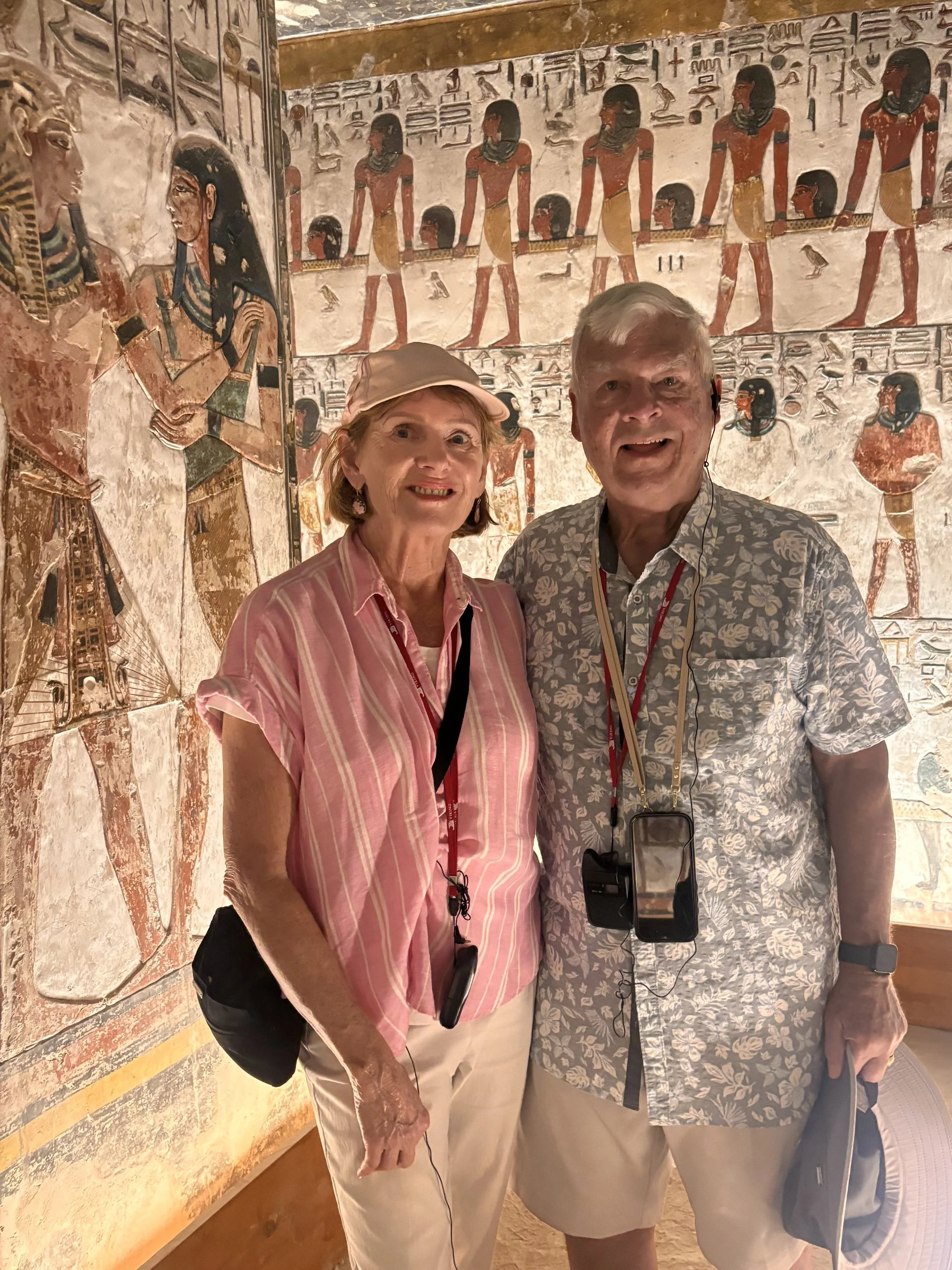
On Day 6, we set out early for the Valley of the Kings, another trip highlight. There, our guide, Amal, led us into the tombs of King Tutankhamun and other important pharaohs, including Hatshepsut and Seti I.
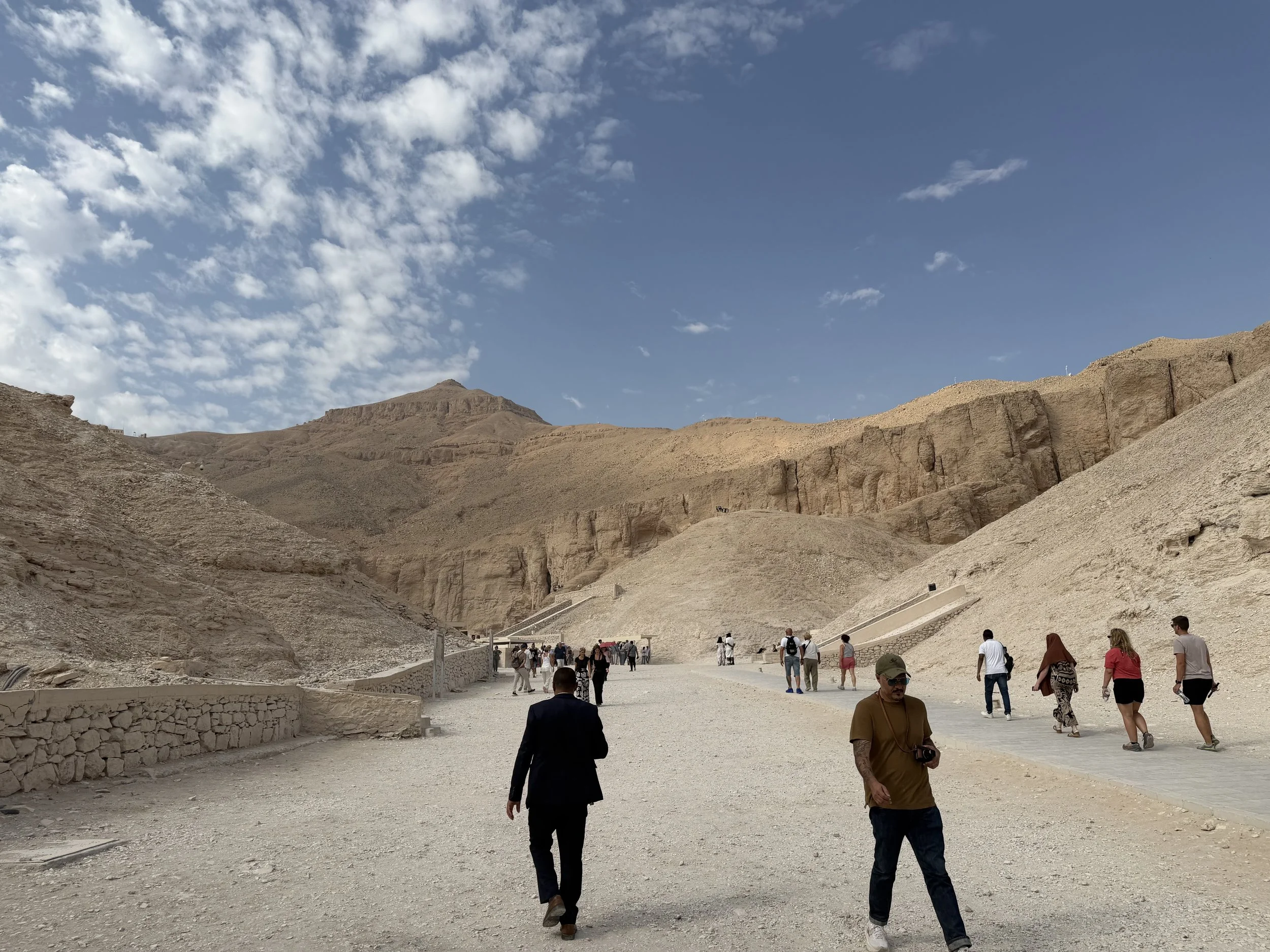
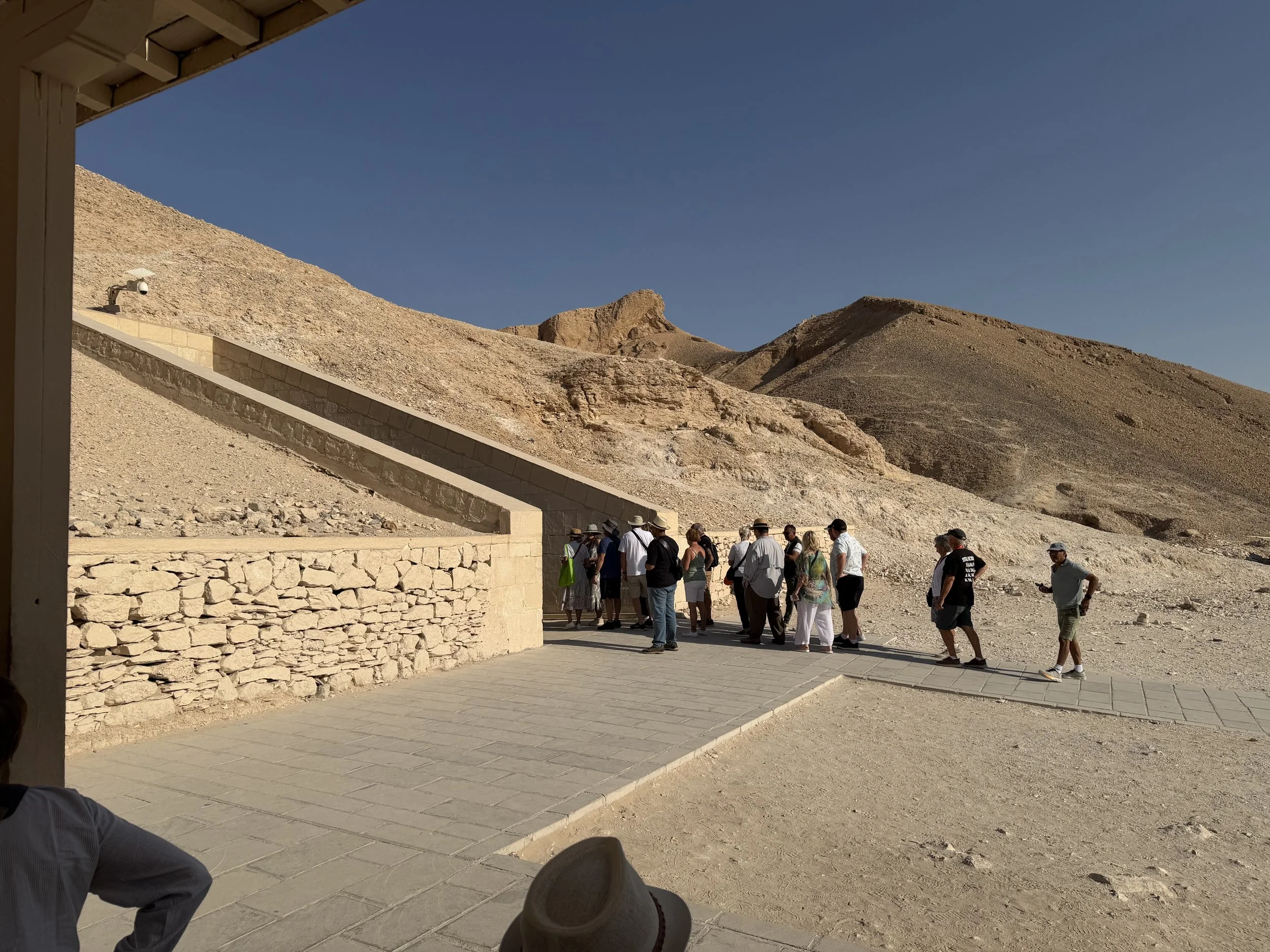
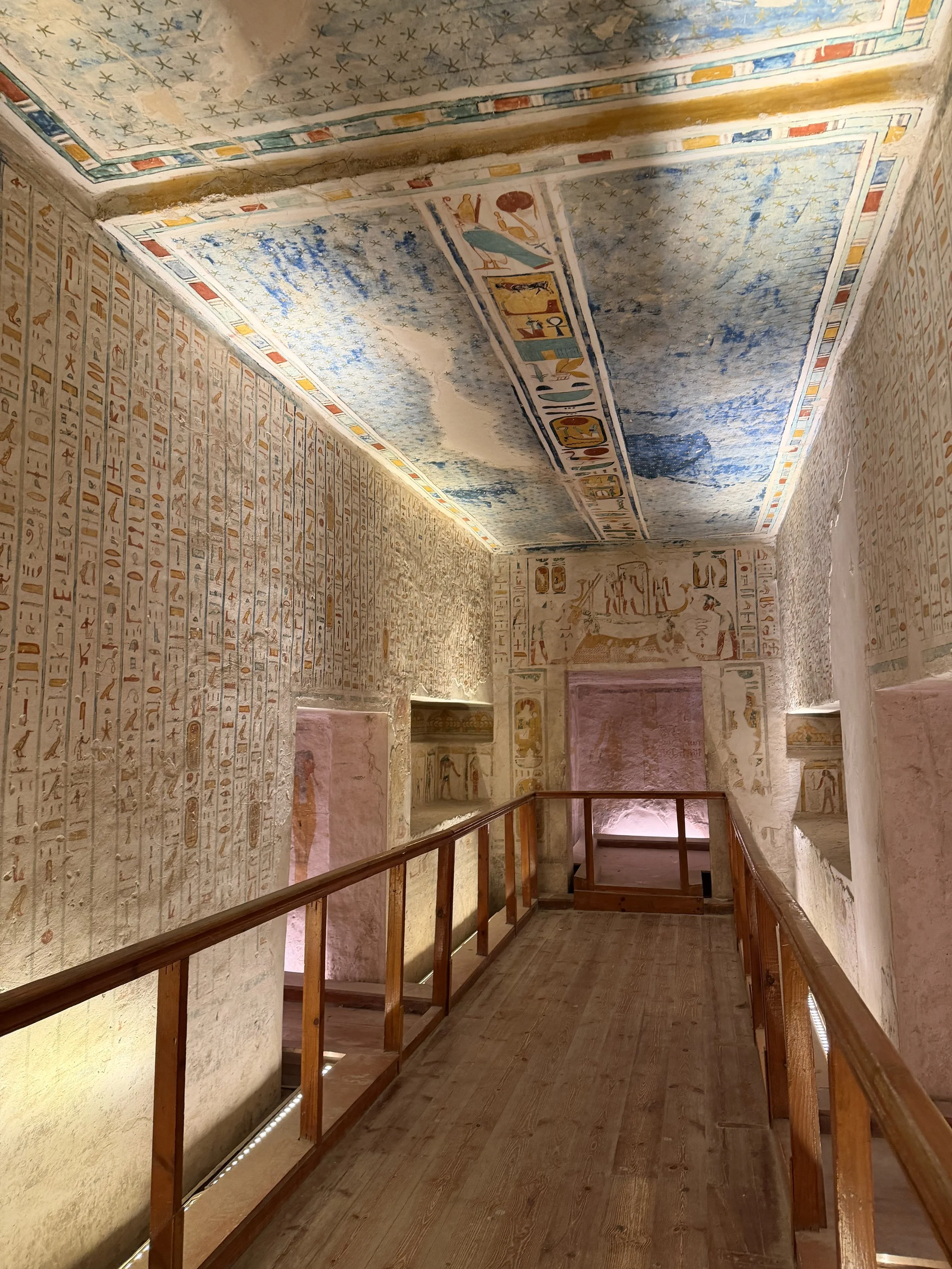
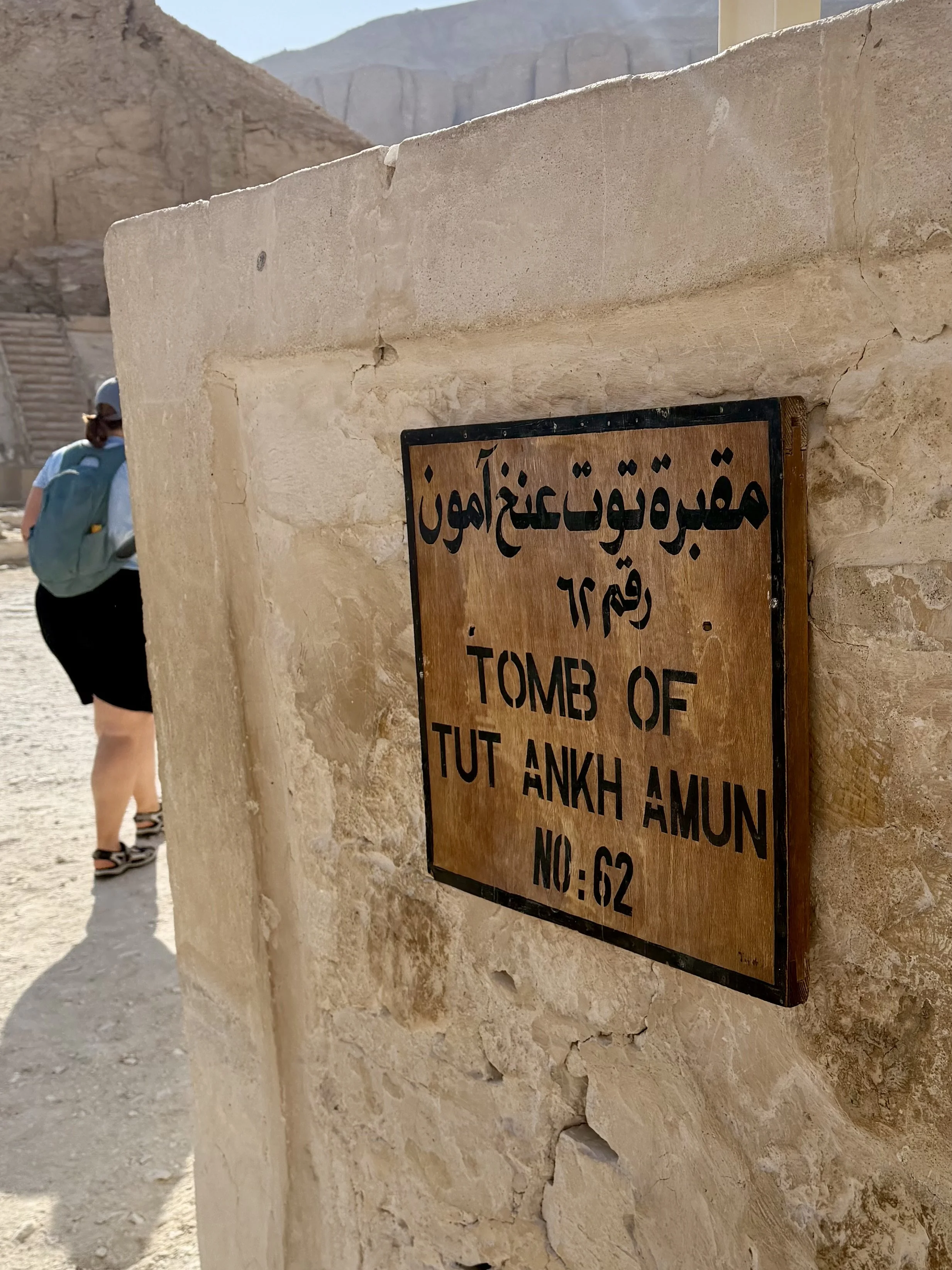
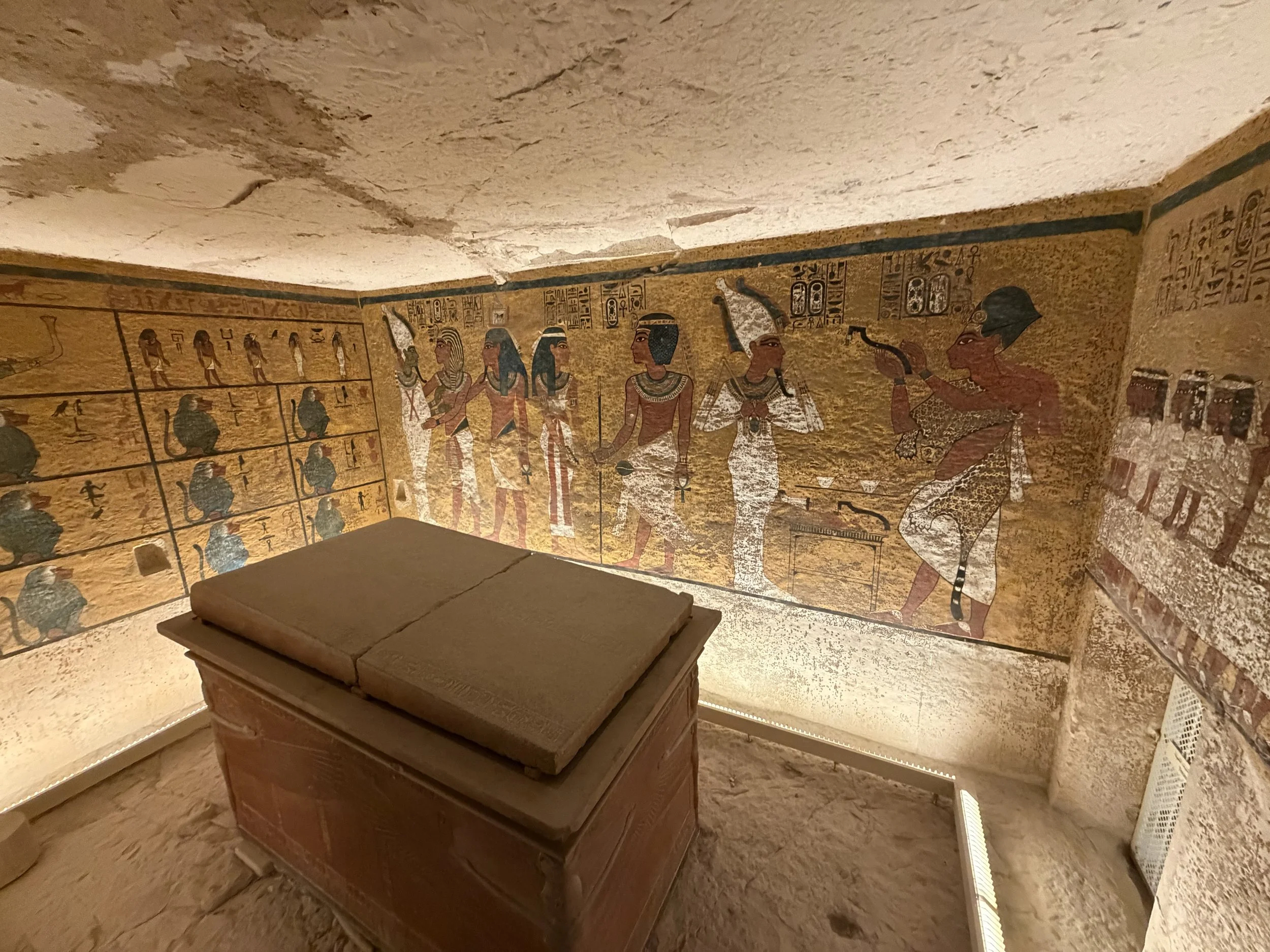
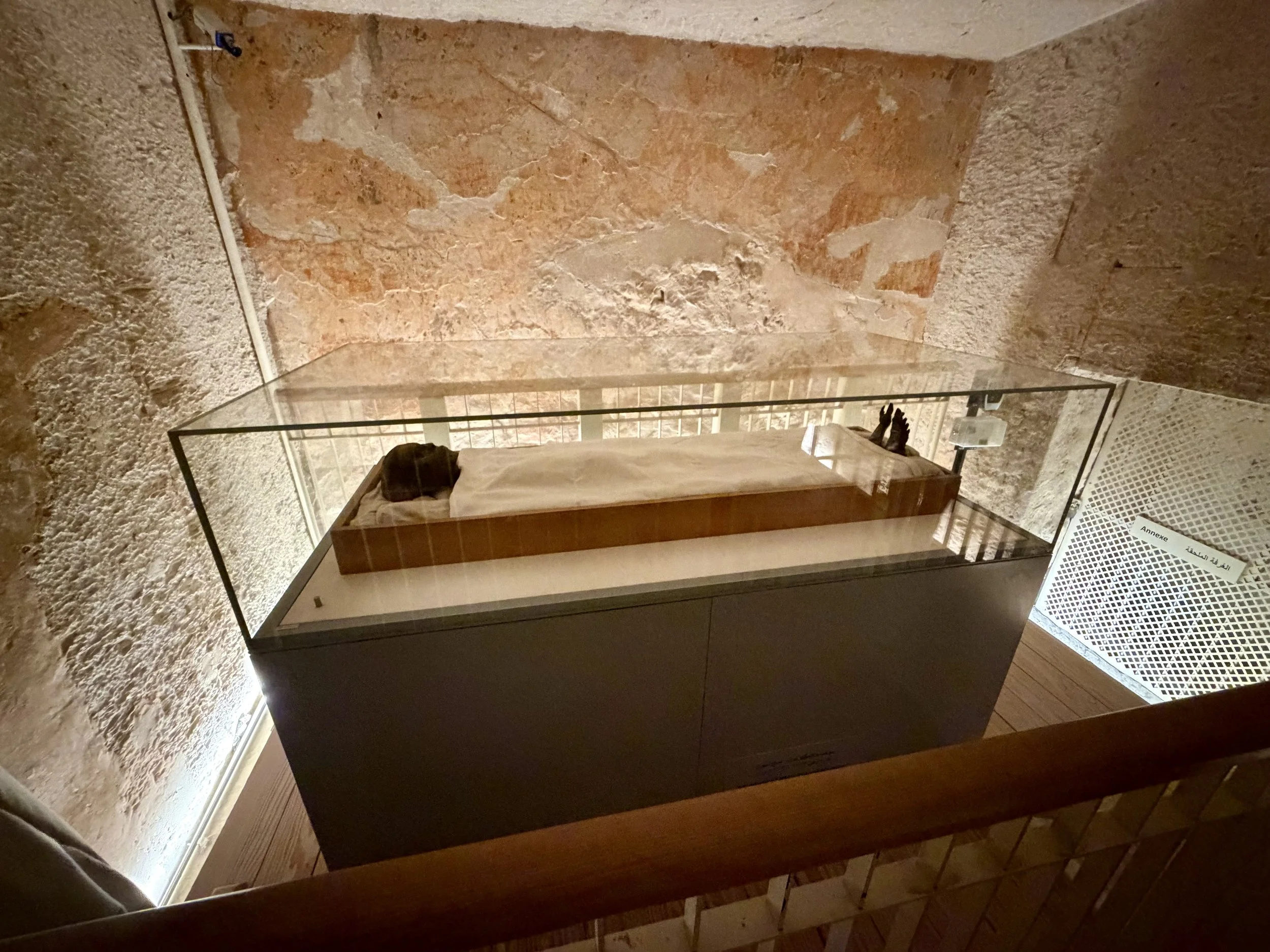
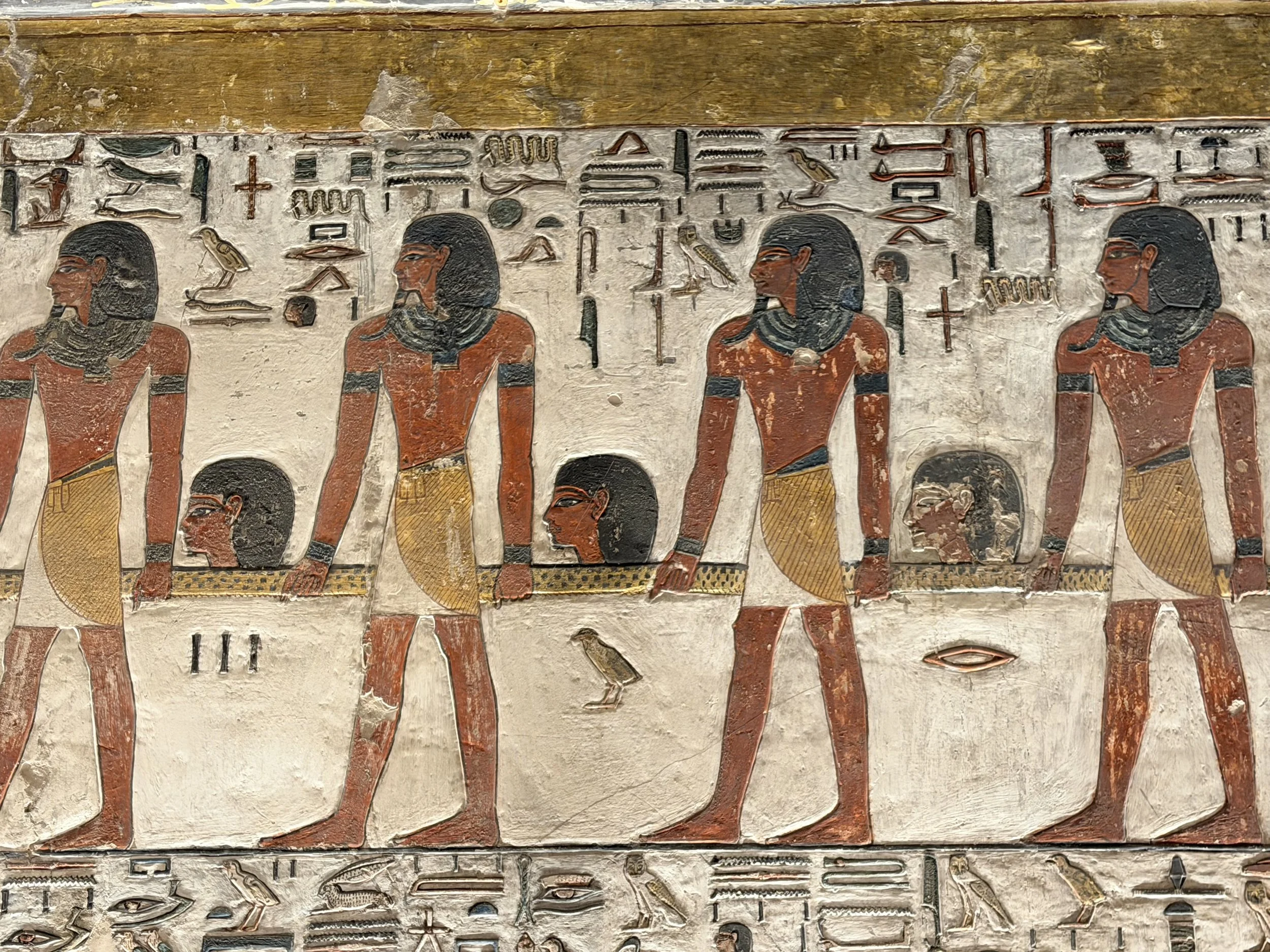
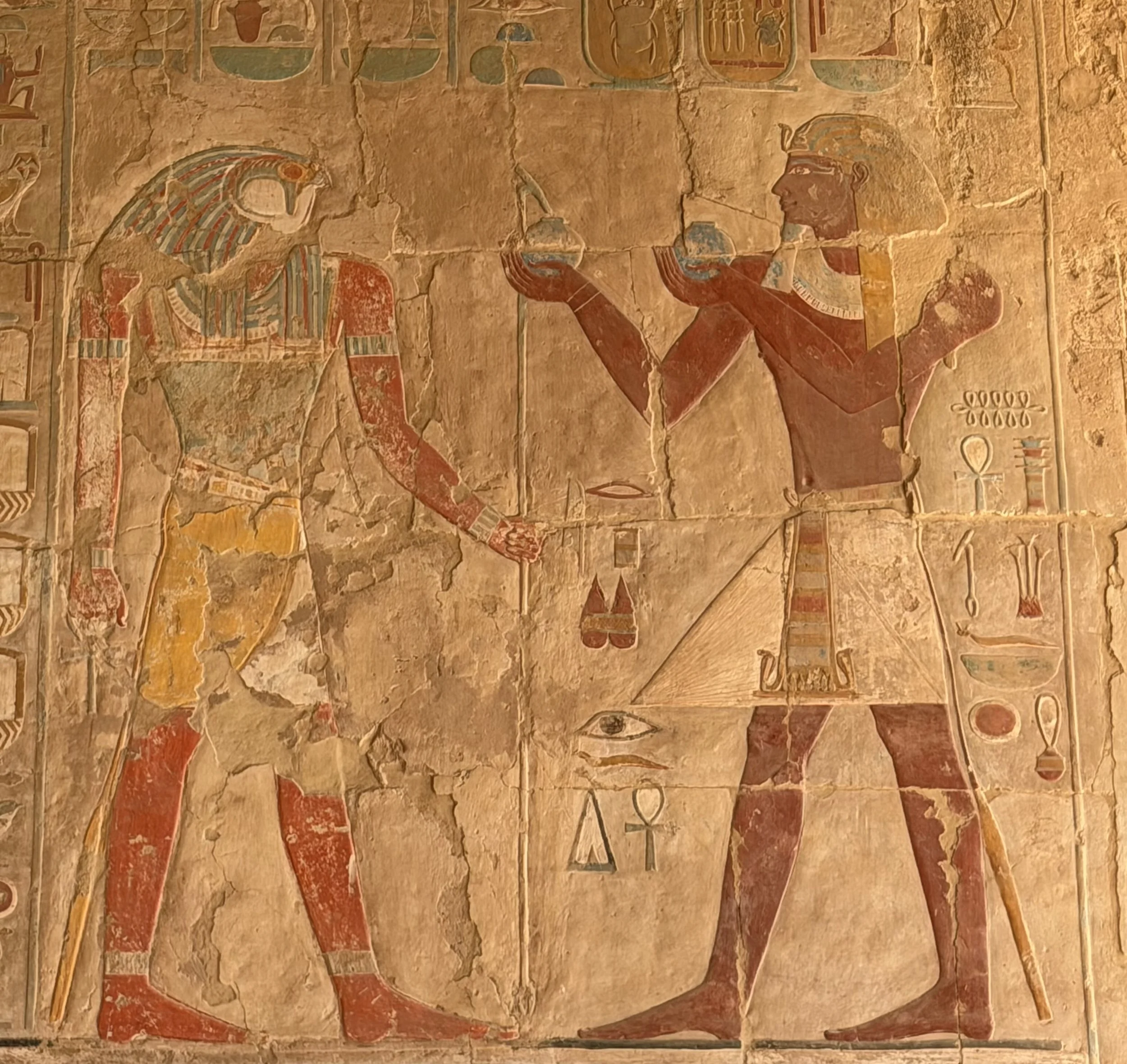
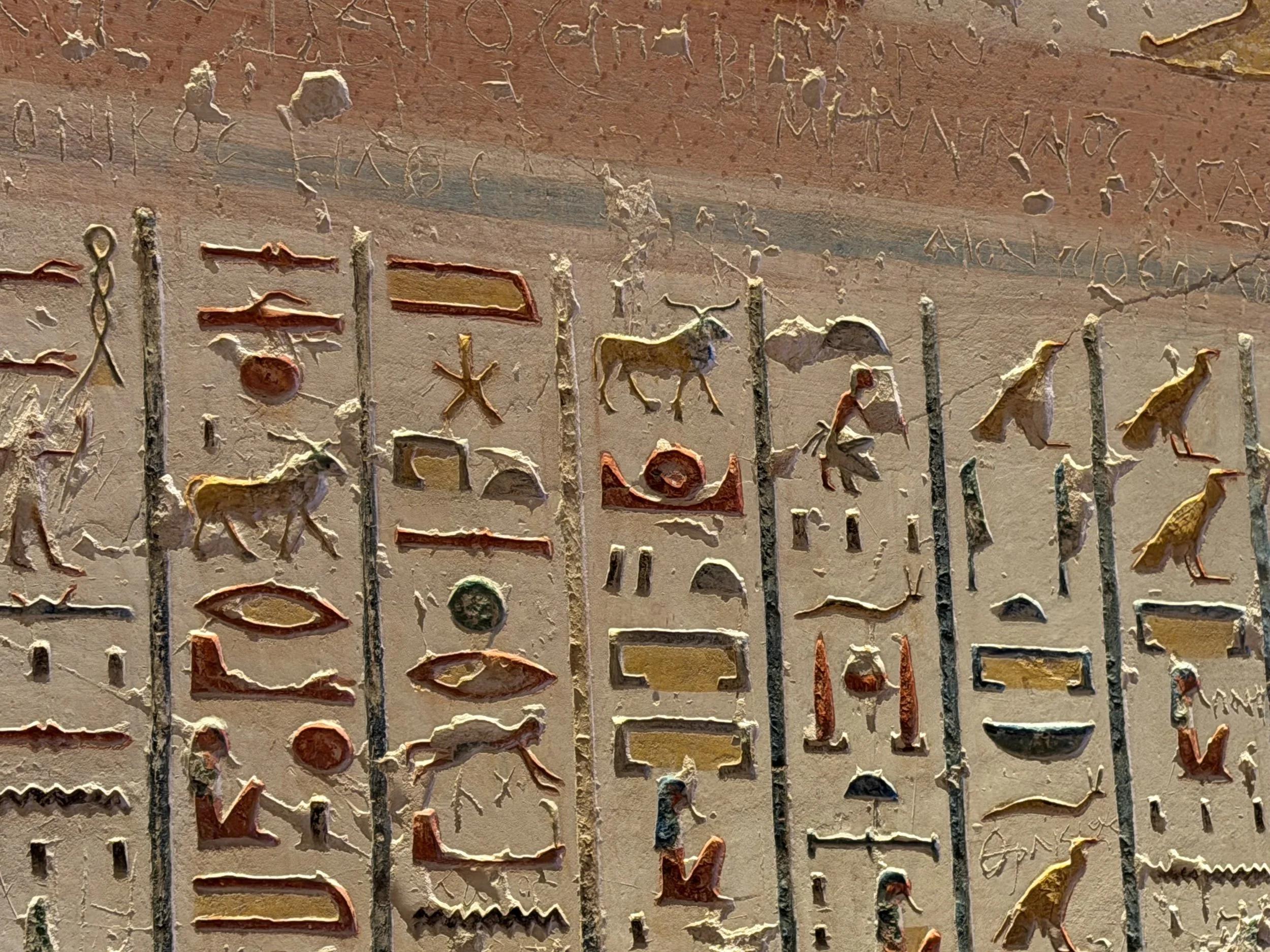
These sites were remarkably well-preserved despite damage caused by tomb raiders and natural deterioration. Amal interpreted many of the fascinating hieroglyphics, which told stories about the pharaohs buried there and their relationships with the many gods of ancient Egypt.
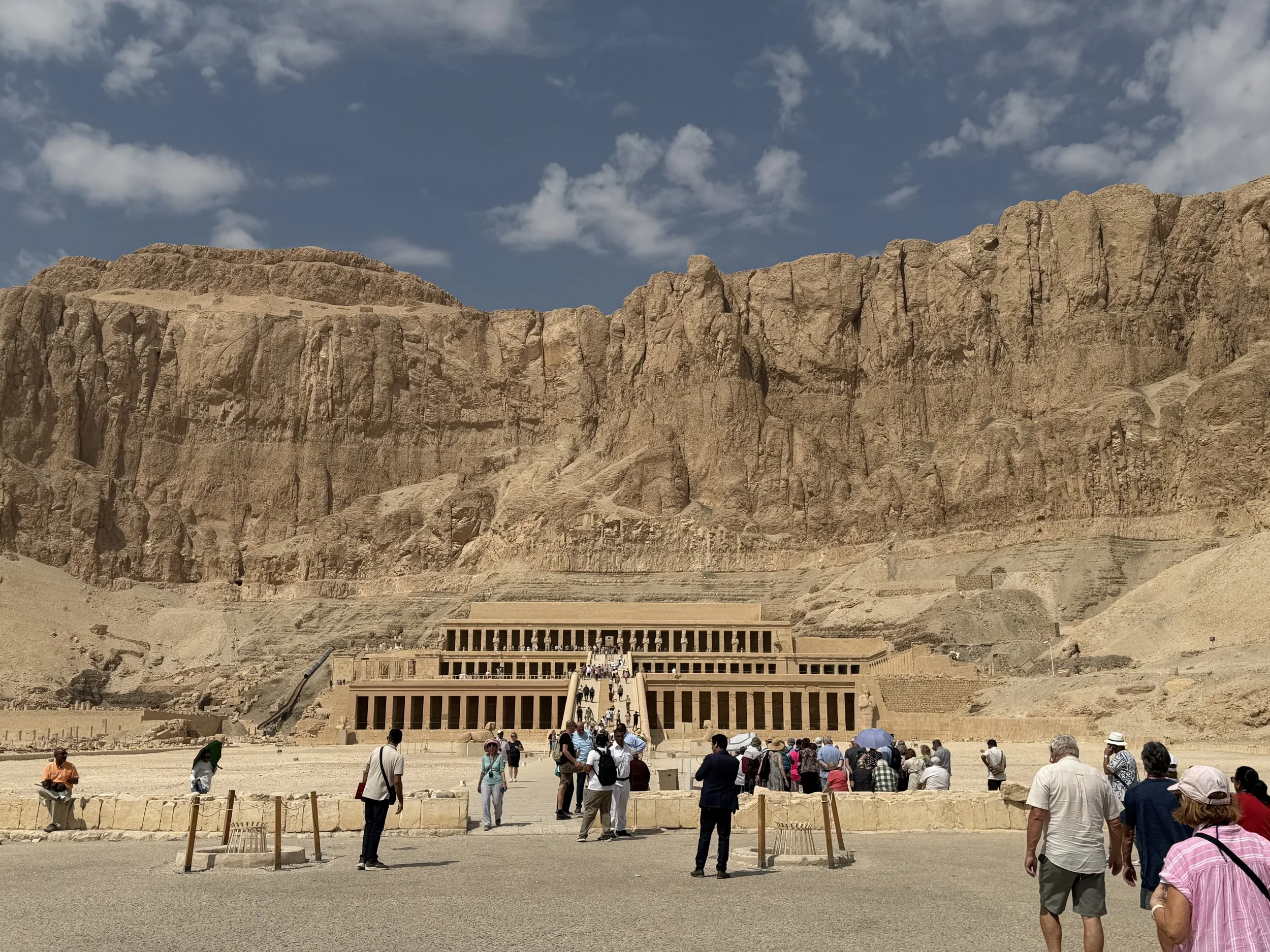
Queen Hatshepsut is regarded as one of Egypt’s most successful female pharaohs. We were told that she adopted traditionally male royal attire and symbols to reinforce her authority and legitimacy. She ruled for roughly two decades.
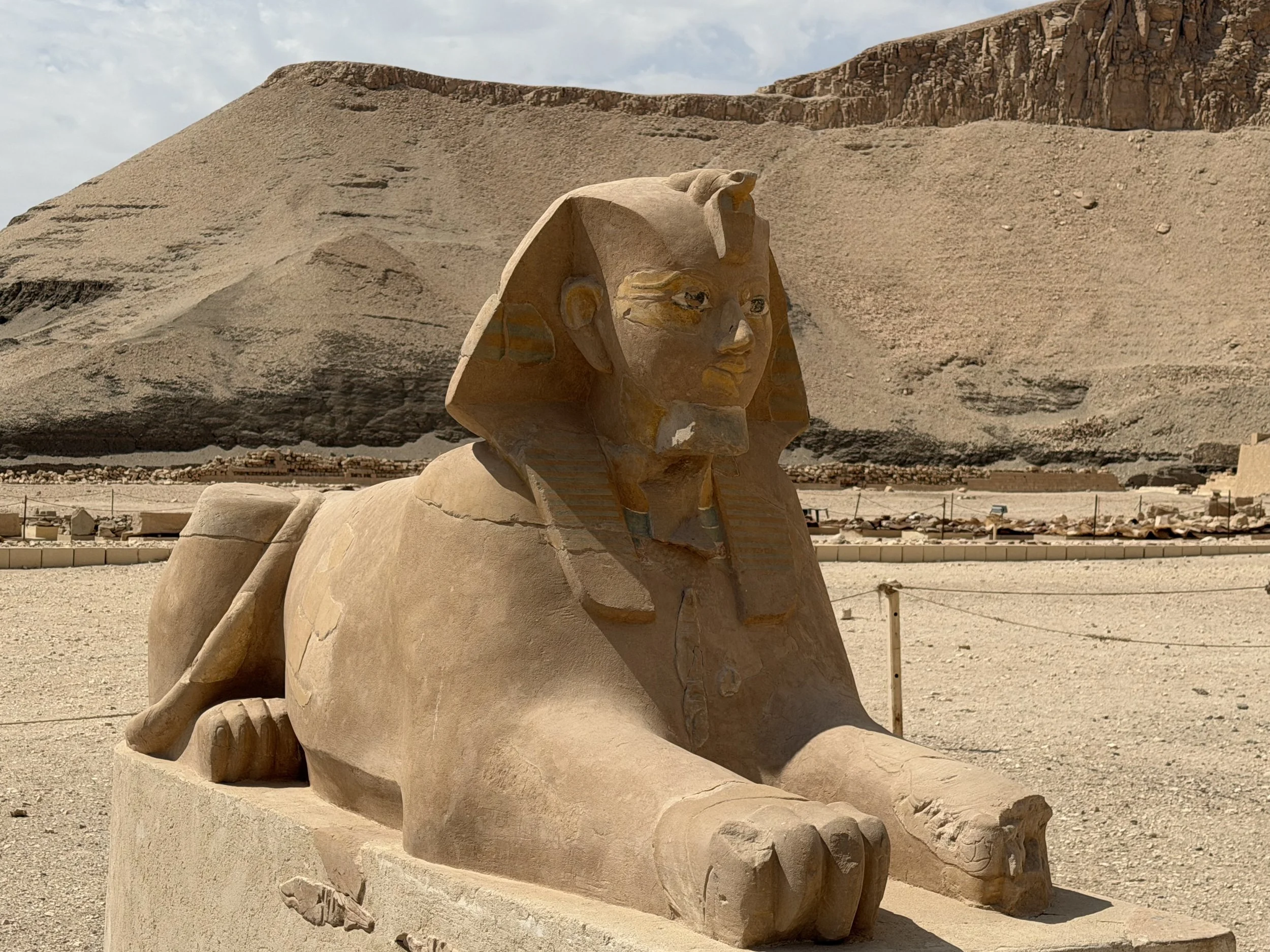
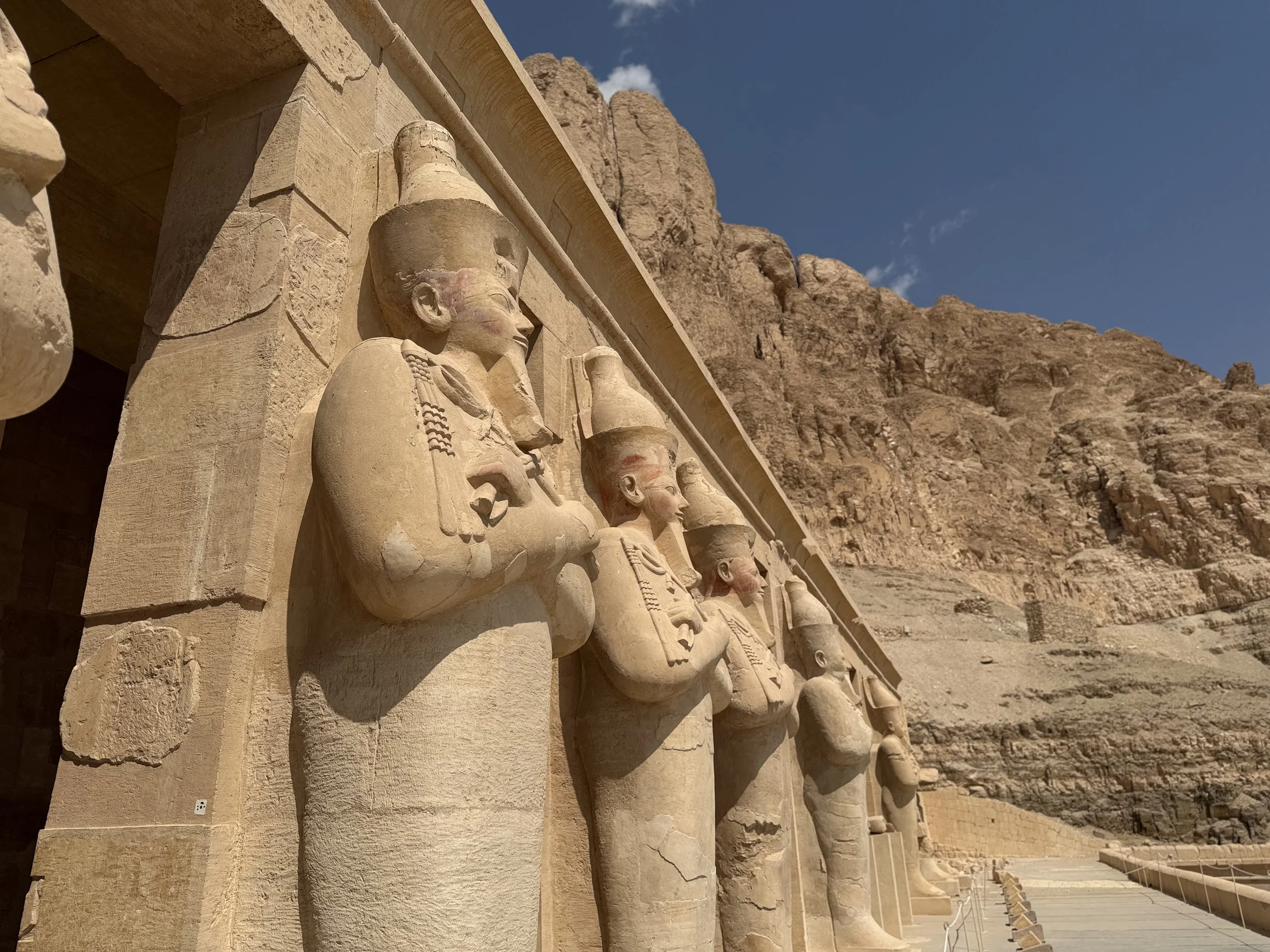
Her mortuary temple, built dramatically against towering stone cliffs, was one of the most striking sites we saw. The beautiful columns and colorful carvings made it especially memorable.
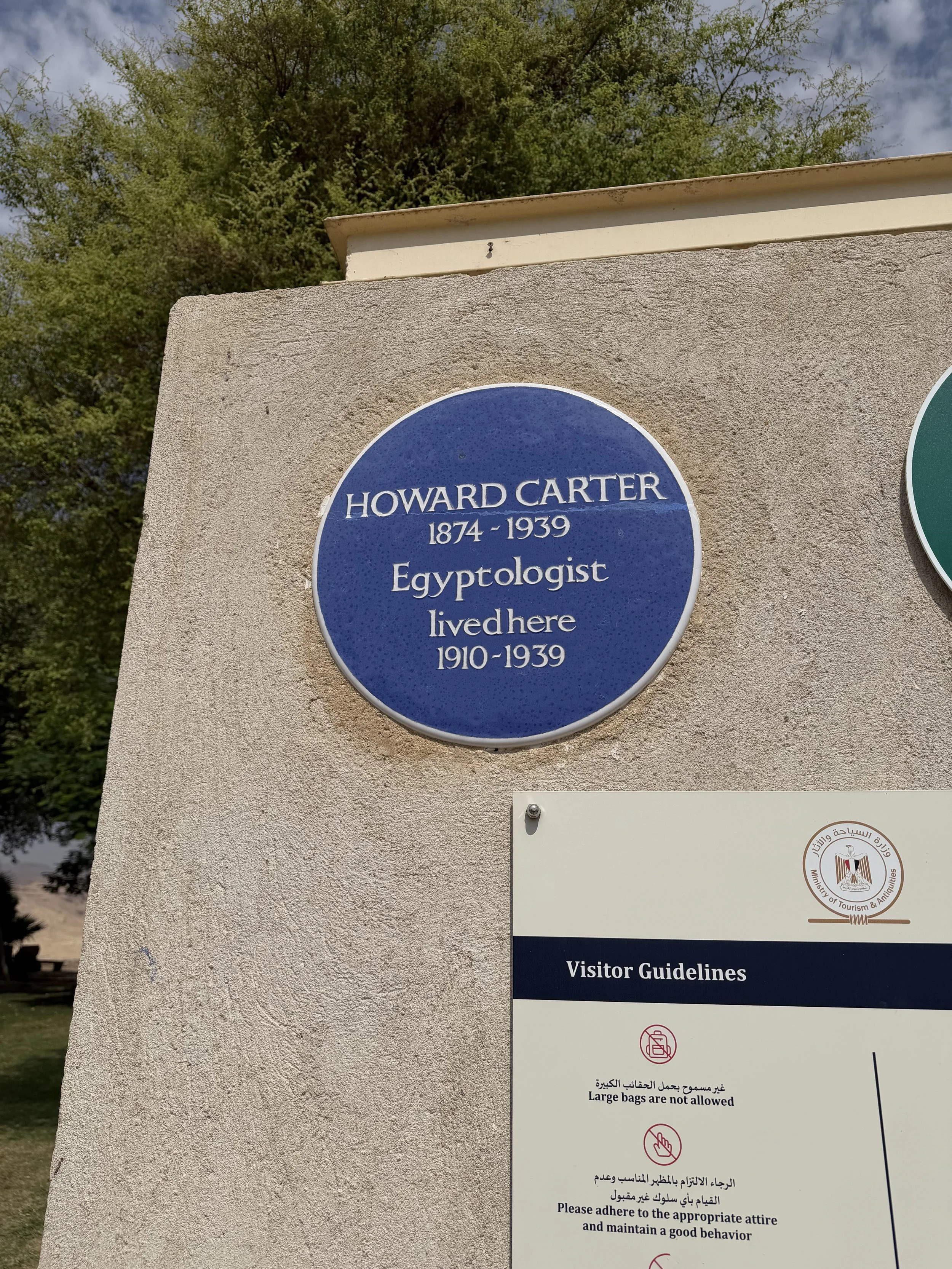
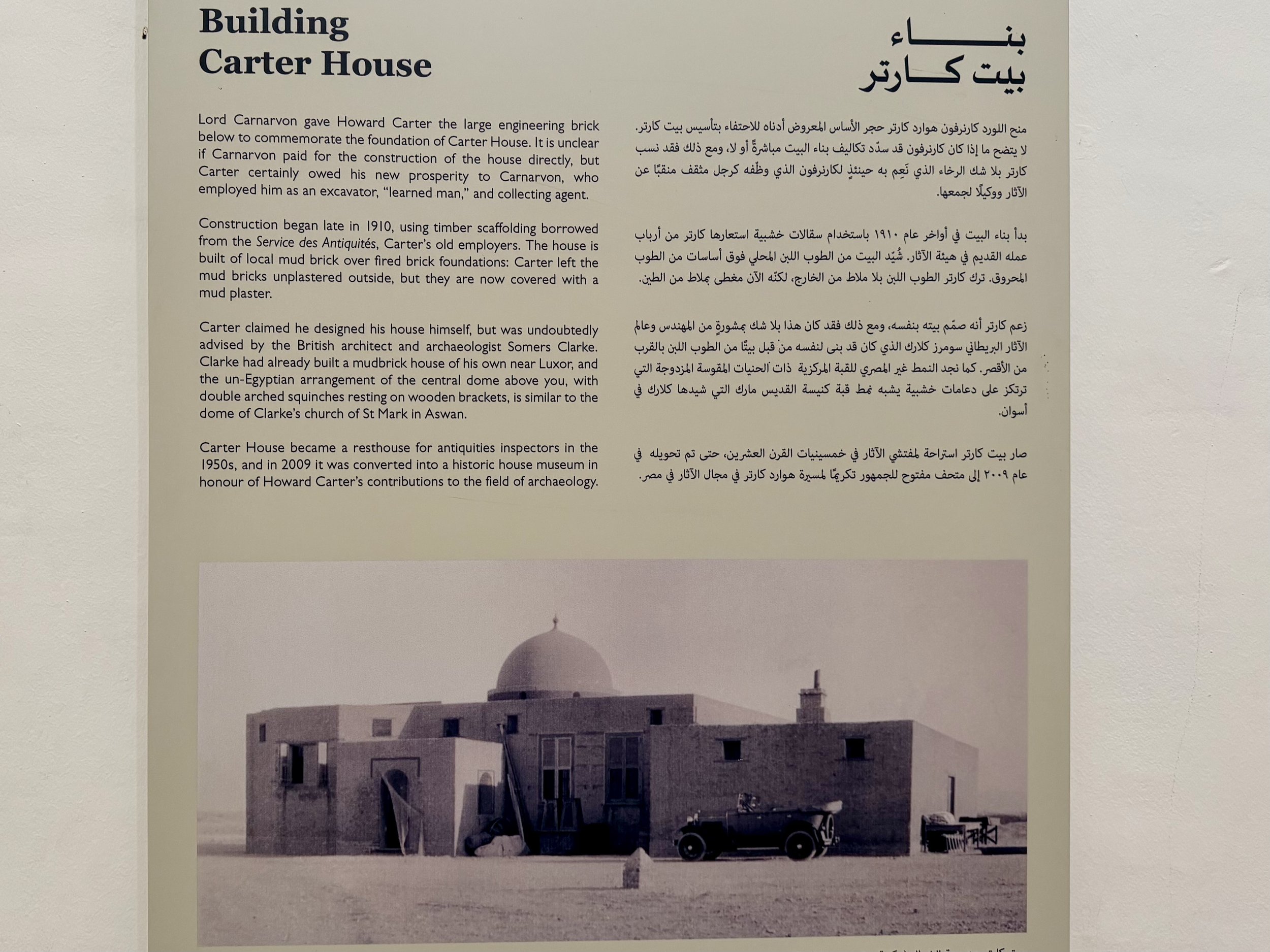
Before leaving this area we had a brief stop at the house of Howard Carter, the archeologist and Egyptologist who discovered many of the key sites in the Valley of the Kings, including the tomb of King Tut. Our afternoon was relatively calm. After lunch, we set sail for Esna, further south, and enjoyed some free time along with a few optional lectures.
Esna
Day 7 of our Viking journey was another relatively easy day. We took an early excursion to the Temple of Esna, which lasted about 90 minutes, before returning to the ship.
(Another temple? I know! Most of us probably thought the same thing. But every site we visited turned out to be different, and even some we were tempted to skip proved fascinating.)
Once everyone was back aboard, we set sail for Aswan.
I attended a mid-afternoon lecture on “Medicine in Ancient Egypt,” which I found extremely interesting. That was followed by a “Wheelhouse Tour,” where we learned more about the workings of our modern river cruise ship.
Aswan
Day 8 began with two competing excursions: the included tour of the Aswan High Dam and a local market, or an optional excursion, at additional cost, to the Temples of Abu Simbel.
We chose the Aswan High Dam, and it turned out to be a worthwhile tour. I was old enough to remember the news coverage of this massive structure being built with technical and financial assistance from the Soviet Union during the Cold War—much to our dismay at the time.
The completed dam dramatically reduced the destructive flooding that had plagued farmers for centuries. In fact, throughout our travels, we saw structures bearing high-water marks from earlier floods.
Abu Simbel is home to some of Egypt’s most impressive monumental statues and temples, which are remarkably well-preserved. The photos we saw were certainly impressive. However, the excursion required a short plane ride, and the schedule ran from 7:30 a.m. to 3:30 p.m. It was a substantial commitment of time.
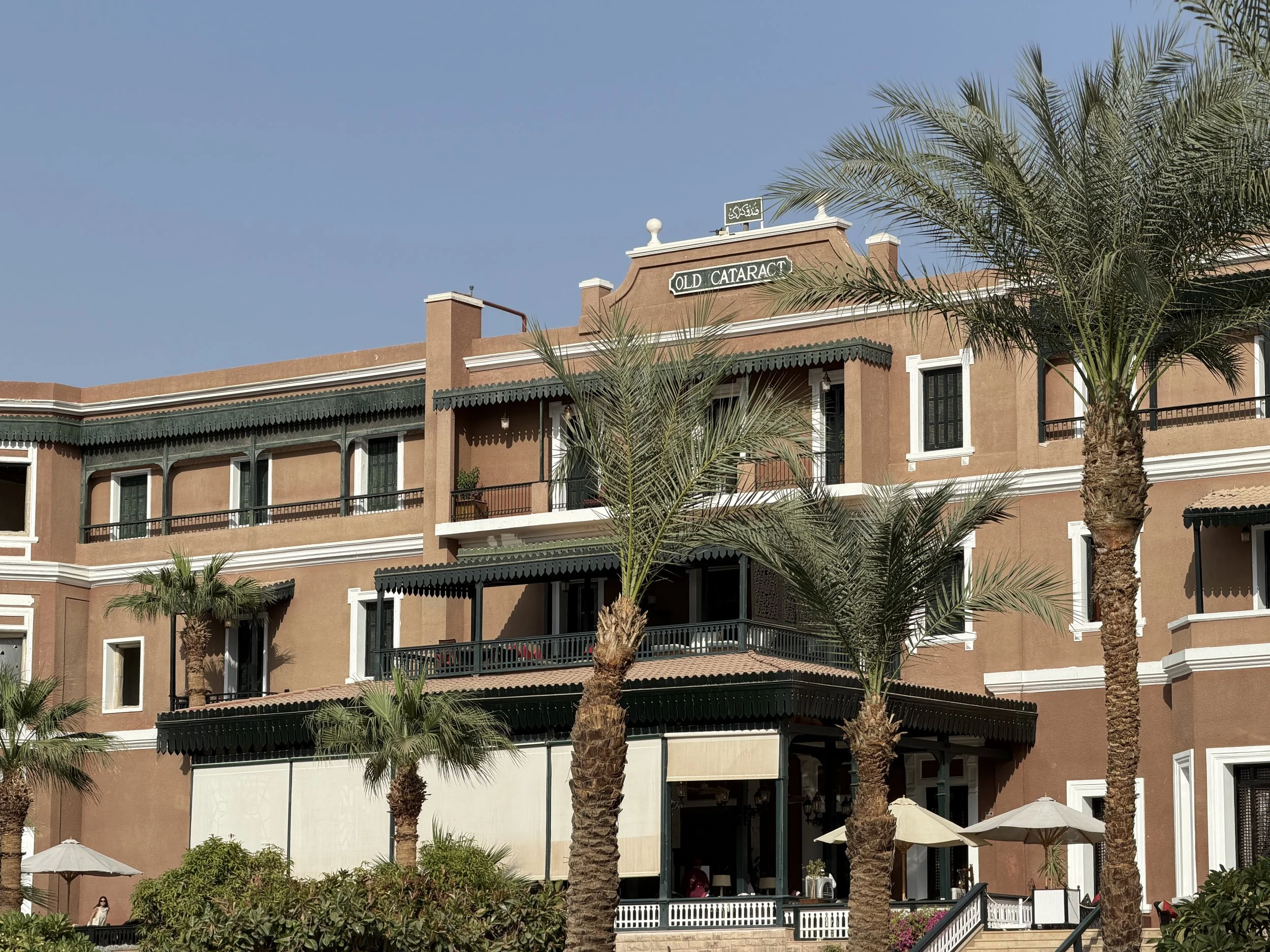
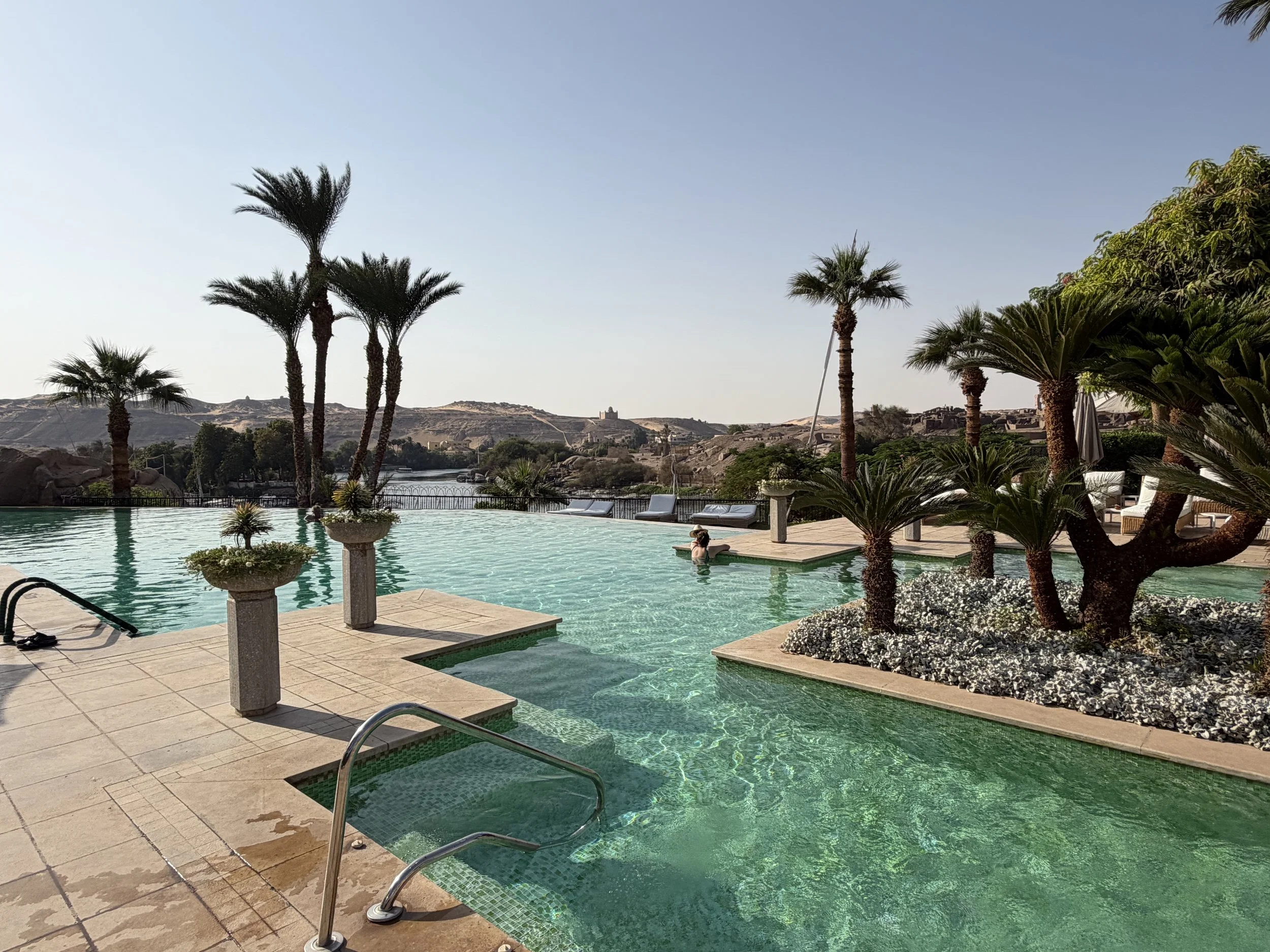
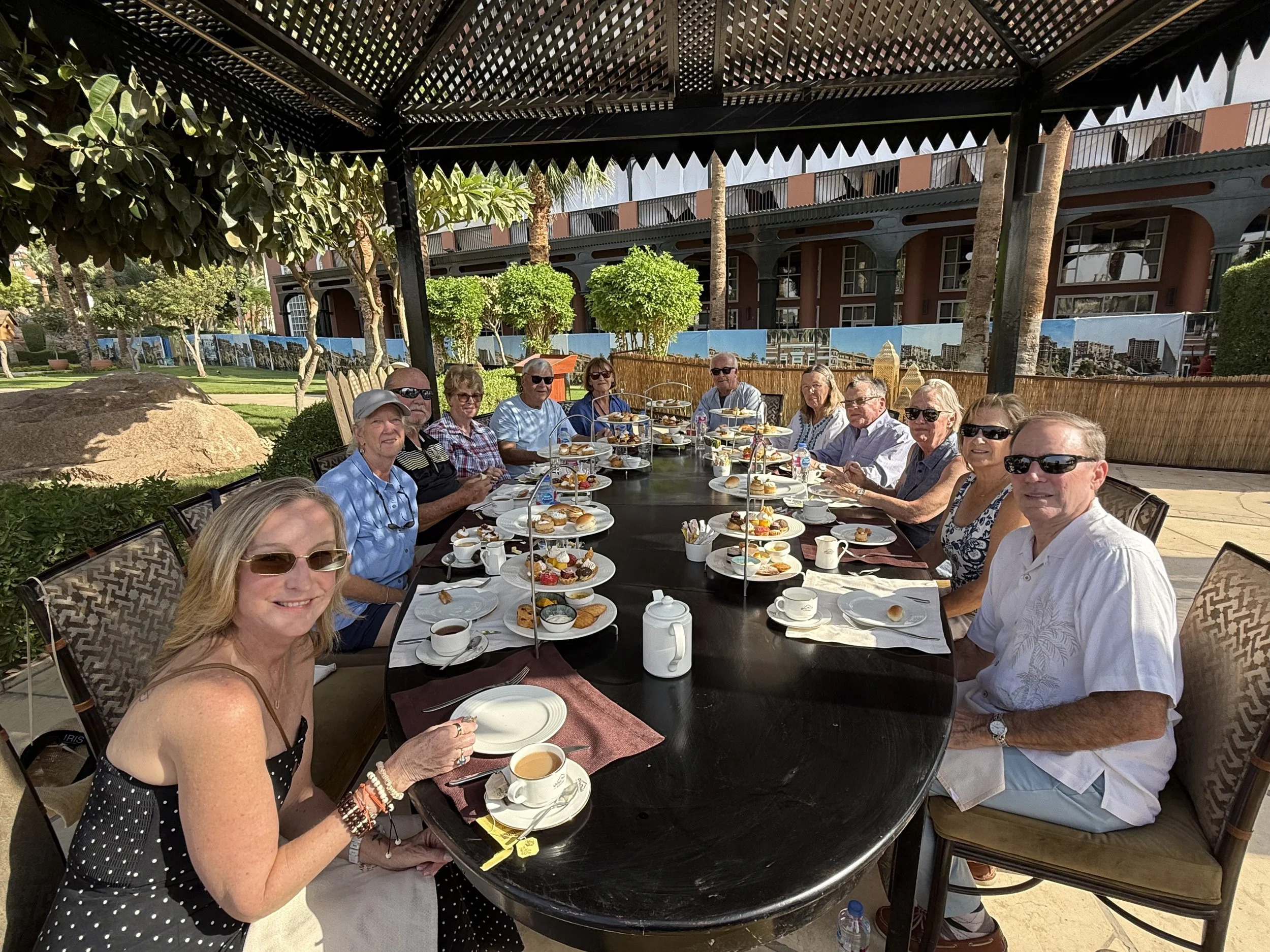
Another optional excursion we did take was High Tea at the Old Cataract Hotel in Aswan. This elegant historic hotel hosted famous visitors, including Winston Churchill and Agatha Christie. Christie stayed there while writing Death on the Nile and reportedly returned many times during her life.
The High Tea itself was no big deal. We felt it fell short of the standard set by the other first-class experiences Viking had arranged. Part of the problem was the rather simple tea service, and the other was our location in a very sunny area. I’m sure Viking will hear about that on the guest feedback forms!
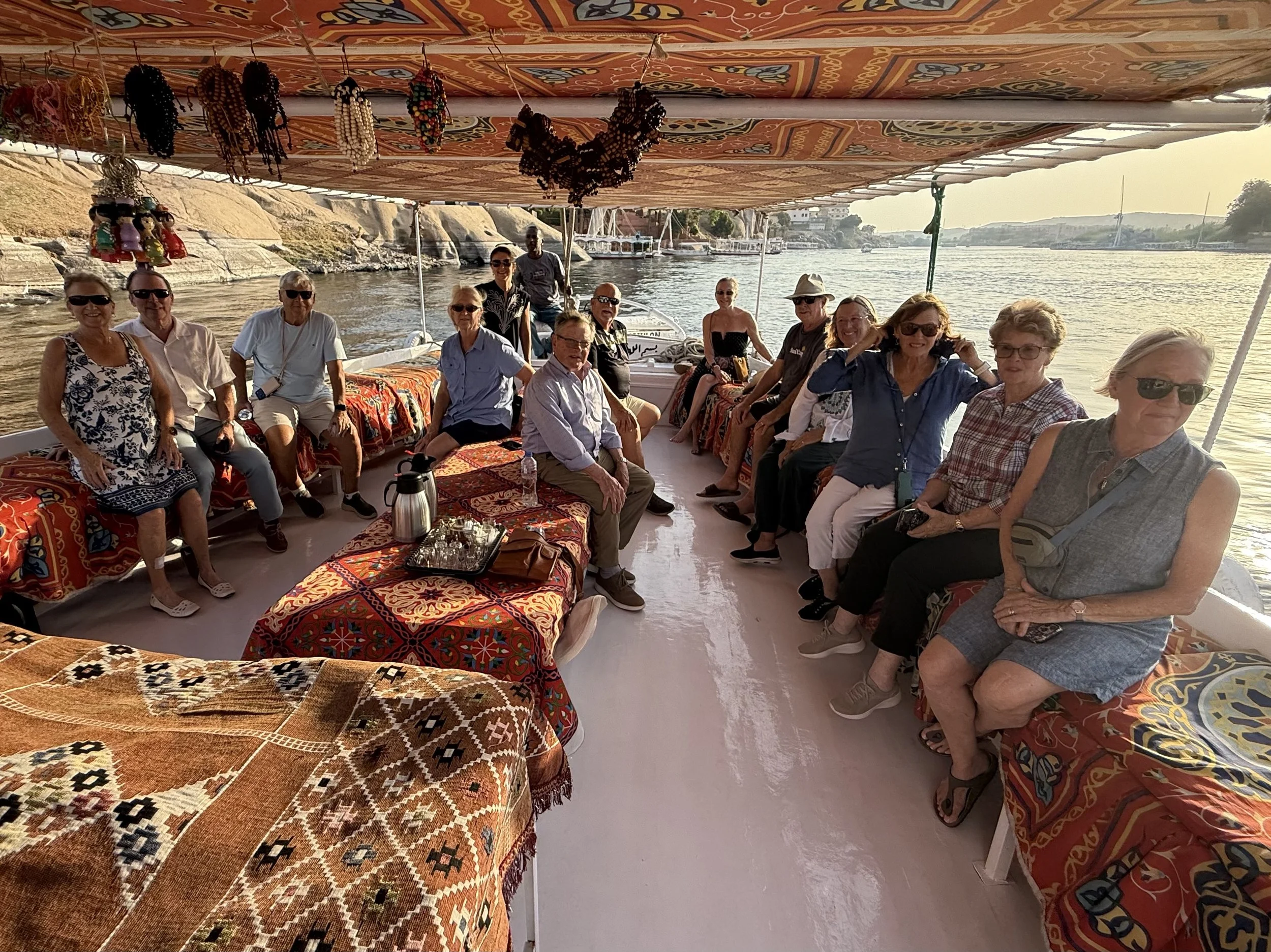
On the positive side, the excursion concluded with an hour-long ride on a felucca, one of the traditional sailboats used on the Nile. That was a great way to finish the outing.
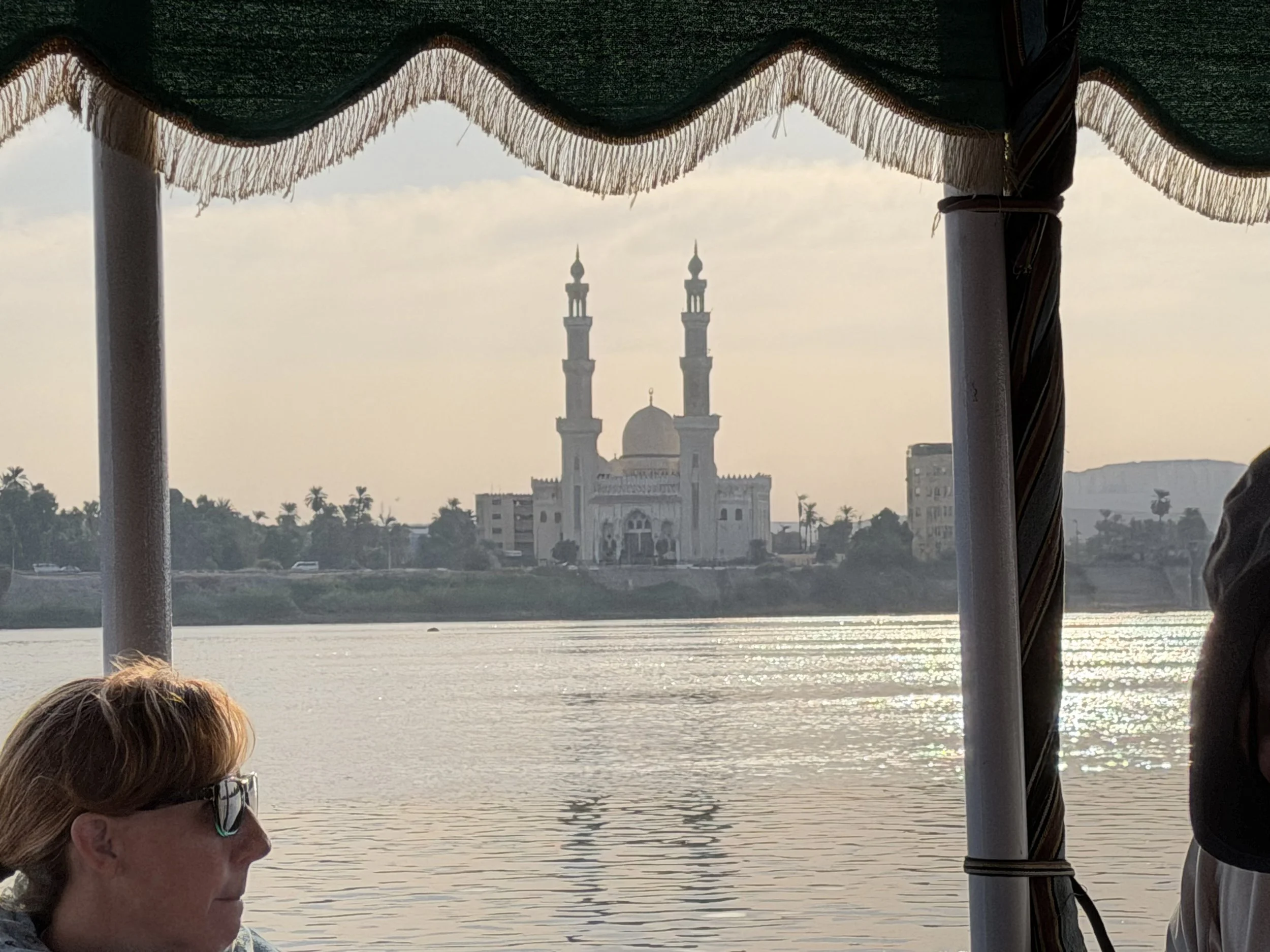
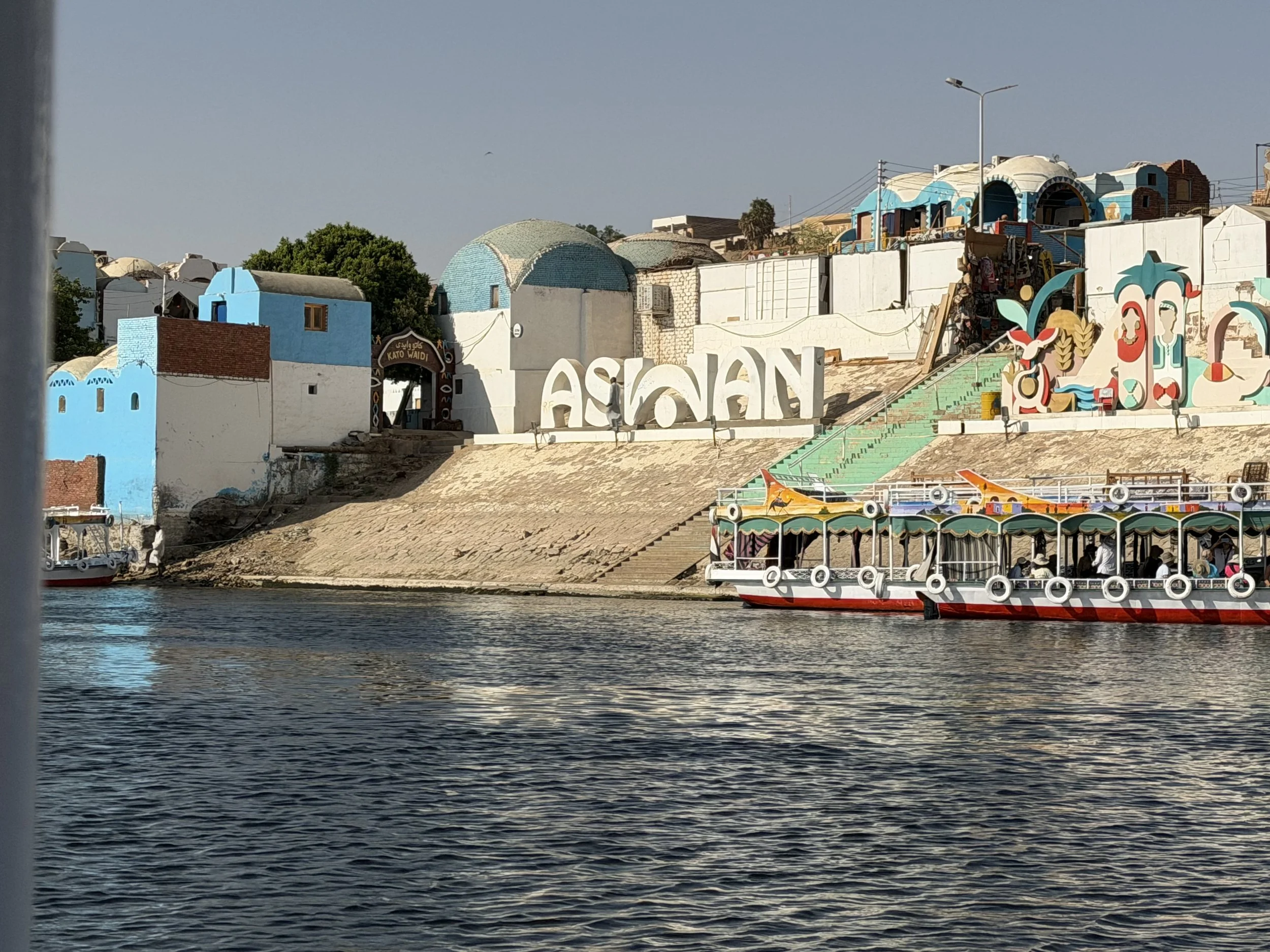
We remained in Aswan on Day 9. Our morning included visits to a Nubian village, Philae Temple, and the Papyrus Institute.
The Nubian village was in a beautiful, well-maintained area alongside the Nile. We saw numerous resort hotels and even Airbnbs catering to a thriving tourist trade. Tourism is a major part of Egypt’s economy, and the people we encountered seemed to appreciate our business. Security was tight everywhere we went, and we generally felt very safe.
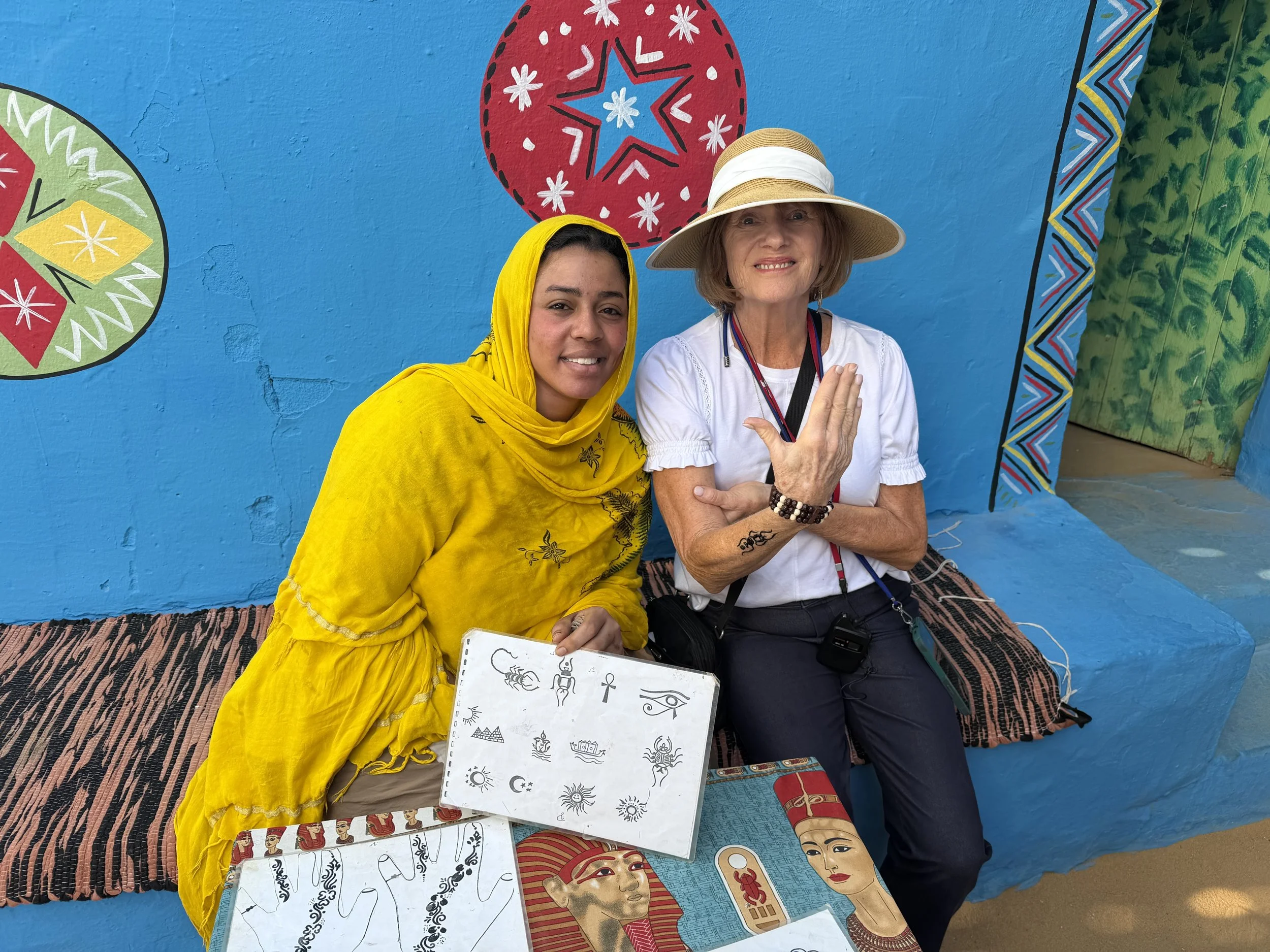
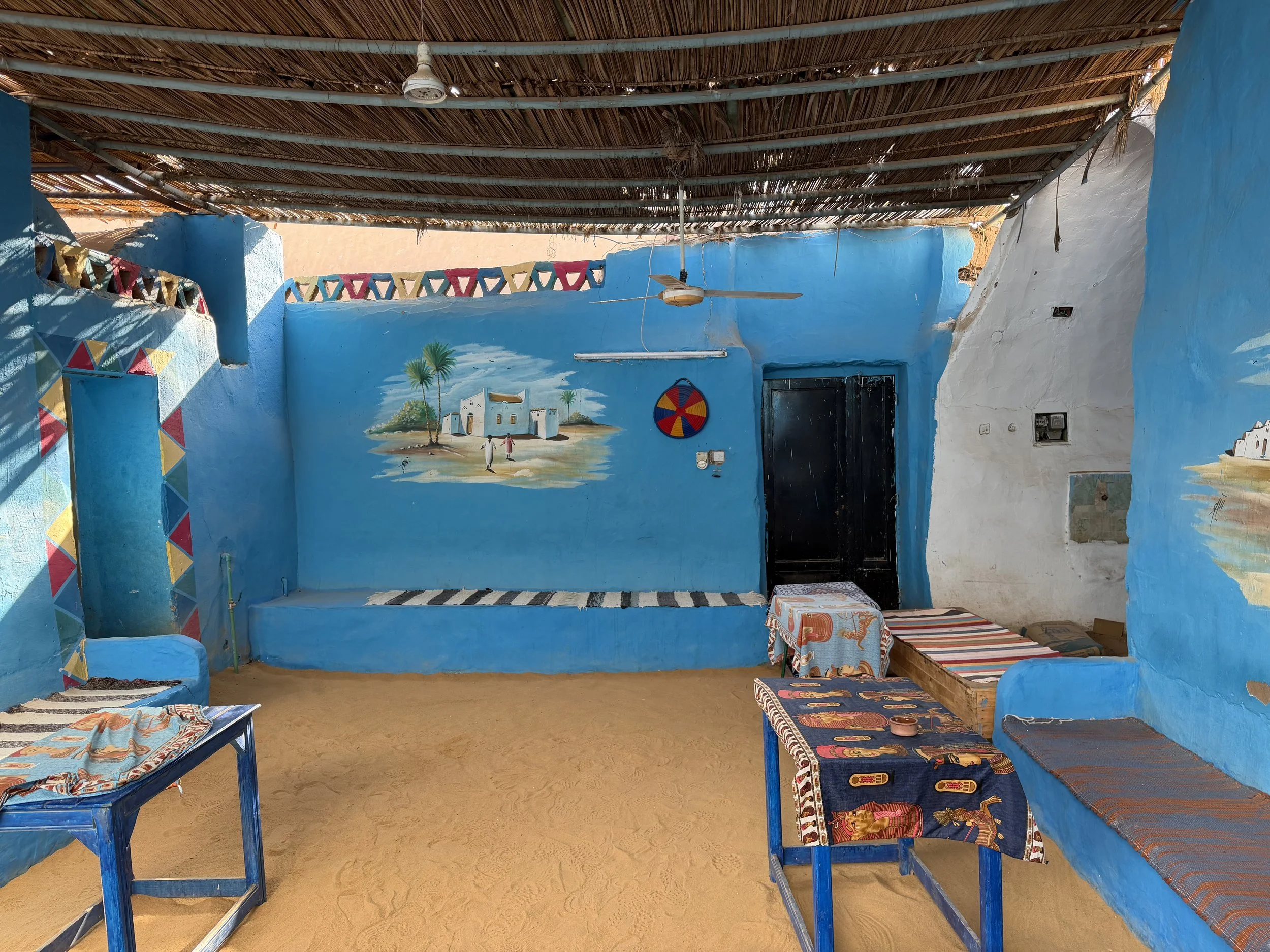
We visited a Nubian home that housed about 12 family members. While there, members of our group made purchases that included cotton goods and drawings, and some people got henna tattoos.
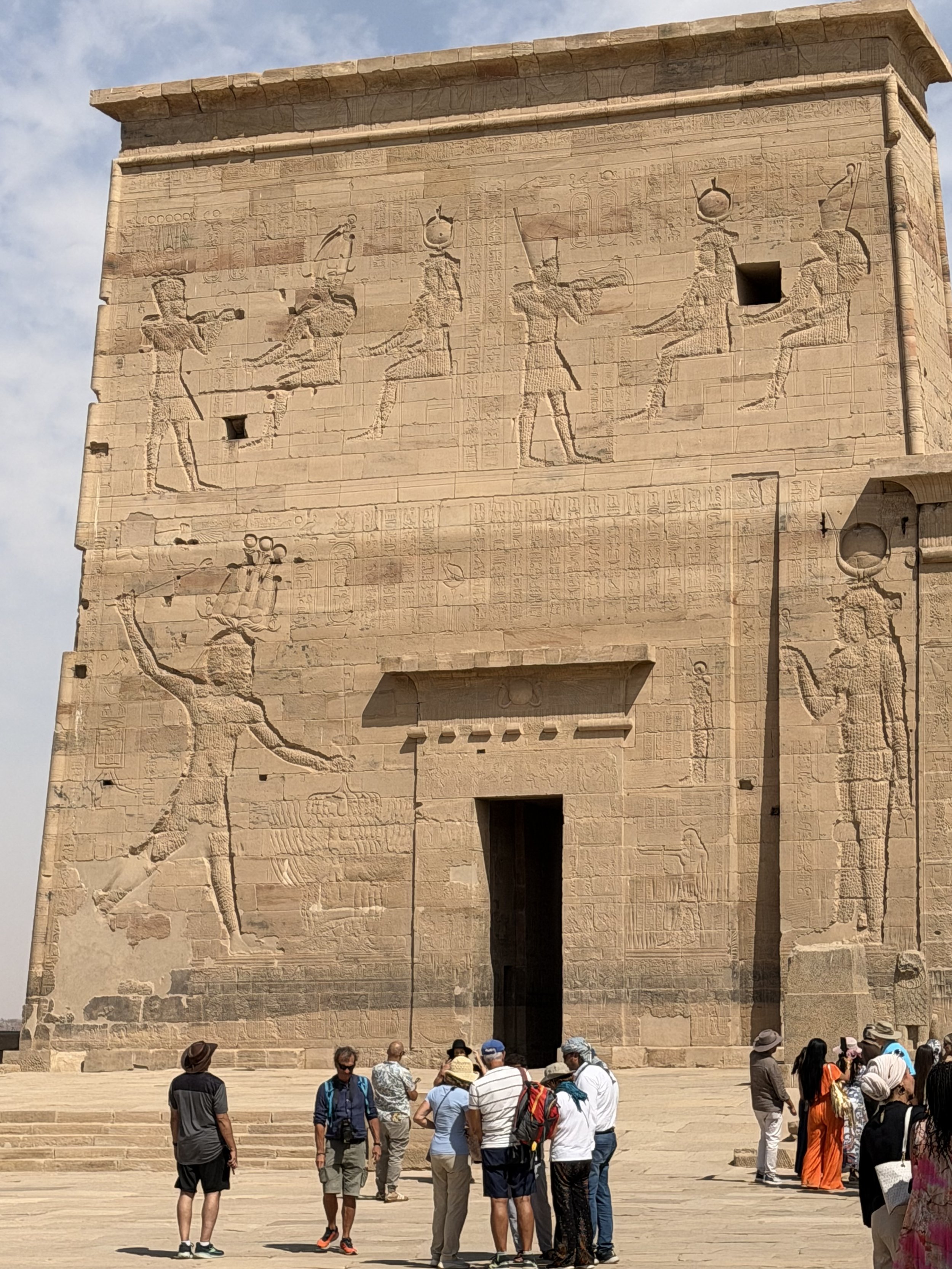
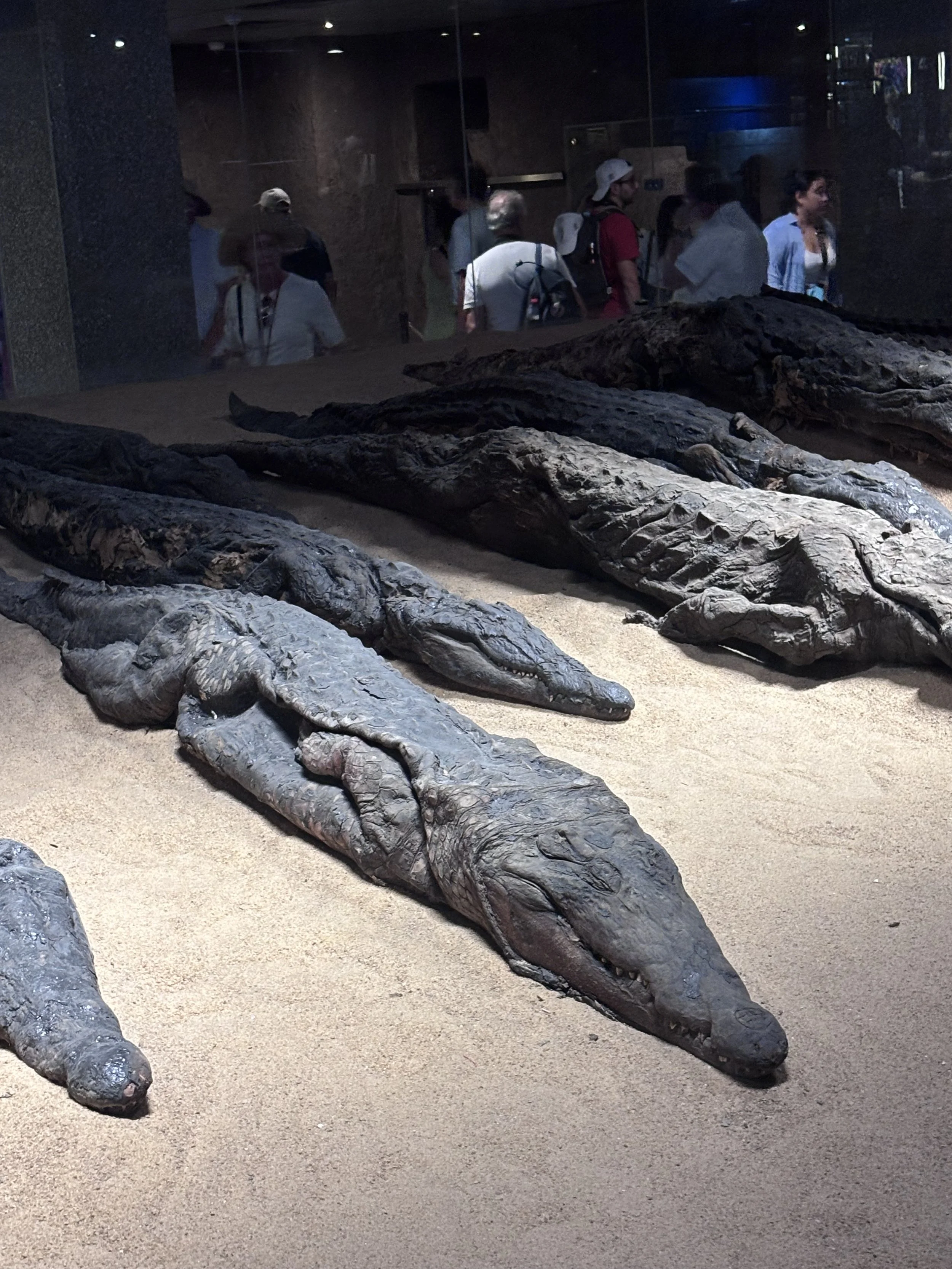
Philae Temple featured the worship of Isis, an important goddess in ancient Egyptian religion. We also learned about the Egyptians’ religious associations with crocodiles and the mummification of these animals. At Kom Ombo, another site we visited, hundreds of mummified crocodiles have been discovered.
I thought the Papyrus Institute was the most interesting of the three stops. We watched a demonstration of how the ancient Egyptians made paper from papyrus plants, followed by an opportunity to browse paintings and drawings of all sizes on papyrus for purchase.
We ended up buying a small painting of a felucca sailing on the Nile at sunset, with the pyramids in the distance. To me, it captured an iconic scene of Egypt. We’ve already argued about where to display it at home!
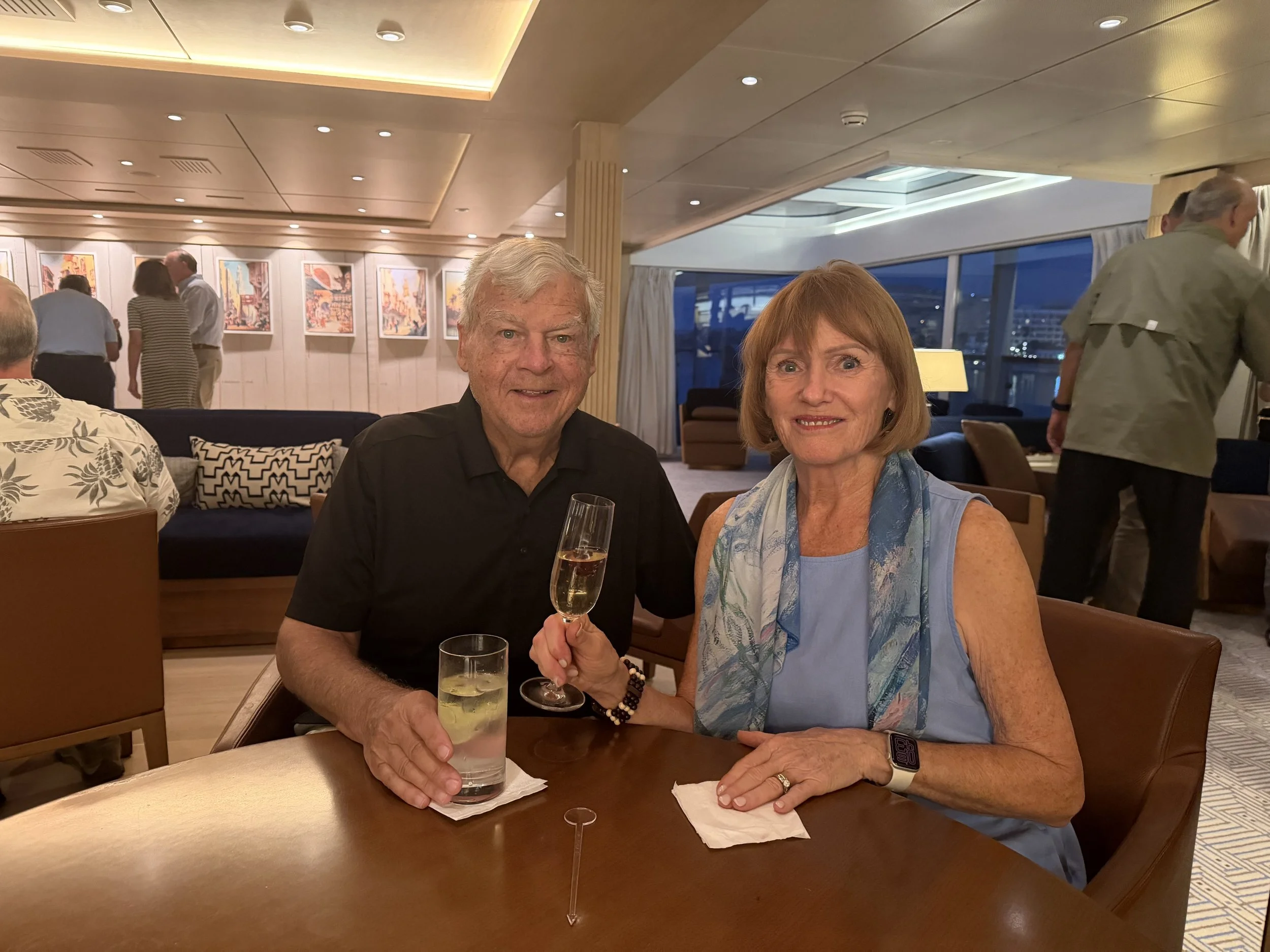
In the late afternoon, we visited Kom Ombo Temple. We were back aboard in time for a cold drink, our Port Talk, and dinner. Then we set sail for Edfu, further north.
Edfu
Day 10 gave us another relatively easy day, and one we probably needed as we approached the end of the cruise.
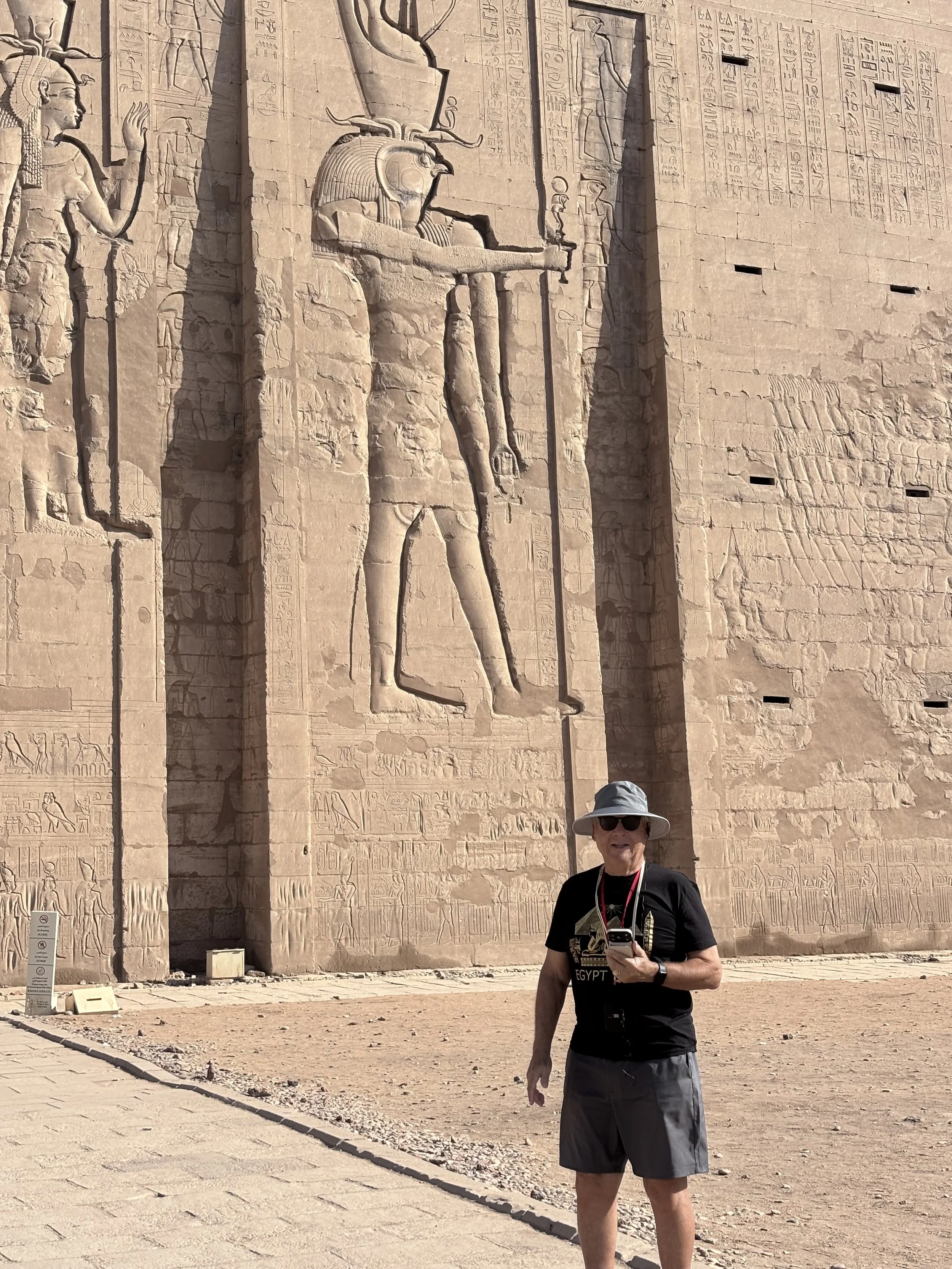
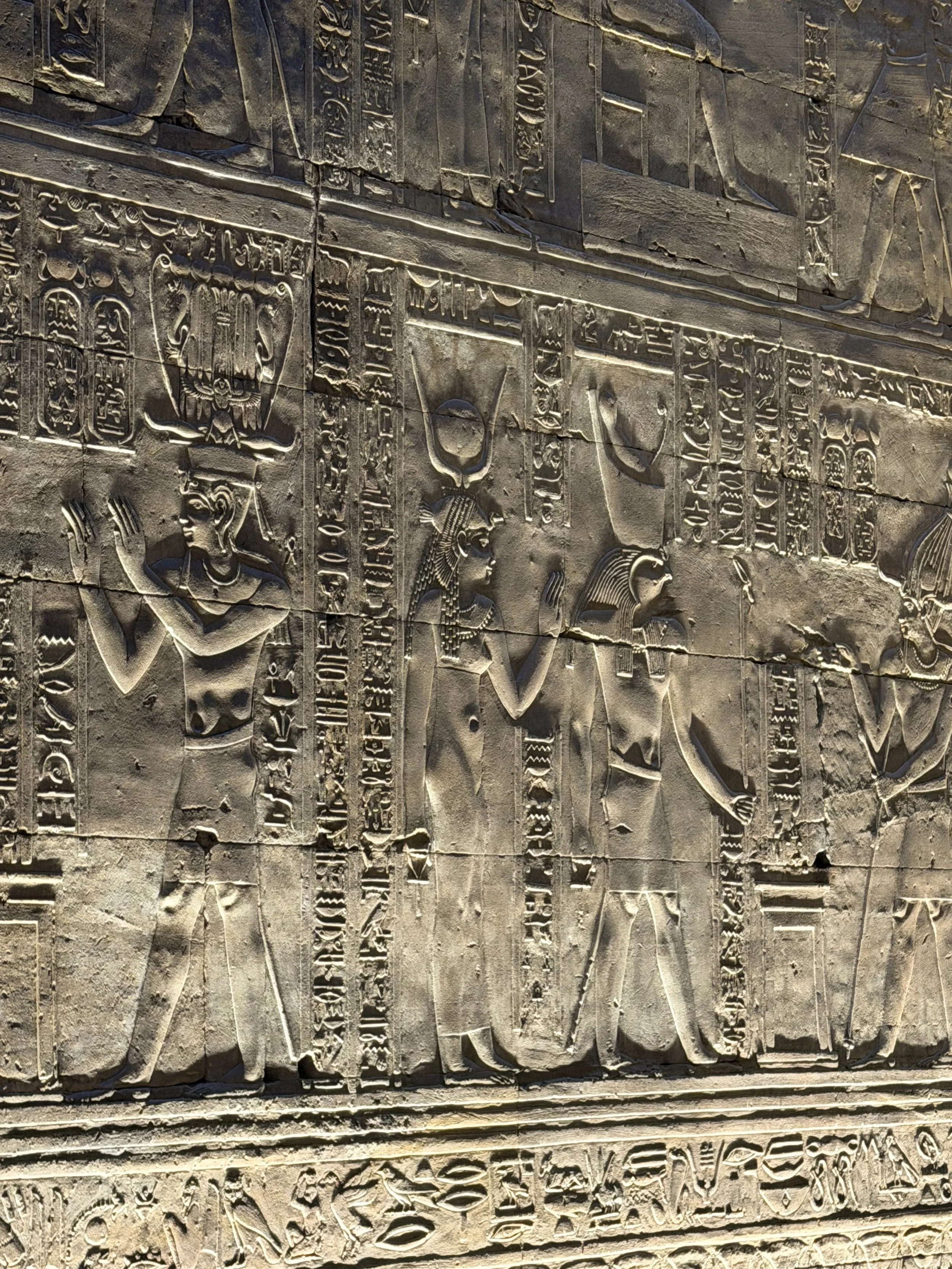
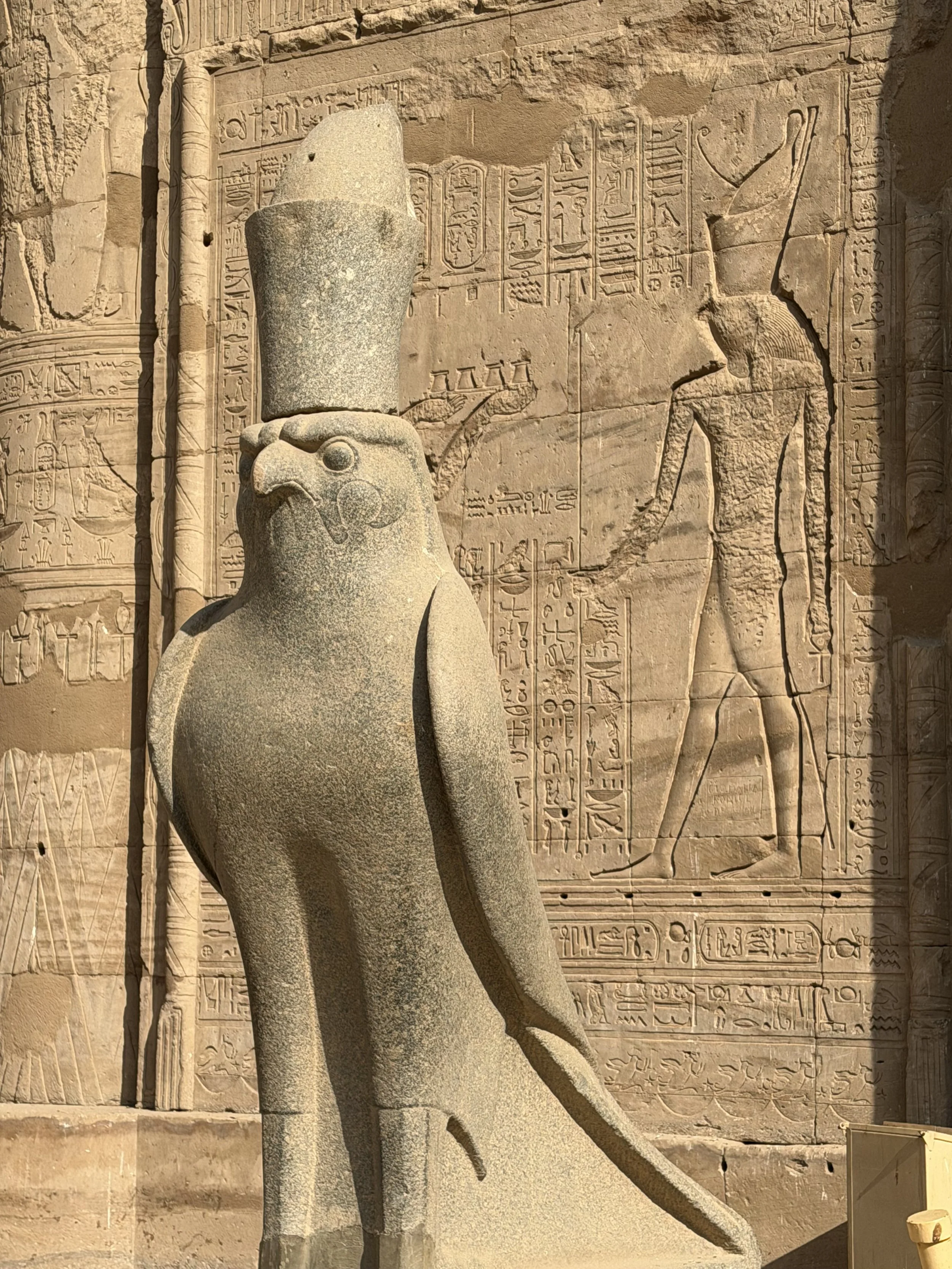
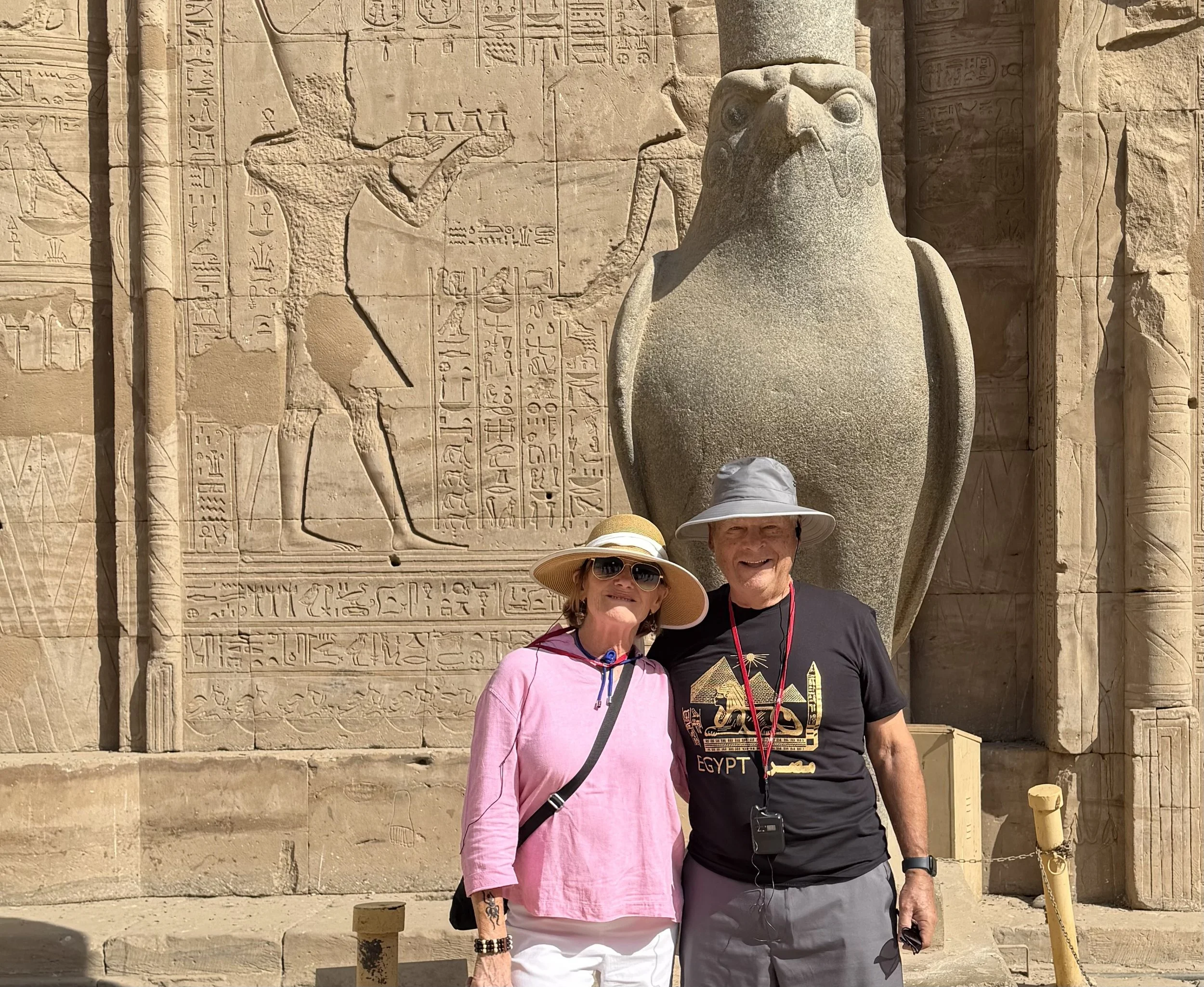
We left at 9 a.m. for Edfu Temple—our last temple! Amal gave us an excellent briefing on the history and meaning of the site, which is dedicated to Horus, the falcon-headed god.
Sun god, cow goddess, falcon god, crocodile god—they certainly had their bases covered!
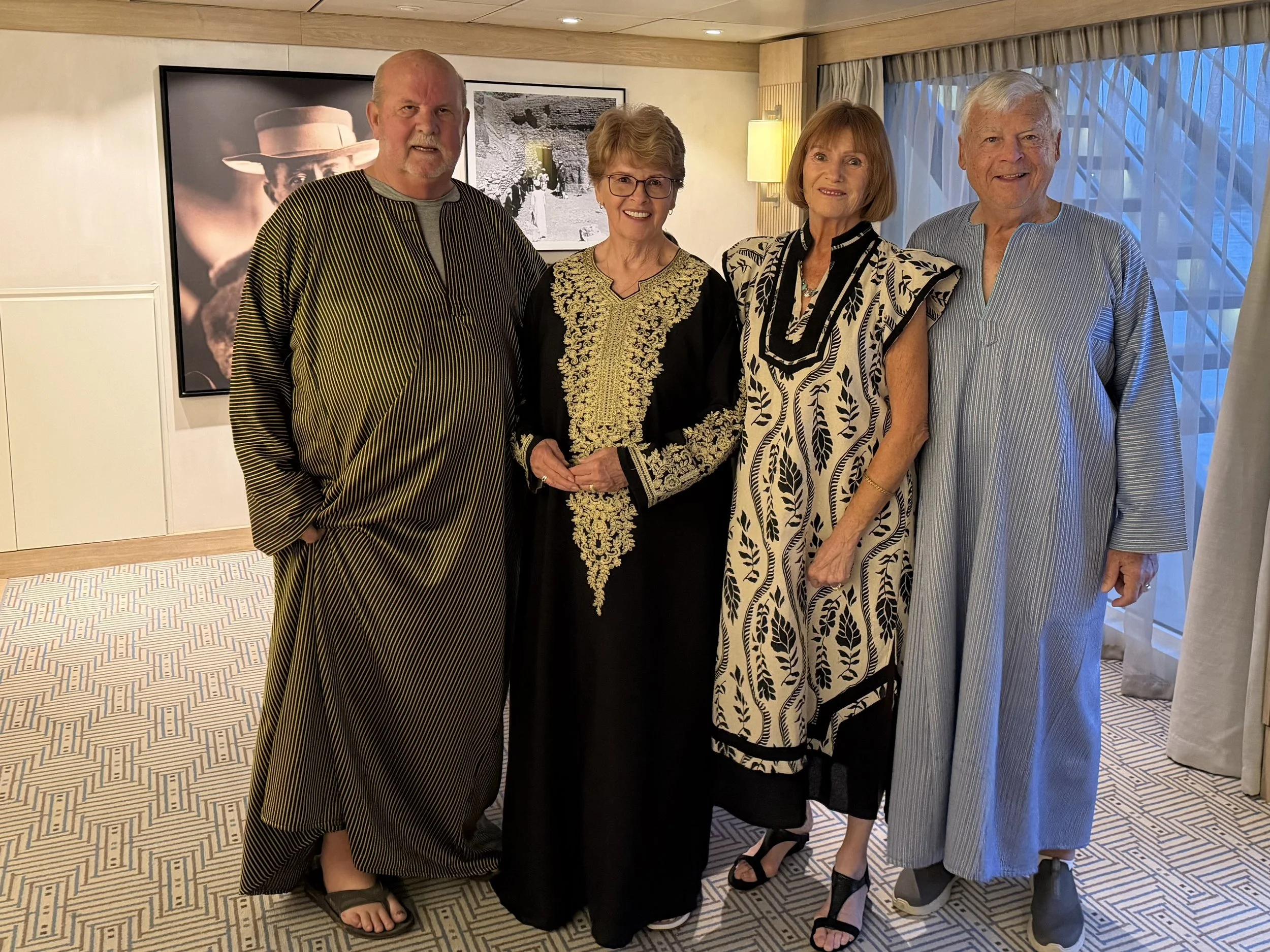
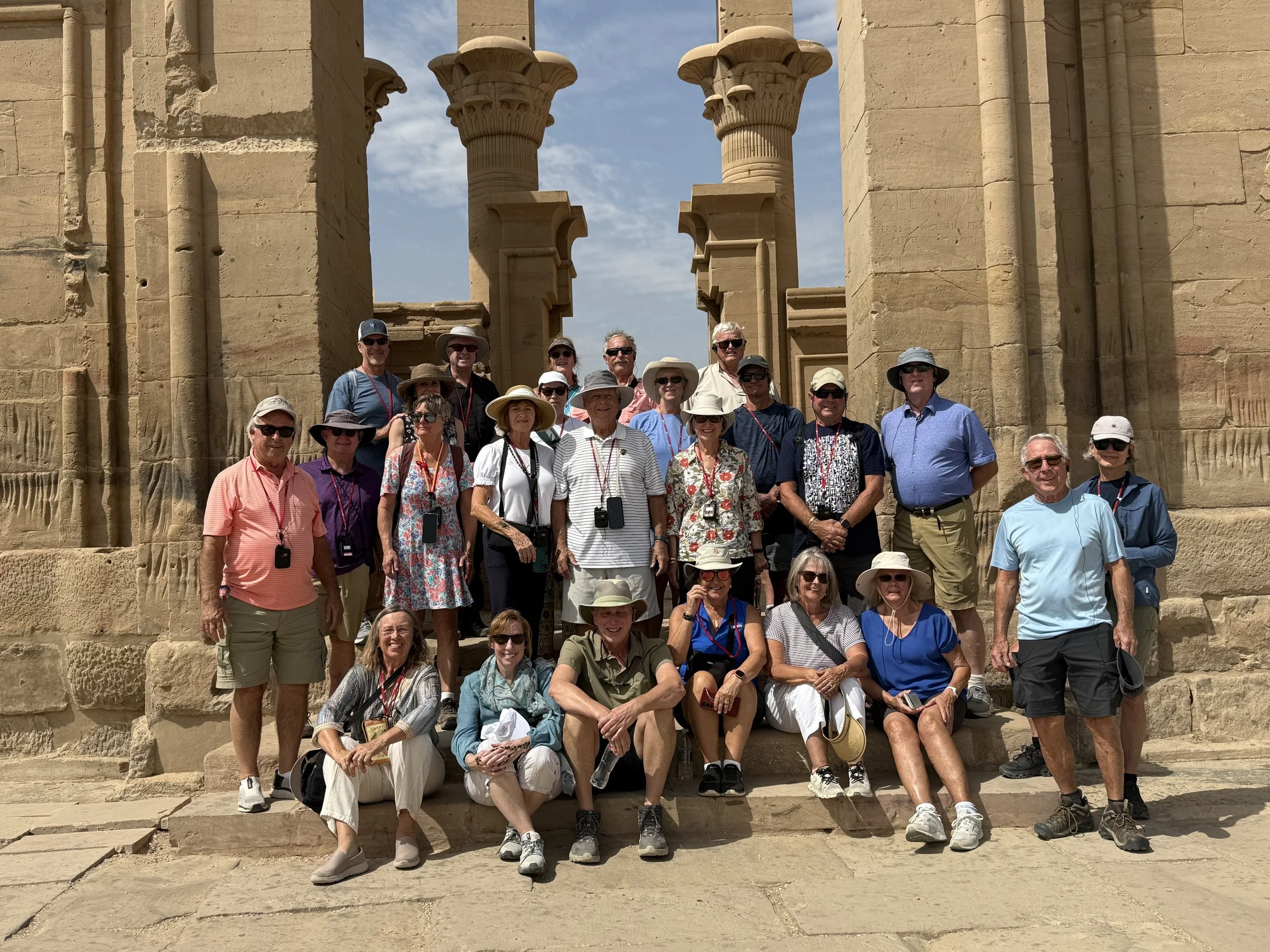
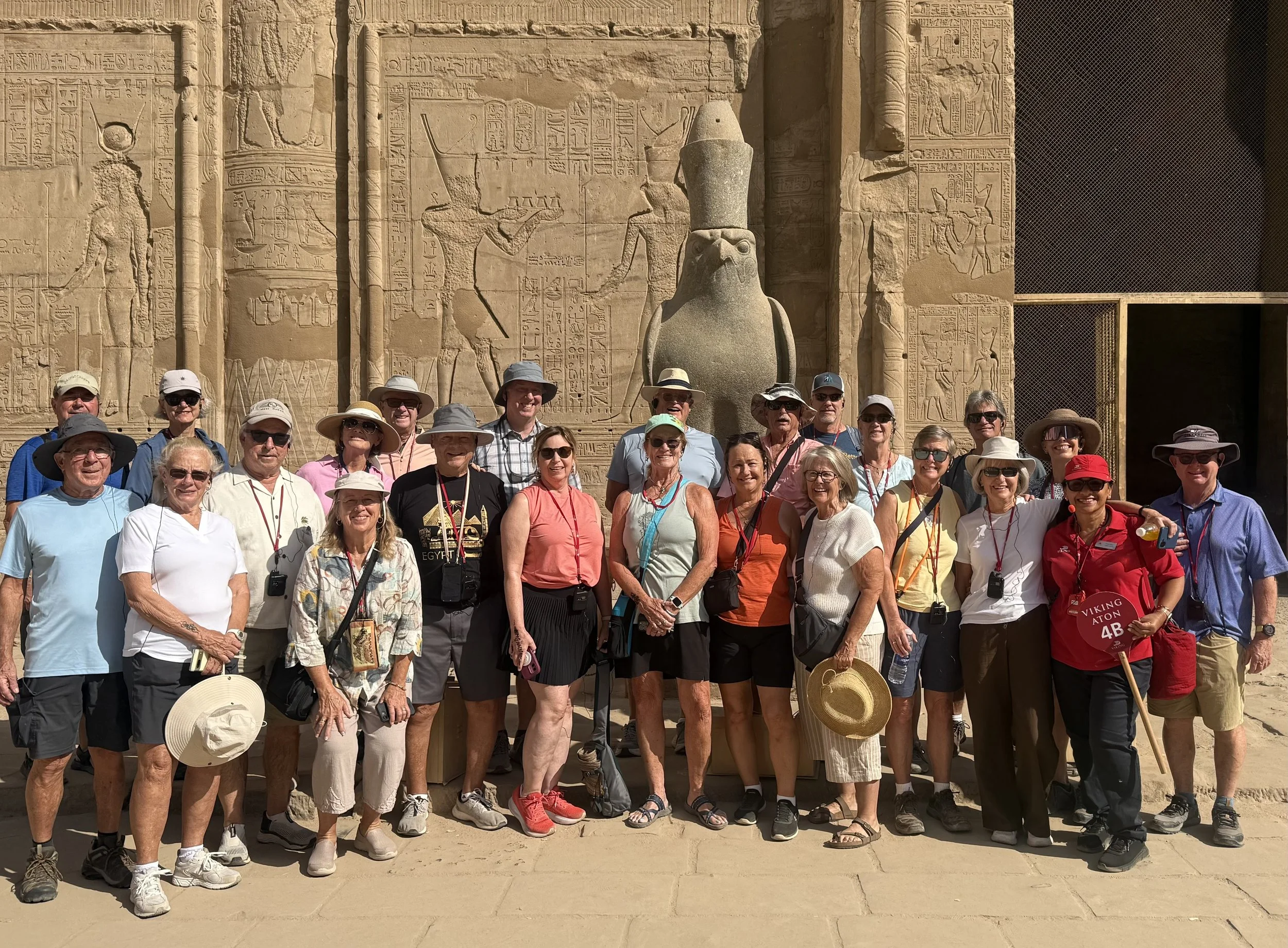
At a large stone statue of a falcon, we took several photos of “Amal’s Group.” Those photos reminded us that our amazing trip was ending.
Several lectures were available that afternoon, including “Women in Egypt,” which was especially good. Later, we set sail for Luxor, where we would catch our flight back to Cairo.
Back to Cairo
Day 11 was disembarkation day. We thanked the staff who had made our river cruise so special. We hated to leave, partly because we had been spoiled to death. Now we would have to fend for ourselves!
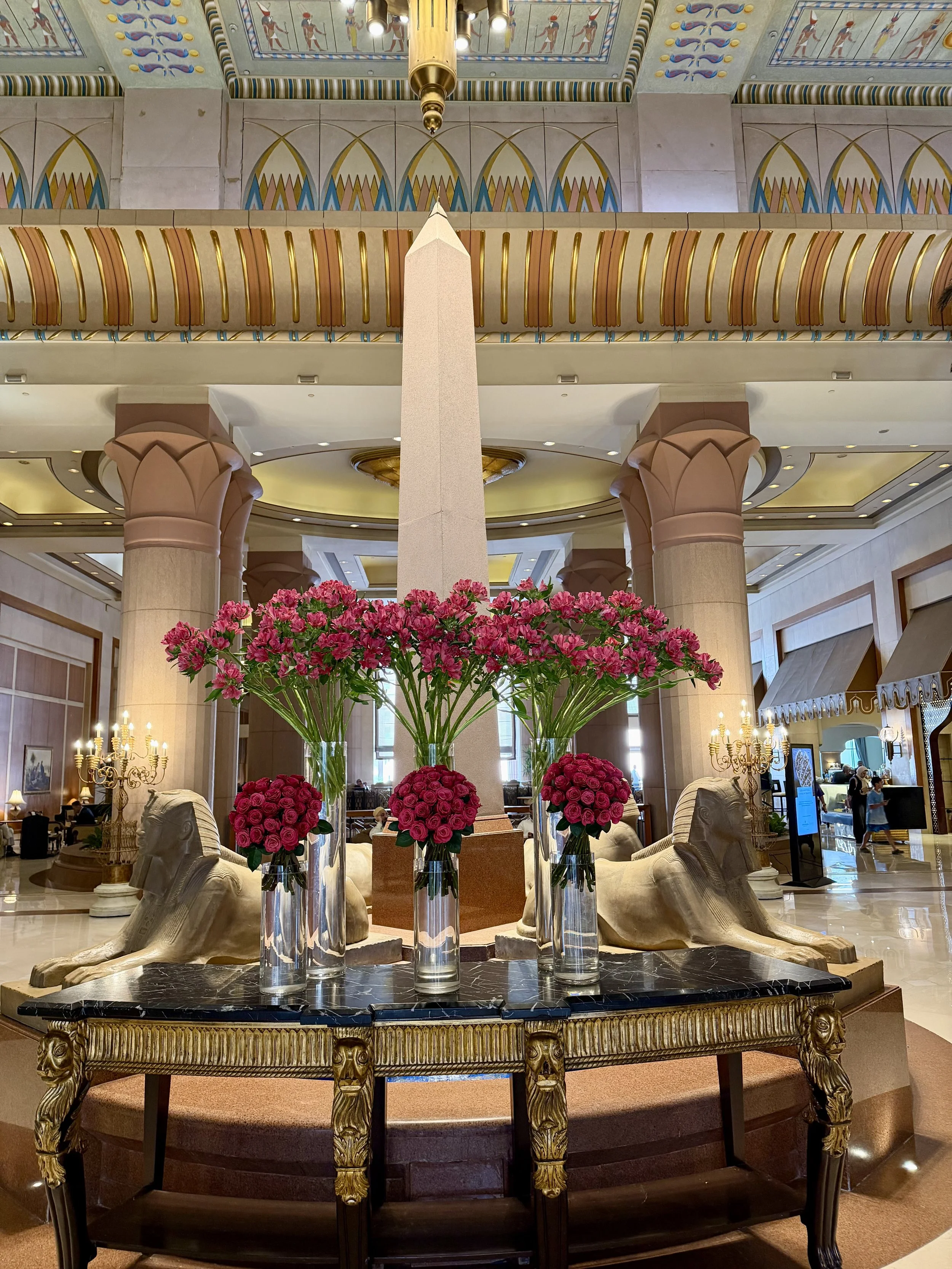
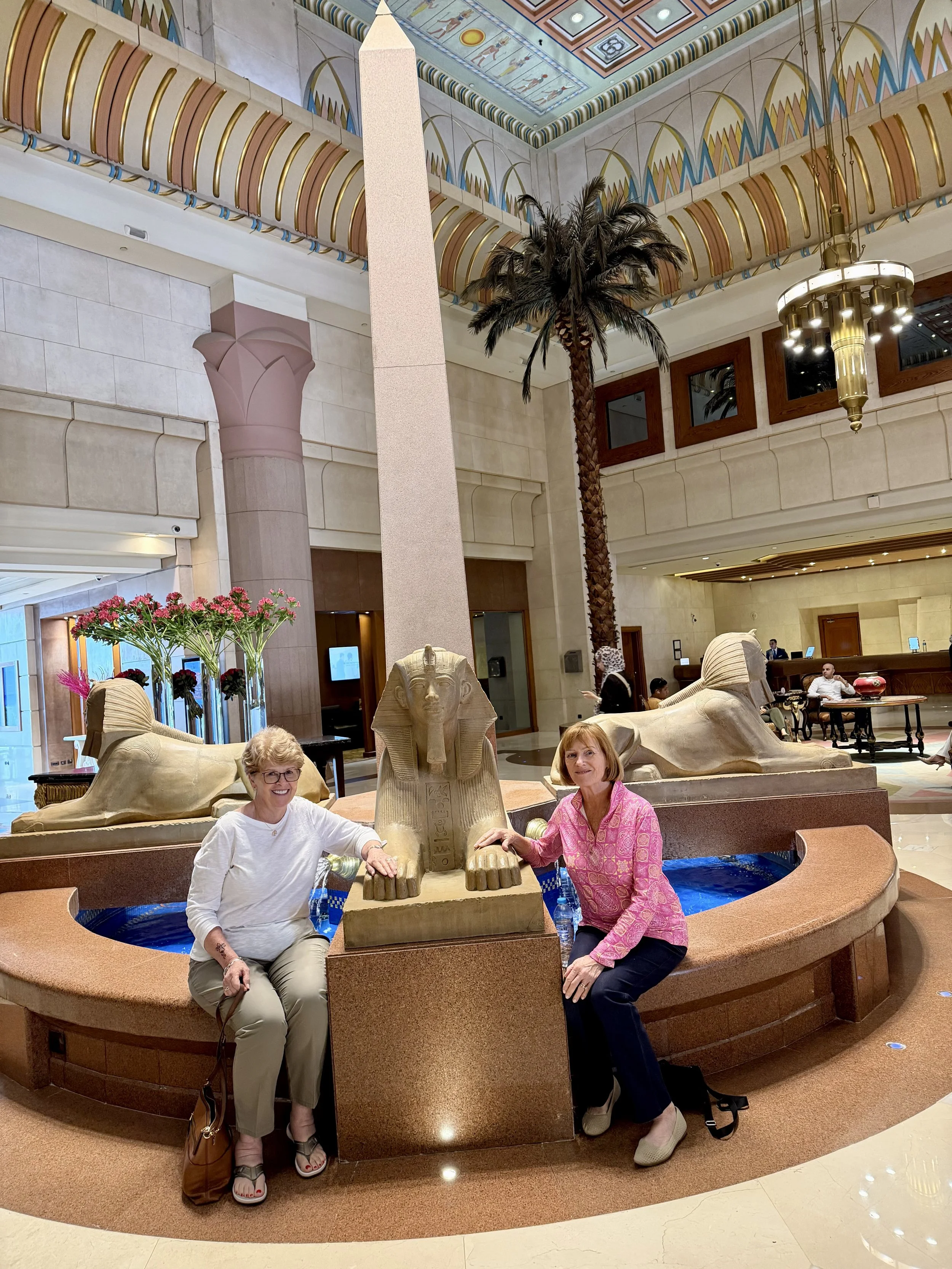
We left the ship at 7:30 a.m., took off from Luxor Airport at 10 a.m., and landed at Cairo Airport around 11 a.m. From there, we were bused to the spectacular InterContinental Cairo Citystars Hotel, where we had lunch and were assigned our rooms.
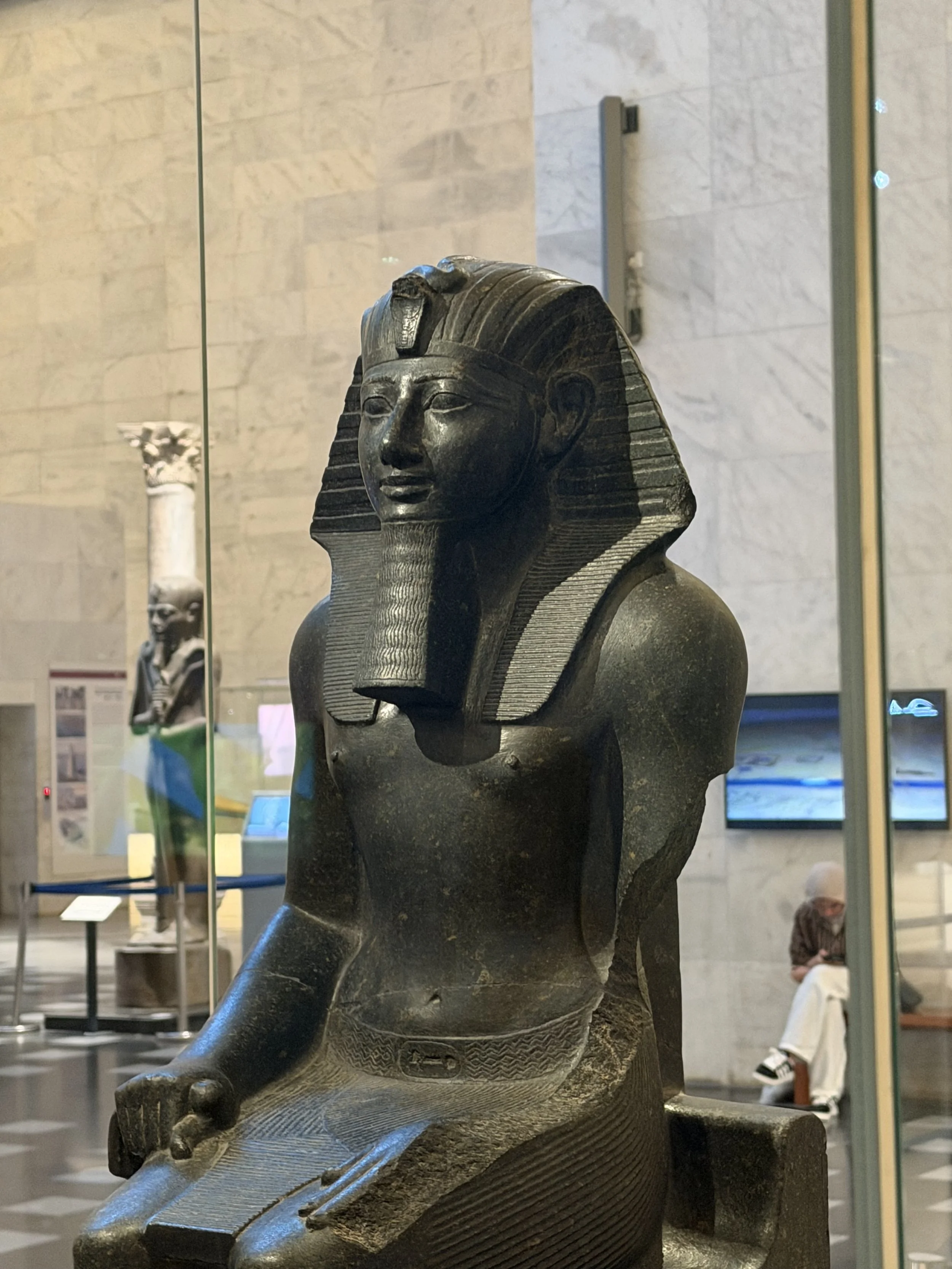
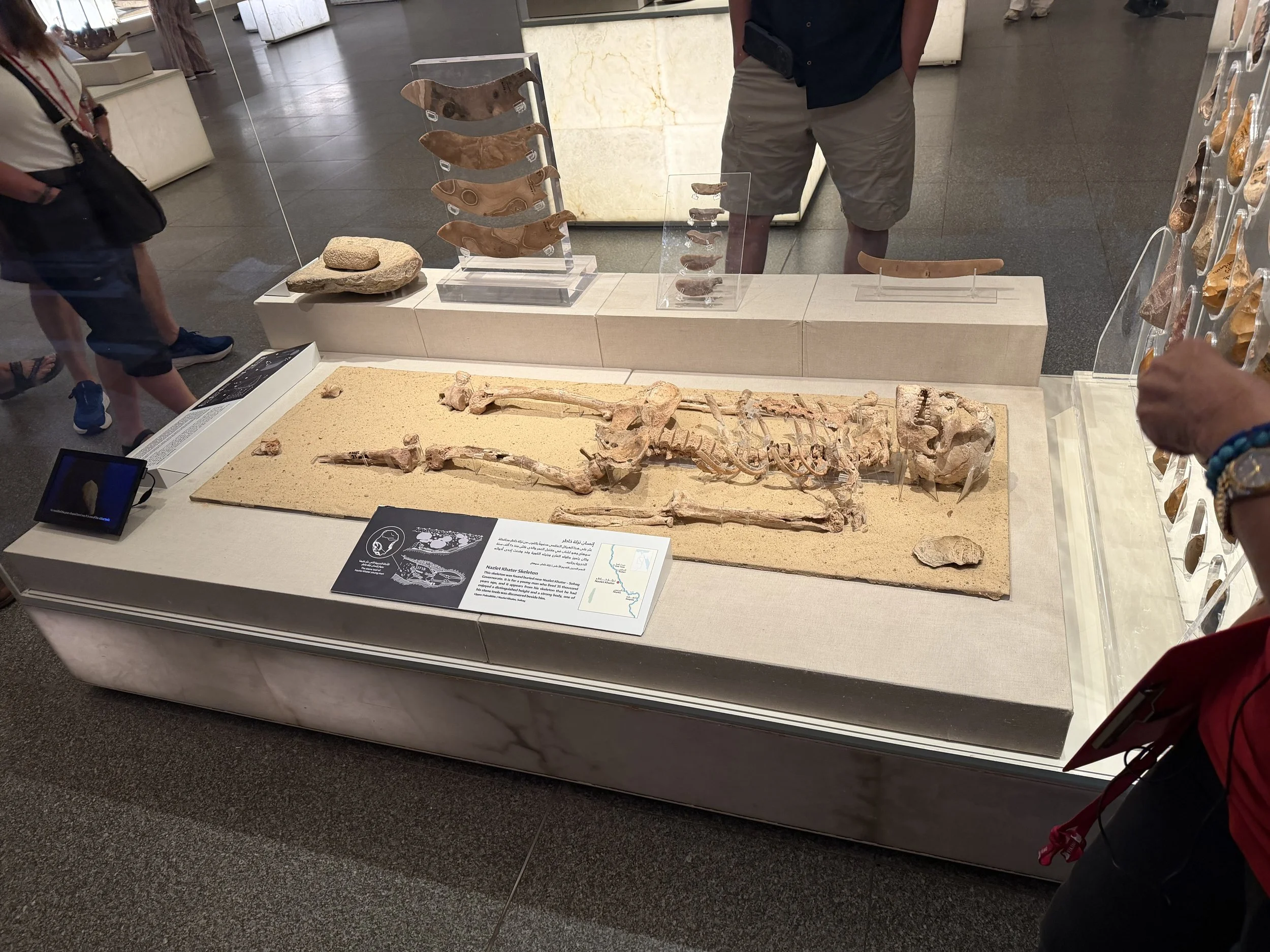
Two optional tours were offered that afternoon: the Coptic Quarter and the National Museum of Egyptian Civilization. We chose the latter.
This modern museum, which opened in 2021, presents major milestones across approximately 5,000 years of Egyptian history. Its exhibits include traditional displays, video presentations, and special exhibitions. During our visit, the featured exhibition focused on textiles in Egypt.
Our last evening in Cairo included a Farewell Dinner, where we said goodbye to our tour guides and the many new friends we had made along the way. Some travelers were leaving on late-night flights, while others were moving on to additional tours.
We decided to stay one extra day before heading home. This gave us an opportunity to visit the enormous Citystars Mall, adjacent to the InterContinental and connected to it by a shared entrance.
We had dinner there, bought some Egyptian cotton goods, and went to the movie theater. It was a wonderful, relaxing way to spend our last day in Egypt.
On Day 13, we called an Uber to take us to the airport and enjoyed some time in the Emirates lounge before our flight to Dubai. We would have about 90 minutes after arriving in Dubai to make our connecting flight back to Miami.
And just like that, our long-awaited Egyptian adventure was coming to an end.
Final Thoughts
For me—and I suspect for most of our fellow travelers—this truly was the trip of a lifetime.
Aside from my lifelong fascination with ancient Egypt, the sights we saw up close transported us to another time, thousands of years in the past. Our guides were outstanding teachers of history. They presented the past in easily understood terms, with a good sense of humor, and were thoroughly professional and sensitive to the needs and interests of their visitors.
Americans have just celebrated their 250th birthday, but Egyptians think in terms of centuries and millennia. The Step Pyramid, which we saw on our first day of touring, dates back roughly 4,700 years. That’s mind-boggling!
Lessons Learned
Arrive early. On this trip, we followed one of my cardinal rules for overseas travel: arrive a day or two before the trip starts. Aside from helping to mitigate jet lag, this gives you a cushion in case of flight delays or other unexpected problems. Our flights connected in Dubai, so we planned to spend a few nights there and hired a local tour guide to show us the city’s highlights.
Be prepared for sketchy internet. We found Wi-Fi and internet access unreliable throughout the trip. Many cruise ships seem to struggle with this, although the technology continues to improve. My point is simple: plan for intermittent coverage, even in modern hotels. Have a backup plan for important online tasks. Our Cairo Airport Uber experience was a good reminder of that!
Understand the local currency. Get familiar with the local currency and exchange rates before you travel. For us, the conversion was easy to estimate: divide Egyptian pounds by roughly 50 to get U.S. dollars. Exchange rates change, of course, so check the current rate before your trip. For tipping small US bills can come in handy. Of course, it’s worth having some local currency, too.
Respect the security procedures. Overseas travel often involves security “hoops” that can seem redundant or inconvenient. We came to appreciate that these measures were intended to help keep visitors safe. Overall, we felt very safe in Egypt.
At the end of the trip, I commented to my wife that we had seen the ancient world, the developing world, and the modern Egyptian world—all in one extraordinary journey.
Don’t let hesitation stop you. If your first reaction to visiting Egypt is uncertainty, think again. Don’t miss out on this amazing country if you have the opportunity to go.
For someone who dreamed about Egypt as a fourth grader, the experience exceeded my expectations. It was clearly one of the best travel experiences we’ve ever had.